

Creating Mystical Themed Accessories: Your 2026 Craft Guide
Symbolic crystals, celestial motifs, and a handful of specialized tools are all you need to start creating mystical themed accessories that carry genuine meaning. The core elements are straightforward: natural stones like rose quartz and black tourmaline for intention, metal wire and cord for structure, and round-nose pliers plus wire cutters for shaping. What separates a forgettable piece from something talismanic is the layering of symbolic intent into every material choice and assembly step.
Here is a quick-reference overview of what goes into a mystical accessory:
- Accessory types: rings, necklaces, bracelets, hair pins, and circlets
- Core motifs: moons, stars, pentagrams, fey elements, dragons, mermaids
- Key materials: rose quartz, black tourmaline, metal wire, leather or silk cord
- Essential tools: round-nose pliers, wire cutters, jump rings, clasps
- Primary techniques: wire wrapping, bead stringing, patina application
- Symbolic layer: selecting each material for a specific intention, such as protection, love, or creativity
What motifs work best for mystical accessory designs?
Celestial and mythical motifs are the backbone of magical jewelry design in 2026, and a few stand out as especially versatile.
Moons and stars are the most universally recognized symbols in spiritual themed accessories. A crescent moon signals mystery and feminine power; a full moon suggests completion and clarity. Stars, particularly the five-pointed pentagram, carry deep roots in protection magic across multiple cultural traditions. Both translate beautifully into pendants, hair pins, and circlet centerpieces.
Fey and fairy elements pull from Victorian botanical illustration: dragonfly wings, flower fronds, and delicate leaf filigree. These work especially well in earrings and brooches, where fine wire detail catches light. Dragons and mermaids occupy the bolder end of the spectrum. A dragon-scale necklace built from overlapping leaf components reads as fierce and layered; a mermaid-inspired piece leans into fluid, oceanic curves with iridescent color.
The Whimsy Goth aesthetic is the dominant style influence right now. It fuses traditional gothic darkness with a softer, dreamier touch drawn from fairy tales, Victorian fashion, and esoteric symbolism. Occult motifs like moons and black horn pendants sit alongside bohemian beadwork and iridescent pearls. The result feels both mysterious and romantic rather than purely dark.
- Celestial: moons, stars, sun wheels, constellation maps
- Occult: pentagrams, third-eye symbols, ouroboros, runes
- Fey/fantasy: dragonfly wings, mushroom caps, fairy silhouettes, leaf filigree
- Mythical creatures: dragon scales, mermaid tails, unicorn horns, phoenix feathers
- Nature-occult hybrids: black horn, crow feathers, botanical pressed elements
Pro Tip: When building a matching set of earrings, a bracelet, and a necklace around one motif, test the design on the earrings first. Smaller pieces let you refine the color palette and wire tension before committing to a complex centerpiece.
Which materials and tools do you actually need?
The right materials do two jobs at once: they hold the piece together physically and carry the symbolic weight that makes it meaningful. Getting both right is what separates a craft project from a wearable talisman.
Crystals and natural stones
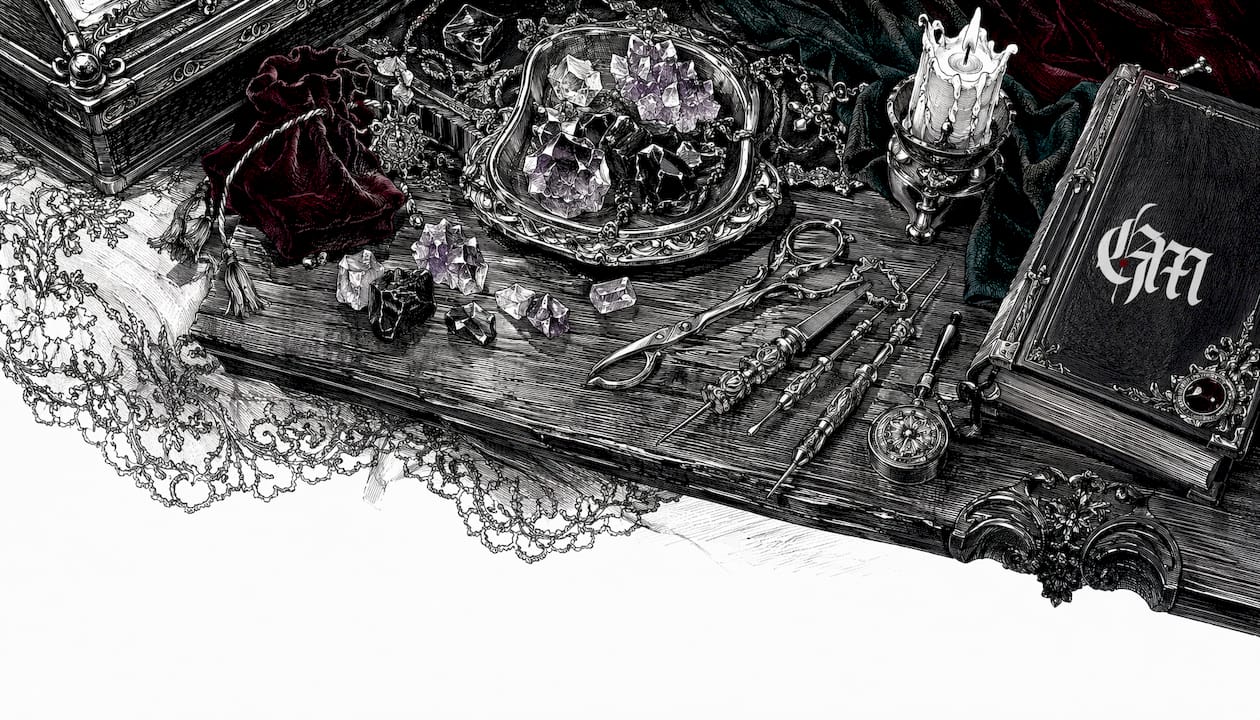
Rose quartz is the go-to stone for love and compassion-focused pieces. Its pale pink color pairs naturally with gold wire and silk cord. Black tourmaline is the protective counterpart, a deep black stone traditionally used to shield against negative energy. Other popular choices include amethyst for intuition, labradorite for transformation, and moonstone for lunar-aligned designs.
Metal components and patina effects
Standard copper and brass findings are the most affordable base metals for beginners. A patina effect transforms these plain components into something that looks aged, mythical, and layered. Blending deep purples, greens, and gold through patina application can evoke the shimmering scales of a mermaid or the iridescent wings of a fairy. Layering patina colors rather than applying a single flat coat is what creates that sense of depth.
Cords and chains
Leather cord reads as earthy and rugged, ideal for nature-occult hybrids. Silk or imitation-silk cord adds a softer, more Victorian feel. Metal ball chains work for minimalist celestial pieces. Ribbon cord, especially in black or deep jewel tones, suits Whimsy Goth designs perfectly.
| Material | Symbolic meaning | Common use |
|---|---|---|
| Rose quartz | Love, compassion, romance | Pendants, bracelets, bead stringing |
| Black tourmaline | Protection, grounding | Focal stones, wire-wrapped pendants |
| Amethyst | Intuition, spiritual clarity | Earrings, circlet centerpieces |
| Copper wire | Conductivity, energy flow | Wire wrapping, structural frames |
| Black horn | Moon connection, mystery | Whimsy Goth pendants, hair pins |
| Patina-treated brass | Mythical creature evocation | Dragon scale necklaces, enchantress earrings |
Essential tools
- Round-nose pliers: for forming loops and wire coils
- Flat-nose pliers: for flattening crimp beads and closing jump rings
- Wire cutters: for clean cuts on copper and silver wire
- Jump rings: connectors between pendants, chains, and clasps
- Clasps: lobster claw or toggle styles for necklace and bracelet closures
- Beading needle: for threading seed beads onto fine cord
Ethical sourcing note: Look for crystals sold with country-of-origin information. Suppliers who disclose mining location and fair-trade certification are increasingly common in the US market, and the extra transparency is worth the slightly higher cost.
How to craft your mystical accessory step by step
A well-made piece starts long before you pick up the pliers. The process below works for necklaces, bracelets, and hair pins alike.
-
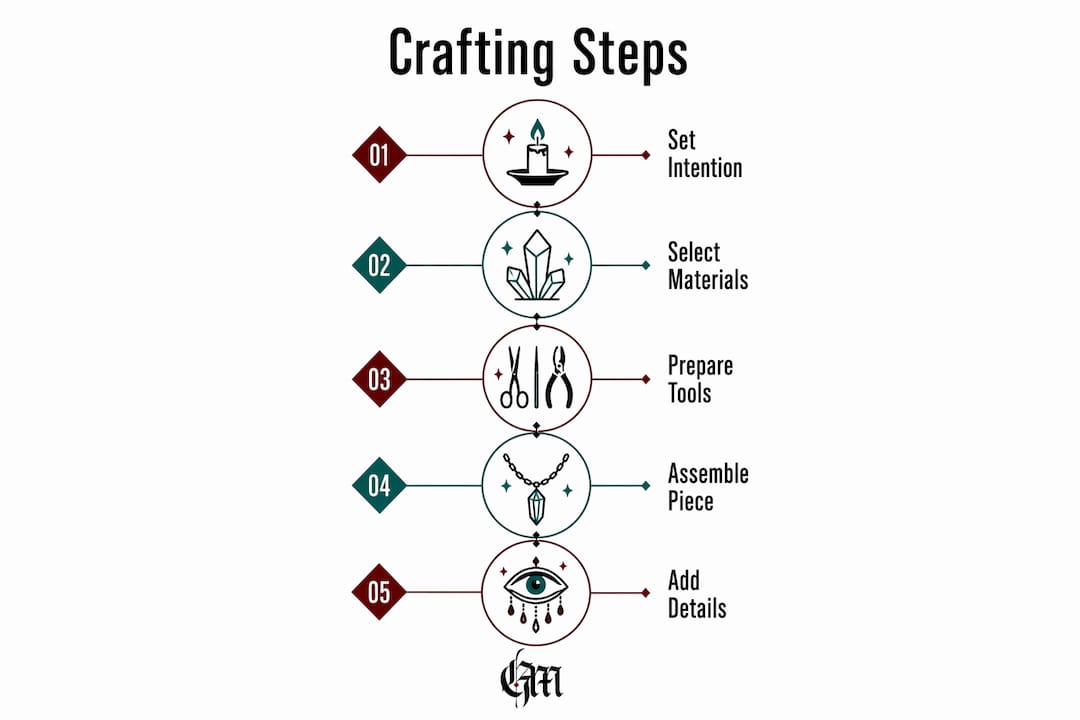
Define your intention. Decide what the piece is for: protection, love, creativity, or connection to a specific mythical theme. This choice drives every material decision that follows. A protection piece calls for black tourmaline and dark metal; a love piece calls for rose quartz and rose gold wire.
-
Select motifs and materials aligned with that intention. Pull from the motif list that fits your theme. A lunar protection piece might combine a crescent moon charm, black tourmaline, and black silk cord. A fey-inspired bracelet might use leaf filigree, amethyst beads, and gold wire.
-
Plan your layout digitally or on paper. Arrange your components on a flat surface before stringing anything. For more complex designs, AI tools like JewelryAI let you generate 3D visual mockups from a text description in seconds, which is genuinely useful for prototyping a dragon-scale necklace or a layered circlet before cutting any wire.
-
Prepare your materials and tools. Cut wire to working lengths (typically 20–30 cm per wrap segment). Pre-open jump rings with flat-nose pliers. Lay out beads and charms in sequence order. Having everything within reach before you start prevents mid-assembly mistakes.
-
Assemble using wire wrapping or bead stringing. For wire-wrapped crystal pendants, coil the wire around the stone base, bring it up and over the top, then form a loop at the crown for the chain. For bead-strung pieces, thread components in your planned sequence, tying a stopper knot at one end first. If you are applying a patina effect, do it on metal components before final assembly so the color settles into the texture naturally.
-
Add finishing touches and charge the piece. Secure all clasps and jump rings tightly. Trim any wire tails flush. Then take a moment to hold the finished piece and focus on its intended purpose. Many crafters place the piece in moonlight overnight or use a smudging ritual to clear residual energy and set the intention. This final step is what elevates a piece to talismanic status, turning a well-made accessory into something personally significant.
Pro Tip: While threading beads or wrapping wire, whisper or mentally repeat the intention you set in step one. The repetitive physical motion of crafting creates a meditative state that many makers find deepens the symbolic connection between maker and piece.
For a detailed walkthrough of gothic jewelry making with crystals and natural elements, Goth has a dedicated crafting guide worth bookmarking.
What are the biggest trends shaping mystical accessory design in 2026?
The craft space for fantasy accessory creation has shifted noticeably in 2026, with three forces driving most of the change: the rise of Whimsy Goth as a dominant aesthetic, the mainstream adoption of AI design tools, and a renewed focus on storytelling through symbolic materials.
Whimsy Goth is the defining aesthetic
Whimsy Goth, also called Poetic Gothic, blends the dark visual language of traditional gothic fashion with softer, dreamier references drawn from fairy tales, Victorian botanicals, and esoteric symbolism. A black half-moon horn pendant paired with iridescent purple pearls and gold wire is a textbook example. The aesthetic rewards layering: a single piece might carry occult symbolism, natural materials, and delicate beadwork simultaneously. For crafters, this means the design ceiling is high and the combinations are nearly endless.
Goth’s 2026 gothic accessory trends roundup captures exactly how this aesthetic is showing up in wearable pieces this year, from circlets to layered necklaces.
Patina effects are replacing flat metalwork
The shift away from plain polished metal toward layered patina finishes is one of the clearest technical trends of 2026. Design experts recommend layered patina effects combined with rich jewel tones to express mystical auras and create depth. A dragon-scale necklace built from overlapping brass leaf components, painted in fiery reds, oranges, and purples, reads completely differently from the same piece left in plain brass. The patina does not just add color; it adds narrative.
AI design tools are changing how crafters prototype
JewelryAI and similar platforms have moved from novelty to practical workflow tool for many independent makers. The ability to type a description like “crescent moon pendant with amethyst and black tourmaline, Whimsy Goth style” and receive a visual mockup in seconds removes a significant barrier for crafters who struggle to translate mental images into physical plans. Combining AI prototyping with traditional wire-wrapping and patina techniques gives you the speed of digital design without losing the handmade quality that makes mystical accessories worth wearing. Pairing this with resources on AI-assisted jewelry design can sharpen your prototyping process further.
Storytelling through symbolic materials is the differentiator
The most successful pieces in 2026 tell a story through their material choices. Black horn signals lunar mystery. Rose quartz signals compassion. A pentagram in copper wire signals protection through an ancient geometric form. Crafters who think about the narrative their materials carry before they pick up a tool consistently produce pieces with more perceived depth and personal resonance. For more inspiration on gothic accessory ideas that use nature-driven motifs, Goth’s curated examples are a strong starting point.
Key Takeaways
Successful mystical accessory crafting requires pairing symbolic materials like rose quartz and black tourmaline with the right tools, a clear intention, and 2026 techniques like patina layering and AI-assisted prototyping.
| Point | Details |
|---|---|
| Intention drives material choice | Select crystals and motifs based on a specific purpose: protection, love, or creativity. |
| Patina effects add mythical depth | Layering purples, greens, and gold on brass components evokes legendary creatures far better than flat metalwork. |
| Whimsy Goth leads 2026 trends | This aesthetic blends dark occult motifs with Victorian and fey elements for a poetic, layered look. |
| AI tools accelerate prototyping | JewelryAI generates visual mockups from text descriptions, letting you refine designs before cutting any wire. |
| Sets strategy reduces risk | Testing a motif on earrings before building a complex necklace saves materials and sharpens the final design. |