

4 Easy Witchy Home Decor Projects You Can Make Today
You can finish a twig wreath, dried-herb garland, apothecary bottle display, or moon-phase wall art in a single afternoon, most for under $25. Each one takes between 30 and 90 minutes, uses supplies you likely already have or can grab cheap, and delivers that cozy Practical Magic feel without a single power tool. These projects work because they lean on texture, muted light, and a few well-chosen objects instead of buying a room full of trinkets.
- Twig wreath: 45–60 minutes, $5–$15
- Dried-herb garland: 30 minutes, $8–$18
- Apothecary bottle display: 30–45 minutes, $10–$25
- Moon-phase wall art: 60–90 minutes, $10–$20
Pro Tip: If you only have 30 to 60 minutes, start with the dried-herb garland. It requires no drying time, no glue curing, and no adhesive that needs to set overnight.
Key Takeaways
Cozy-witch decor works best when a few curated, textured pieces replace a room full of small trinkets, backed by layered, low-flame lighting.
| Point | Details |
|---|---|
| Start small and fast | The twig wreath and herb garland finish in under an hour for less than $18 combined. |
| Curate, don’t accumulate | One apothecary cluster beats several scattered trinkets for a calmer room. |
| Light in layers | Combine LED candles, string lights, and one accent lamp instead of a single overhead bulb. |
| Personalize symbols | Design your own moon charts or sigils rather than copying culturally specific ritual objects. |
| Buy finished pieces when short on time | Goth Market offers curated apothecary bottles, candle clusters, and ritual bowls as a ready-made alternative to DIY. |
Table of Contents
- What Supplies and Tools Do I Need for Beginner Witchy Decor Tutorials?
- How Do I Make Each Easy Witchy Decor Project Step-by-Step?
- How Do I Style Witchy Decor in a Small Apartment or Limited Space?
- What Design Principles Create the Cozy-Witch Look and Why Do They Work?
- What I Learned Trying These Projects Myself
- Where Can I Buy Curated Witchy Decor and Supplies if I Want to Skip DIY?
- Where Can I Find Photo or Video Inspiration and Reliable Supplies?
- Sources
- FAQ
What Supplies and Tools Do I Need for Beginner Witchy Decor Tutorials?
Four categories cover almost every project in a witchy home decor tutorial: natural botanicals, basic hand tools, adhesives and fasteners, and lighting. You don’t need a craft room full of gear, just a handful of reliable items you’ll reuse across projects.
- Botanicals: dried lavender, eucalyptus, or faux stems if you have allergies or pets
- Hand tools: floral wire, pruning shears, a hot glue gun
- Fasteners: jute twine, small nails or removable adhesive hooks
- Lighting: LED tea lights, faux black taper candles, a strand of warm white string lights
- Containers: amber or dark glass bottles for apothecary-style vignettes
Thrift stores are the best source for glass bottles and odd little dishes. Craft chains handle floral wire, twine, and glue guns. Online marketplaces work well for faux botanicals if you want a look that never wilts or sheds. One safety note worth taking seriously: dried botanicals bought loose from bulk bins can carry dust or mold spores, so give them a shake outdoors and let them air out for a day before hanging them near a bed or a reading nook.
Pro Tip: Skip new apothecary jars entirely at first. A trip to a thrift store usually turns up amber cough syrup bottles and old spice jars that look more authentic than anything from a craft aisle.

How Do I Make Each Easy Witchy Decor Project Step-by-Step?
These four projects were picked because they’re forgiving for first-timers, cost under $25 each, and won’t get you in trouble with a landlord. Skip anything that requires drilling, painting walls, or open flame left unattended.
Twig Wreath
Materials: gathered twigs (or a $6 grapevine base), floral wire, dried flowers, twine Time: 45–60 minutes | Cost: $5–$15
- Bend a wire frame into a circle or buy a pre-made grapevine base.
- Sort twigs by length and flexibility.
- Wrap the base twigs around the frame, securing every few inches with floral wire.
- Layer in shorter twigs to fill gaps and add depth.
- Tuck dried flowers or lavender sprigs into the twine wraps.
- Add a twine loop at the top for hanging.
- Hang somewhere dry, out of direct sun.
Twig-wreath tutorials show variations like a radiating sun shape or a crescent moon, which makes this project easy to riff on once you’ve made the basic version.
Pro Tip: Wire twigs while they’re slightly green or freshly cut. Fully dried twigs snap instead of bending.

Dried-Herb Garland
Materials: twine, dried herbs (rosemary, lavender, bay leaf), small clothespins Time: 30 minutes | Cost: $8–$18
- Cut twine to your desired length, plus a few extra inches on each end.
- Lay herb bundles along the twine in a repeating pattern.
- Clip each bundle in place with a small clothespin.
- Space bundles 3 to 4 inches apart.
- Hang across a window frame, mantel, or bookshelf edge.
Safety note: hang away from stovetops and keep a window cracked while herbs finish drying indoors. Trapped humidity encourages mold on anything not fully dried.
Apothecary Bottle Display
Materials: 3 to 5 amber or dark glass bottles, dried botanicals, small labels Time: 30–45 minutes | Cost: $10–$25
- Wash and dry thrifted bottles thoroughly.
- Group bottles by height, tallest in back.
- Fill a few with dried herbs, leave others empty for visual variety.
- Add hand-written labels for a lived-in, apothecary feel.
- Arrange on a shelf or windowsill in a tight cluster, not spread out.
Pro Tip: Steep a used tea bag in water and lightly wipe the glass to give new bottles a subtle aged tint.
Moon-Phase Wall Art
Materials: wood circles or black cardstock, white or gold paint, a printed moon-phase template Time: 60–90 minutes | Cost: $10–$20
- Cut or buy 8 small circles.
- Trace moon phases from a free printable template.
- Paint each phase in white or metallic gold.
- Let dry fully, about 20 minutes per coat.
- Arrange in an arc or straight line on the wall using removable adhesive strips.
A 2023 NAHB survey found that homeowners consistently rate cluttered, heavily themed rooms as less comfortable, which is exactly why these four projects stop at a handful of pieces instead of filling every wall.
How Do I Style Witchy Decor in a Small Apartment or Limited Space?
Three moves do most of the work in a small space: layered lighting, one curated vignette instead of many scattered ones, and dark textiles that anchor the room without swallowing it. Overcrowding a small apartment with candles and trinkets tends to reduce the calm you’re going for rather than add to it.
- Swap open-flame candles for LED tea lights near soft furnishings or high-traffic corners.
- Choose one dark throw or velvet pillow cover instead of five small accent pieces.
- Group your apothecary bottles into a single cluster rather than spreading trinkets across every surface.
- Rotate seasonal items in and out so nothing sits untouched for months collecting dust.
Styling examples:
- Entryway: one twig wreath on the door, a small dish for keys beside it.
- Bookshelf altar: apothecary bottles on one shelf, dried herb garland draped along the edge above.
- Mantel or floating shelf: moon-phase art centered, flanked by two LED taper candles.
For renters, everything here uses removable hooks, adhesive strips, or freestanding pieces, so nothing risks a security deposit.
Pro Tip: Dust dried botanicals with a soft makeup brush every couple of weeks instead of shaking them; shaking sheds leaves faster than gravity alone.
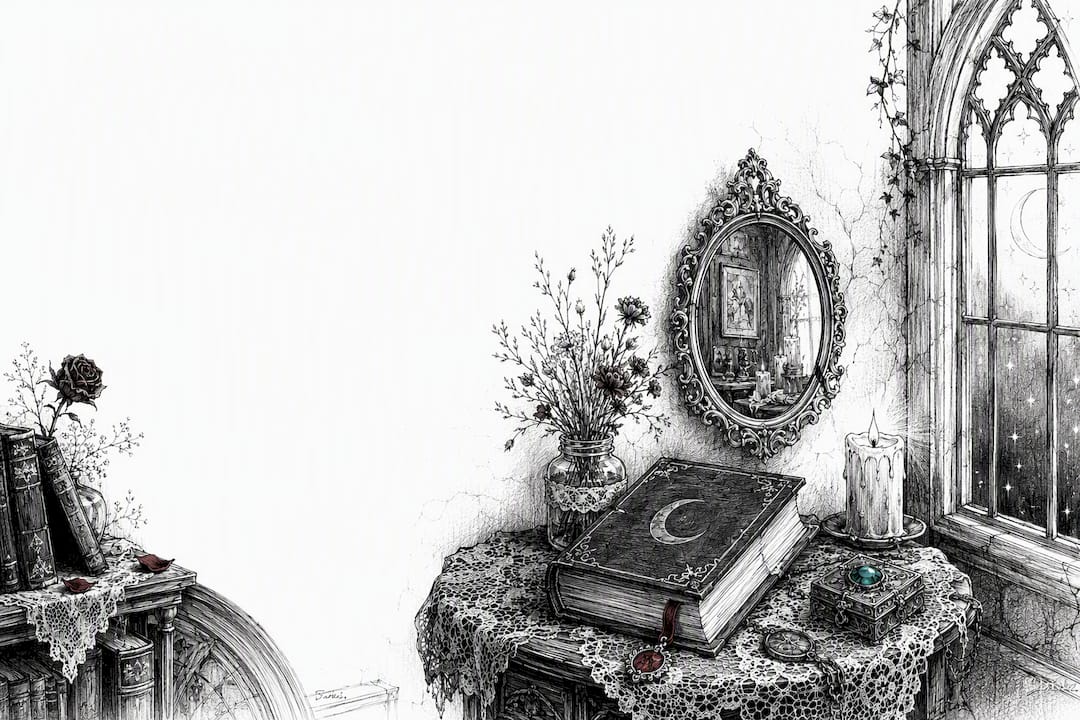
| Point | Details |
|---|---|
| Pick one vignette per wall | A single curated grouping reads calmer than several small displays. |
| Layer light sources | Mix LED candles, string lights, and one accent lamp rather than relying on open flame. |
| Rotate, don’t accumulate | Swap pieces seasonally so surfaces stay editable, not cluttered. |
What Design Principles Create the Cozy-Witch Look and Why Do They Work?
Five principles drive the cozy-witch, or whimsigoth, look: layered lighting, restrained symbolism, textured materials, curated apothecary displays, and jewel-toned accents against dark backdrops. Layered lighting works because a single overhead bulb flattens a room, while multiple soft sources create depth and shadow, the same effect that makes candlelit dinners feel more intimate than fluorescent ones. Restrained symbolism keeps a handful of meaningful objects, a moon chart, one altar cloth, rather than a shelf of mismatched trinkets that starts to look like a costume shop. Textured materials (velvet, aged glass, raw wood) add tactile depth that photographs and glossy surfaces can’t fake. Jewel tones like emerald and burgundy against black keep the space from feeling like a haunted attraction rather than a home.
Designers describe whimsigoth as injecting mystery into dark spaces with a touch of playfulness, pairing heavy jewel tones with lighter accents so the room stays inviting instead of oppressive, according to House Beautiful design writer Blair Moore.
- Layered lighting
- Restrained symbolism
- Textured materials
- Curated apothecary displays
- Jewel-toned accents
One more thing worth saying: personalize your symbols. Design your own sigils or moon charts rather than reproducing ritual objects tied to specific cultural or religious practices that aren’t yours.
What I Learned Trying These Projects Myself
Start with the twig wreath. It has the fastest payoff, costs the least, and teaches you the wiring technique you’ll reuse on the garland. One surprise: swapping store-bought dried flowers for lavender clipped from a grocery store bouquet cut the cost by more than half, and it looked better once it dried. Don’t be afraid to change the shape once you know the basic wrap.
Where Can I Buy Curated Witchy Decor and Supplies if I Want to Skip DIY?
If gluing twigs at 9 p.m. on a Tuesday isn’t your idea of fun, Goth Market gives you the finished version without the glue gun. The marketplace is built around curated, ready-made pieces from independent makers, so instead of hunting thrift stores for the right amber bottle, you’re browsing apothecary sets, ritual bowls, and candle clusters already styled the way a designer would arrange them.

This is a straightforward alternative to DIY, not a replacement for it. Some readers want the process; others want the finished vignette on their shelf by Friday. If you’re in the second group, browse Goth Market’s dark decor essentials for pieces that pair naturally with the apothecary and moon-phase projects above, and check what’s currently listed before deciding whether to build or buy.
Where Can I Find Photo or Video Inspiration and Reliable Supplies?
For step photos and layout ideas, check House Beautiful’s whimsigoth roundup, Styletaste Studio’s witchcore living rooms, and detailed twig-wreath tutorials with full step sequences. For finished supplies, browse Goth Market’s gothic decor checklist.
Sources
- Whimsigoth Is the Witchy Trend of the Moment—Here’s How Designers Bring It Home
- 15 Witchcore Living Room Ideas for a Moody Enchanting Space
- How To Make a Witchy Twig Wreathe with Dried Flowers
FAQ
Is it safe to burn candles near dried herbs and botanicals?
Keep any open flame at least a foot from dried botanicals, since dried plant material ignites easily. LED tea lights give you the same warm glow with zero fire risk, which is why they’re recommended for garlands and wreaths specifically.
Do I need real herbs, or can I use faux botanicals?
Faux botanicals work fine and are actually the safer choice if you have pets, allergies, or worry about mold from improperly dried plants. Real dried herbs add scent and authenticity but need proper airflow to dry fully before display.
How much does a full witchy decor makeover cost?
You can complete all four projects in this witchy home decor tutorial for a modest total cost, especially if you source containers secondhand. Spreading projects across a few weekends keeps the cost even lower.
Is it culturally insensitive to use witchy or occult symbols in home decor?
Generic symbols like moon phases, herbs, and candles are broadly used across whimsigoth and witchcore styling, but specific ritual objects tied to closed practices or particular cultures should not be copied for decoration. Designing your own sigils or charts sidesteps the issue entirely.
How do I keep dried botanicals from crumbling over time?
Keep them out of direct sunlight and high humidity, dust gently with a soft brush every couple of weeks, and expect a variable lifespan before they need replacing. Spraying with unscented hairspray can add a little extra hold.
Can renters do witchy decor without damaging walls?
Yes. Removable adhesive hooks, freestanding shelving, and command strips handle nearly everything in this witchy home decor tutorial, including wreaths, garlands, and moon-phase art, with no nail holes or paint required.
What’s the fastest project if I only have 30 minutes?
The dried-herb garland is the quickest, ready in about 30 minutes with no drying or curing time built into the process. It’s the project to start with if you want a finished piece before you have to leave the house.
Where can I buy witchy decor if I don’t want to make it myself?
Goth Market carries curated apothecary bottles, candle clusters, and ritual bowls from independent makers for readers who want the finished look without the DIY steps.