

What Is Horror-Themed Merchandise? A Clear Fan's Guide
Horror-themed merchandise is any physical or decorative product intentionally designed around horror stories, icons, aesthetics, or tropes, from apparel to home decor to collectible figures. A licensed Chucky vinyl statue and a distressed slasher-print tee are both textbook examples. The category has grown fast enough that Walmart now runs a Horror Fan Store across many locations nationwide, and outlets like Fangoria track new drops monthly.
Key Takeaways
Horror-themed merchandise spans apparel, collectibles, decor, and media, and its value to collectors rests on authenticity signals as much as the artwork itself.
| Point | Details |
|---|---|
| Definition | Horror-themed merchandise is any product designed around horror stories, icons, or aesthetics, from tees to statues. |
| Six core categories | Apparel, collectibles/figures, home decor, props/replicas, printed media, and novelty items cover most products. |
| Authenticity checklist | Look for licensing marks, edition numbers, artist credit, and quality materials like resin or vinyl. |
| Viral vs. core items | Novelty pieces like popcorn buckets spike fast and fade, while numbered figures hold long-term value. |
| Curated sourcing | Goth.Market lists vetted independent creators, reducing the guesswork of checking licensing and quality alone. |
Table of Contents
- What Counts as Horror-Themed Merchandise?
- What Are the Main Themes and Icons in Horror Merchandise?
- What Are the Most Sought-After Horror Items?
- Why Do Fans Collect and Display Horror Merchandise?
- How Do You Spot Authentic Horror Merch vs. Bootlegs?
- How Do Fans Wear and Display Horror Merch Day to Day?
- Why a Curated Marketplace Changes the Buying Experience
- Ready to Browse Vetted Horror Merch?
- Sources
- FAQ
What Counts as Horror-Themed Merchandise?
The category splits into a handful of recognizable buckets, and most collectors end up owning something from each one without planning it that way.
- Apparel: graphic tees, enamel pins, patches, hoodies with slasher or supernatural artwork
- Collectibles and figures: limited-edition statues, vinyl figures, action figures tied to specific films
- Home decor: wall art, candles, tapestries, kitchenware printed with horror motifs
- Props and replicas: screen-accurate masks, weapons, or costume pieces
- Printed media and retro formats: posters, VHS reissues, vinyl soundtracks
- Novelty items: themed popcorn buckets, mugs, keychains, stickers
Halloween Express alone stocks everything — from costume props to licensed statues to novelty kitchenware — which gives a sense of how wide this net has gotten. Enamel pins represent the apparel end well: cheap, wearable, easy to trade. A limited-edition statue sits at the opposite end, a display piece bought for its craftsmanship as much as its subject matter.
Pro Tip: Mix functional pieces (tees, mugs, pins) with one or two higher-end display items. Experienced collectors say this balance keeps a collection feeling lived-in rather than untouchable.
What Are the Main Themes and Icons in Horror Merchandise?
Five themes dominate the genre, and each one pulls different materials and visual choices into the design — you can explore common examples in the complete guide to horror themes.
- Slasher: masked killers, blood-splatter prints, weapon silhouettes
- Supernatural: ghosts, possession imagery, occult sigils
- Cosmic/Lovecraftian: tentacled creatures, cosmic color palettes, ancient symbols
- Body horror: stitches, distortion, unsettling anatomy
- Folklore and gothic: witches, crypts, Victorian mourning motifs
Icons like Michael Myers, Chucky, or Pennywise anchor a huge share of licensed products because their silhouettes are instantly recognizable even in simplified form. That recognizability shapes materials too: slasher merch leans on distressed leather and matte black finishes, while supernatural and gothic pieces favor resin detailing and aged brass. Fangoria’s own roundup of collectible releases shows this range in a single month’s drop list, from statues to apparel to retro reissues. You can dig deeper into how these horror motifs translate into product design if you want the full breakdown.
What Are the Most Sought-After Horror Items?
Demand concentrates around a predictable set of categories, roughly in this order:
- Limited-edition and numbered figures
- Screen-used or screen-accurate prop replicas
- Signed posters and artist proofs
- Premium resin statues
- Retro formats like VHS and vinyl soundtracks
Then there’s the wildcard: viral novelty items. Themed popcorn buckets have sold out within hours and spiked on resale sites, but they’re a different animal than a numbered statue.
- Core collectibles hold value because of scarcity and craftsmanship
- Viral novelty items spike fast, sell out, and often fade from demand within a season
Both matter to fans, but only one is built to last on a shelf for a decade.
Why Do Fans Collect and Display Horror Merchandise?
Collecting horror merch taps into something psychological, not just aesthetic preference. A 2020 Association for Psychological Science study found that engaging with horror content can give people a genuine sense of control over fear, and owning physical pieces of that content extends the same effect.
- Nostalgia: reconnecting with formative films or games
- Identity and belonging: signaling taste to like-minded fans
- Control over fear: owning the source of a scare, literally
- Self-expression: apparel and decor as a visible aesthetic statement
Creator Onastacia Roe describes modern horror merch as designed to be worn and lived with year-round, with pieces that translate film aesthetics into fashion and home goods rather than sitting boxed on a shelf.
Conventions, online forums, and shared display photos add a social layer. It’s rarely just about the object.
How Do You Spot Authentic Horror Merch vs. Bootlegs?
Authenticity comes down to a handful of checkable details, not guesswork.
- Licensing marks: official studio or IP license stamped or printed on packaging
- Edition numbers and certificates: numbered runs with a certificate of authenticity
- Artist credit or signature: named creators tied to limited releases
- Materials and build quality: resin, quality vinyl, stamped fabric tags rather than thin plastic or unfinished seams
- Authorized retailer status: confirmed partnerships with the studio or license holder
These signals hold across formats, including vintage media condition grading for VHS and vinyl, where clamshell integrity and print quality separate a real find from a cheap reprint.
Pro Tip: If a listing skips licensing details entirely, compare it against an artisan-made alternative instead of assuming it’s official. Independent creators are often upfront about not holding a license, which is more honest than a vague “inspired by” bootleg.
How Do Fans Wear and Display Horror Merch Day to Day?
Horror merch works best when it’s treated like any other decor or wardrobe category, not a once-a-year Halloween box.
- Dedicate a shelf, floating frame, or small altar-style corner for display pieces rather than scattering them
- Keep resin and vinyl figures out of direct sunlight, which fades paint over time
- Pair a graphic tee with neutral pieces so the artwork stays the focal point
- In shared households, keep delicate or intense pieces in a bedroom or office rather than a common hallway
- Rotate seasonal pieces (masks, props) while keeping core collectibles on permanent display
Retail trend analysis backs this shift: horror products have moved from seasonal endcaps into year-round assortments across fashion and home decor. If you want a longer breakdown of display setups, creative and safe display methods covers lighting, shelving, and rotation in more depth.
Why a Curated Marketplace Changes the Buying Experience
Buying horror merch site by site means re-verifying licensing and materials every single time, and that gets old fast. Curation solves the actual problem collectors run into: sorting real craftsmanship from mass-produced filler. A marketplace that vets independent artists before listing them removes a lot of that guesswork. Goth.Market exists for exactly this reason, built around vetted creators rather than an open free-for-all.
Ready to Browse Vetted Horror Merch?
Sourcing horror merch one listing at a time means checking licensing, materials, and seller reputation over and over. Goth.Market gathers independent creators and vetted sellers in one place, so the authenticity checks described above (edition numbers, artist credit, build quality) are part of how listings get curated, not something you verify alone.
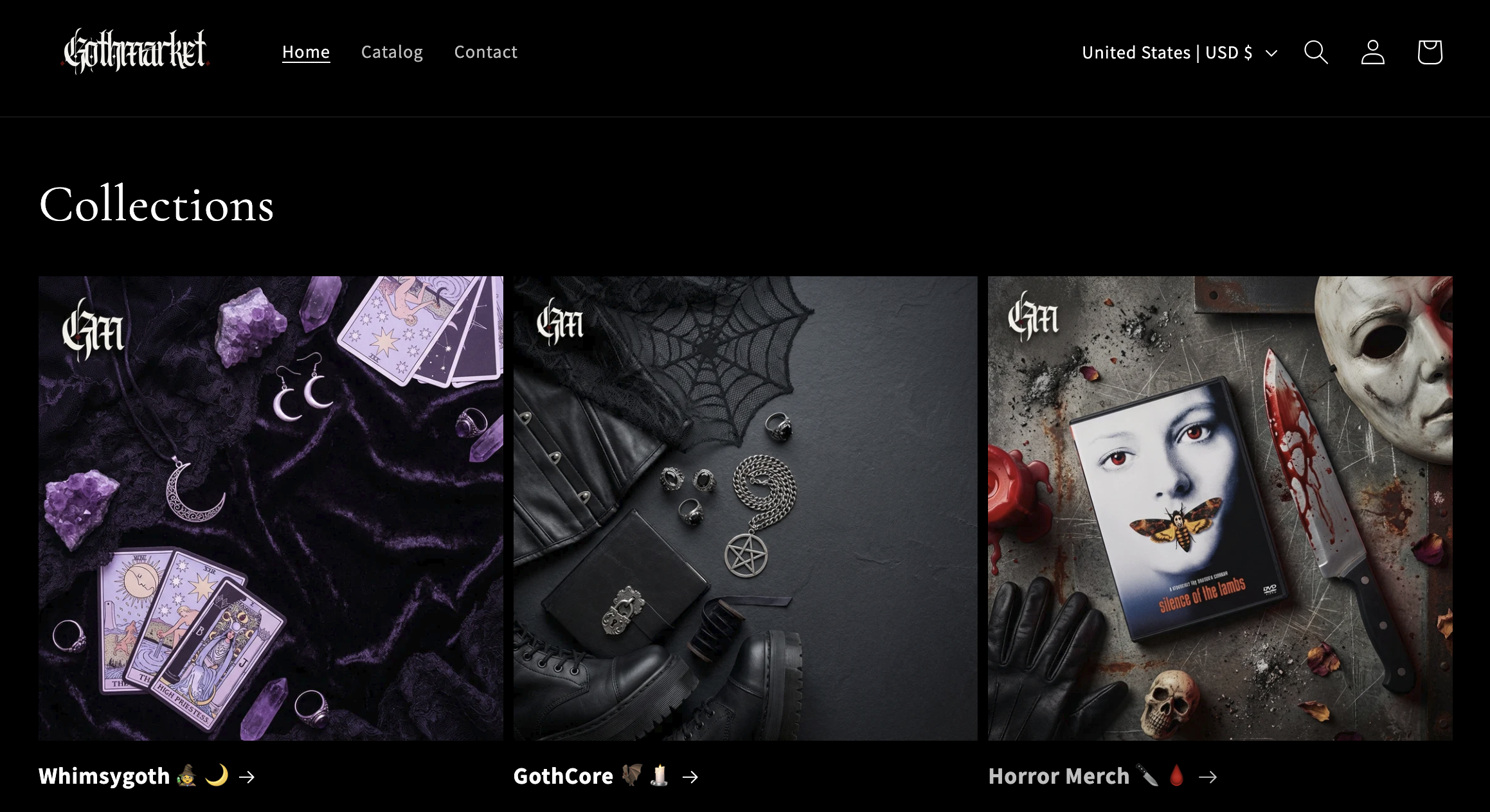
The Horror Merch collection spans apparel, decor, and collectibles from independent artisans working in the same slasher, supernatural, and gothic themes covered above. Browse the collection and check current listings for pieces that fit your space or your wardrobe.
Sources
- Behind the Very Scary Doors of Your Favorite Horror Merch - The Pop Insider
- Inside the weird world of horror collectibles: ‘It’s a lifestyle’ - NME
- 10 Terrifying Horror Collectibles You’ll Want To Take Home And Where To Find Them - Fangoria
- From Taboo To Mainstream: How Horror Merchandise Invaded Retail Spaces | Fireball News
- Horror movie popcorn buckets - Fangoria
FAQ
What is horror-themed merchandise?
Horror-themed merchandise is any physical or decorative product intentionally designed to reference horror films, stories, icons, or aesthetics, spanning apparel, collectible figures, home decor, props, and retro media formats like VHS and vinyl.
What are the main themes of horror merchandise?
The five recurring themes are slasher, supernatural, cosmic or Lovecraftian, body horror, and folklore/gothic. Each one shapes different design choices, from blood-splatter apparel prints to resin-detailed occult decor.
What is the most sought-after horror item?
Limited-edition and numbered figures typically top demand, followed by screen-accurate prop replicas and signed posters. Viral novelty items like themed popcorn buckets can spike harder short-term but rarely hold long-term collector value the way numbered statues do.
What are some well-known horror icons used in merchandise?
Michael Myers, Chucky, and Pennywise are among the most frequently licensed icons because their silhouettes and props are instantly recognizable even in stylized or minimalist product designs.
What elements make horror merchandise feel authentic?
Authentic pieces typically carry official licensing marks, numbered editions with certificates, credited artist signatures, and quality materials like resin, quality vinyl, or stamped fabric tags rather than thin, unfinished plastic.
How can you tell horror merch apart from a bootleg?
Check for licensing marks, authorized retailer information, and edition numbering first. A missing certificate of authenticity or vague “inspired by” language on the listing is a common bootleg signal.
Is horror merchandise only popular around Halloween?
No. Retail analysis shows horror products have moved from seasonal endcaps into year-round assortments across fashion and home decor, with fans wearing and displaying pieces throughout the year rather than just in October.
Where can I find vetted, independently made horror merch?
Marketplaces that vet independent creators before listing, like Goth.Market’s curated horror merch collection, reduce the guesswork of checking licensing and build quality one seller at a time.