

5 Skull Jewelry Types, Museum Examples, and How to Wear Them
In jewelry, skulls typically function as memento mori, symbols of transformation, markers of protection or ancestor connection, or signals of identity and rebellion. The exact meaning shifts with culture, material, and the wearer’s own intent. This guide traces those meanings through history, ritual practice, and modern style, covering their origins, cross-cultural uses, spiritual readings, materials, and how to choose a piece that says what you actually mean.
TL;DR:
- Skull jewelry originally served as moral reminders of mortality in European tradition and often featured black enamel, inscriptions, or miniature skulls.
- Many cultures, including Mesoamerican and Himalayan, associate skull imagery with renewal, protection, and spiritual transition rather than death or evil.
- The symbolic meaning of skull jewelry depends heavily on context, rituals, and materials, with European pieces emphasizing morality and Tibetan objects focusing on ego dissolution.
- In modern fashion, skulls function as style signals; mass-market use dilutes their original significance, but subcultures still associate them with rebellion or identity.
- Material and craftsmanship indicate whether a piece is intended for ritual, memorial, subcultural, or decorative purposes, influencing how it should be ethically and respectfully worn.
Table of Contents
- What are the historical origins of skull jewelry?
- How have different cultures used skull imagery in jewelry and ritual?
- What spiritual meanings are attached to skull jewelry?
- How is skull jewelry used in modern fashion and identity?
- What types and materials of skull jewelry exist and what do they convey?
- How should I choose and wear skull jewelry for the meaning I want?
- How do you care for skull jewelry made from different materials?
- What misconceptions surround skull symbolism in jewelry?
- What is Goth.Market’s perspective on skull jewelry?
- Where should you start browsing curated skull pieces?
- Sources
- FAQ
What are the historical origins of skull jewelry?
The phrase “memento mori,” Latin for “remember to die,” describes a European practice that turned skulls into wearable moral instruction. Between the 16th and 19th centuries, memento mori jewelry spread across social classes as both a private reminder of mortality and a public token of mourning. A ring with a tiny enameled skull was not decoration in the modern sense. It was a daily nudge to live well because death was certain and often close.
The forms varied but the intent stayed consistent:
- Mourning rings with black enamel bands and miniature gold or silver skulls set into the shank.
- Hinged skull rings that opened to reveal a coffin, a phrase, or a lock of hair inside.
- Rose-cut crystal skulls mounted over painted or woven hair, a technique documented in Folger Library research on memorial rings from the late 16th and 17th centuries.
- Posey rings inscribed with short verses pairing the skull image with a name or date.
Some pieces stayed private, worn under a sleeve as a personal discipline. Others were commissioned in batches and distributed at funerals so mourners could carry a physical link to someone specific, not just a generic warning about death.
How have different cultures used skull imagery in jewelry and ritual?
Skull symbolism did not originate in Europe, and its meaning elsewhere often has little to do with mourning. Mesoamerican, Himalayan, and South Asian traditions each built their own relationship to the skull, usually tied to cycles of renewal rather than moral warning.
- The Aztec skull-bead necklace in the Dumbarton Oaks collection uses 18 carved shell skull beads, a count scholars connect to Mesoamerican cyclical cosmology rather than to funerary use alone.
- Mexican Día de los Muertos traditions turn the calavera into a celebratory object. The Smithsonian’s sugar candy skull shows how decorated skulls became tools for joyful remembrance, not grief.
- Tibetan kapala, or skull cups, and the double-sided skull drum are ritual implements. Ancient Origins and Rubin Museum research describe these objects as tools for confronting impermanence within tantric practice, not trophies or props.
- Certain Hindu deities are depicted wearing garlands of skulls to represent the destruction of ego and ignorance rather than literal violence.
- Celtic traditions carried head and skull imagery tied to ancestral power and protection, often carved into stone or metal fittings rather than personal jewelry.
The pattern across these traditions is consistent even where the details differ: a skull rarely means only death. It more often marks a transition, a cycle, or a form of respect for what came before.
What spiritual meanings are attached to skull jewelry?
Spiritually, a skull tends to point toward one of two ideas: an ethical prompt to live intentionally, or a tool for transcending the ego. The European memento mori tradition leaned on the first idea, using the skull as a moral check against vanity and wasted time, a function V&A’s history of the practice documents clearly.
Tibetan ritual use leans on the second. Kapala and skull drums are handled deliberately within tantric contemplative practice as a way to work through fear of death rather than to glorify it. That distinction matters when reading any skull piece: the object is neutral, and the ritual or intention around it carries the meaning.
Part of the symbol’s staying power is psychological. Human brains are wired to recognize faces instantly, and a skull presents a face stripped of everything except structure. That combination, familiar shape and stark honesty, makes it one of the most immediately legible symbols a person can wear. What it communicates to others still depends heavily on context: a mourning ring, a ritual cup, and a fashion pendant share a shape but rarely share a message.

How is skull jewelry used in modern fashion and identity?
Designers moved skulls from ritual and mourning into mainstream fashion over the past several decades, and that shift changed what the symbol communicates. Museum commentary on Versace’s skull motifs traces how repeated use on runways and in fast fashion diluted the original shock value, turning a once-solemn image into a flexible style signal.
That dilution cuts both ways. Within goth, punk, and biker subcultures, a skull ring or pendant still signals defiance, a rejection of polished convention, or membership in a specific aesthetic community. In mainstream fashion, the same shape often reads as edgy accessorizing with no deeper claim attached.
Workplace context still matters. A small silver skull pendant tucked under a collar rarely draws comment, while a large articulated skull ring on every finger will read as a statement in most conservative offices. Matching the piece’s scale to the room is less about hiding your taste and more about choosing when you want the symbol to start a conversation.
What types and materials of skull jewelry exist and what do they convey?
Form and material carry as much meaning as the skull shape itself. A buyer who understands both can tell at a glance whether a piece is ritual, memorial, subcultural, or purely decorative.
- Half-skull rings and pendants blend a skull profile into another shape, often favored in subcultural and fashion contexts over ritual ones.
- Full skull pendants and statement rings carry the most direct symbolic weight and tend to dominate an outfit rather than accent it.
- Skull beads and malas, like the Aztec necklace pattern, connect to counted, cyclical traditions rather than single-moment mourning.
- Mourning brooches and hinged rings with black enamel and rose-cut crystal point to the European memorial tradition.
- Kapala and other ritual vessels made from bone or metal belong to specific spiritual practices and are not decorative reproductions.
Material tells its own story. Bone and shell point toward ritual or ethnographic origins. Enamel and gold point toward memorial jewelry. Polished silver and matte black finishes point toward contemporary subculture and fashion. Craftsmanship details, whether a jaw is hinged to move, how realistically teeth and eye sockets are rendered, and the overall scale, signal whether a maker intended the piece for solemn use or everyday styling.
How should I choose and wear skull jewelry for the meaning I want?
Start by naming your own intent before you shop. A piece meant to honor someone who died reads differently from one meant purely as a fashion statement, and that intent should guide material, scale, and where you buy it. Resources like how to choose occult jewelry that resonates walk through this kind of decision-making in more detail.
A few practical checks before you buy:
- Ask the maker what material was used and where it was sourced.
- Ask whether the piece is a functional ritual object or a decorative reproduction, since the two carry different responsibilities.
- Consider finger placement: middle and ring fingers suit statement pieces, while a pinky or thumb ring can carry a bold design more subtly.
- Pair a single strong skull piece with otherwise simple clothing so it reads as intentional rather than costume.
Pro Tip: If a listing offers actual human bone with no documentation or context, treat it as a red flag and walk away, since legitimate sellers are transparent about material and provenance.
Avoid pieces sold with borrowed ritual language but no cultural context. Buying a kapala replica for style is fine; buying one marketed as an authentic ceremonial object with no provenance is not.
How do you care for skull jewelry made from different materials?
Cleaning and storage depend entirely on what the piece is made from, since silver, enamel, and bone react very differently to moisture, heat, and chemicals.

Sterling silver skull rings and pendants tarnish with air exposure. A soft polishing cloth and occasional use of a silver-specific cleaner keep detail work, like carved eye sockets or jawlines, from clogging with tarnish. Avoid abrasive polishes on pieces with fine engraving, since they wear down detail over time.
Enamel, common on antique mourning pieces, is glass fused to metal and can chip or crack under sudden temperature changes or impact. Store enamel pieces separately, wrapped in soft cloth, and clean them only with a damp cloth rather than ultrasonic cleaners, which can loosen old enamel work.
Bone and shell, used in some ritual and ethnographic pieces, are porous and sensitive to humidity and oils. Keep them away from perfume, lotion, and prolonged water exposure, and store them in a dry space rather than a sealed bag, which can trap moisture. A light wipe with a dry cloth after wearing is usually enough.
Black oxidized or matte finishes on contemporary fashion pieces can wear thin with friction. Removing rings before heavy manual work or exercise preserves the finish far longer than any cleaning routine can restore once it’s gone.
What misconceptions surround skull symbolism in jewelry?
The most common misconception is that a skull automatically signals something dark, evil, or morbid. Historically, the opposite is often true. European memento mori pieces were moral tools meant to encourage a better life, and Mexican calavera traditions treat the skull as a warm, celebratory image tied to remembering loved ones with affection rather than fear.
A second misconception treats all skull jewelry as interchangeable, ignoring that a kapala, a mourning ring, and a punk-style skull ring come from entirely different traditions with different levels of ritual weight. Wearing a reproduction kapala as a fashion accessory is generally fine, but marketing one as an authentic ceremonial object without context misrepresents its origin and can trivialize the practice it comes from.
A third point of friction involves religious framing. Some people assume skull imagery is inherently linked to demonic or occult worship, but the symbol appears across mainstream religious and cultural traditions, including Hindu iconography and Catholic memorial art, long before it became associated with any single subculture. The controversy usually says more about the viewer’s assumptions than about the object itself.
What is Goth.Market’s perspective on skull jewelry?
Skull jewelry can be seen as a symbol worth understanding before it’s worn, not just a style category. Resources cover why occult jewelry resonates and how to evaluate a piece’s meaning and materials before buying. Marketplaces featuring independent creators often include listings with real provenance notes and maker context rather than generic product descriptions.
— Rey
Where should you start browsing curated skull pieces?
If you want something quiet and memorial in spirit, the Curated Finds collection favors understated, meaningful pieces over loud statement jewelry. If you’re after a bold skull ring or pendant that leans into subcultural identity, GothCore is built around exactly that kind of piece. For a softer, more playful take on the same imagery, Whimsigoth leans stylized rather than somber.
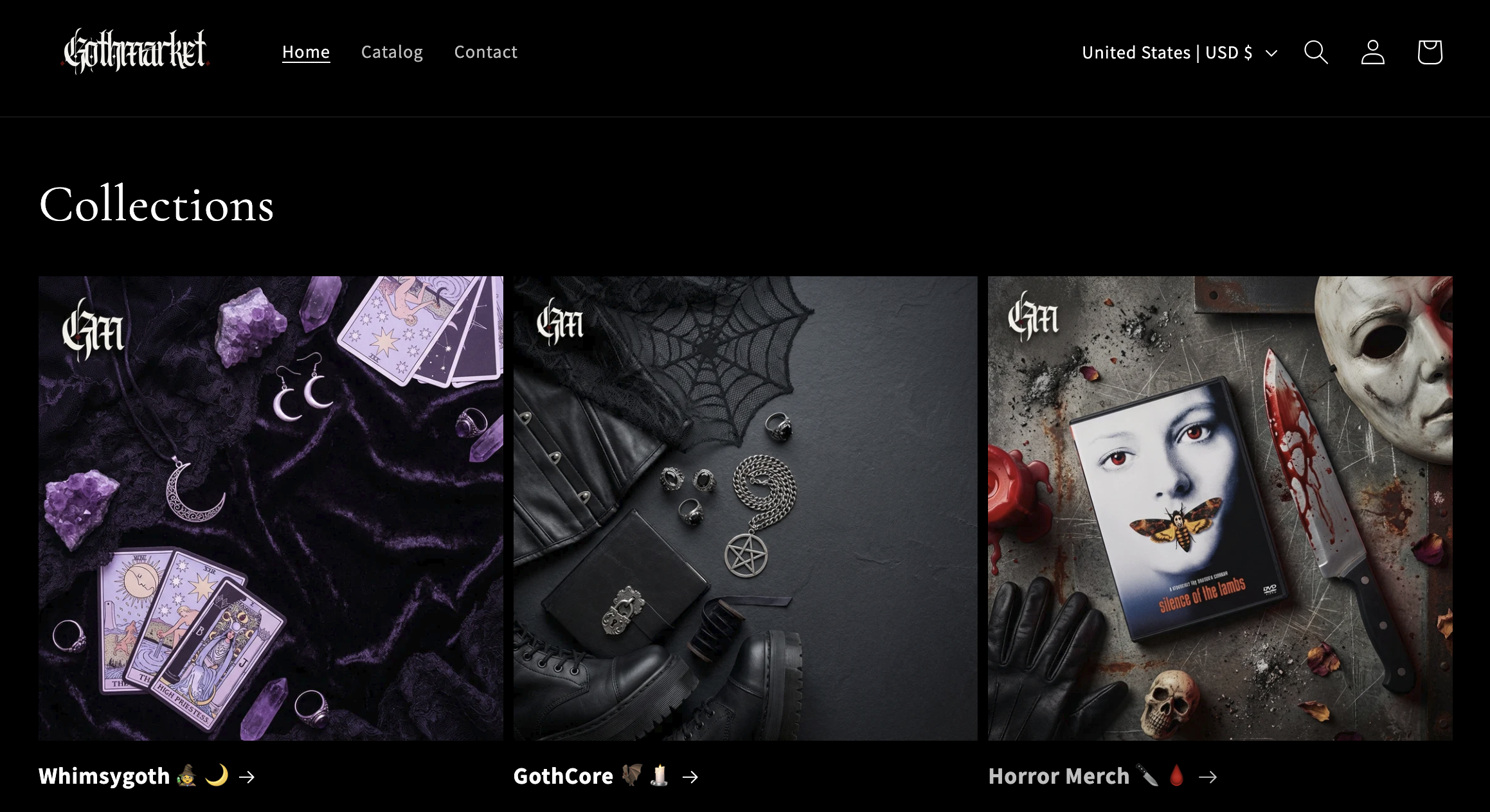
Before buying anywhere, check the material, ask about sourcing, and favor sellers who explain how a piece was made. Browse the current skull and occult jewelry selection to find a piece that matches the meaning you actually want to wear.
Sources
- Skull Necklace — Dumbarton Oaks Museum
- Dancing skeletons and human hair: remembrance, memento mori, and material culture | Folger
- Practices and rituals: Tibetan kapala (skull cups) | Ancient Origins
- Double-Sided Skull Drum I — Rubin Museum (Project Himalayan Art PDF)
FAQ
What does wearing skull jewelry mean?
Wearing skull jewelry usually signals one of a few things: a personal reminder of mortality, a nod to transformation or ritual practice, a connection to ancestors, or simply a style choice tied to gothic or punk identity. The specific meaning depends on the piece’s origin and the wearer’s own intent rather than any single fixed rule. A mourning ring, a Day of the Dead calavera, and a fashion skull pendant all use the same shape for different purposes, so context matters more than the symbol alone.
What do skulls symbolize spiritually?
Spiritually, skulls most often represent mortality, transformation, or the dissolving of ego. In Tibetan tantric practice, ritual objects like the kapala are used to help practitioners confront impermanence directly rather than avoid it. In European memento mori tradition, the skull served as a moral prompt to live well because death was certain. Neither tradition treats the skull as inherently negative. Both use it as a tool for reflection rather than a warning of doom.
Which finger should you wear a skull ring on?
There’s no fixed rule, but the middle and ring fingers tend to suit larger, more detailed skull rings because they draw attention naturally. A smaller or subtler skull design works well on the pinky or index finger, where it reads as an accent rather than a focal point. Thumb rings can also carry a bold design without dominating your whole hand. Choosing placement really comes down to how much attention you want the piece to command.
Are skulls considered demonic?
Skulls are not inherently demonic, though the assumption is common. Historically, skull imagery appears in mainstream religious and moral traditions, including European memento mori jewelry meant to encourage ethical living, Hindu iconography depicting deities with skull garlands, and Mexican Day of the Dead traditions celebrating deceased loved ones. The association with occult or demonic themes largely comes from modern pop culture and horror media rather than the symbol’s actual history across cultures.
What is the difference between a memento mori piece and a modern skull accessory?
A memento mori piece was historically made as a moral or memorial object, often featuring black enamel, inscriptions, or a lock of hair to maintain a connection to a specific deceased person, as Folger Library research documents. A modern skull accessory is usually made for style rather than remembrance, with no personal or ritual attachment behind it. Both use the same imagery, but only one was built around a specific act of mourning or reflection.
Is it disrespectful to wear a kapala-style piece as fashion?
Wearing a decorative kapala-inspired piece as fashion is generally not disrespectful on its own, since reproductions are widely sold and worn outside ritual contexts. Problems arise when a piece is marketed as an authentic ceremonial object without acknowledging its origin in Tibetan tantric practice, which misrepresents its meaning. Buying a clearly labeled stylized version, rather than one falsely presented as a functional ritual object, keeps the choice respectful.