

Velvet's Role in Goth Fashion: Style, Symbolism, and Depth
Velvet is the defining fabric of goth fashion, not just a texture but a statement. Its deep pile absorbs and reflects light in ways that lace and leather simply cannot, giving gothic outfits a dimensional, almost theatrical quality that holds up whether you’re at a show or walking down the street. Ted Polhemus captured it precisely, describing goth style as a “profusion of black velvets,” lace, fishnets, and leather tinged with scarlet or purple. Velvet earns that top billing for good reason.
Here’s what velvet actually does in a goth outfit:
- Provides rich texture and visual depth that anchors the entire look
- Contrasts effectively with harder materials like leather, fishnet, and distressed denim
- Enables dramatic layering, the kind that reads as intentional rather than thrown together
- Appears across key garment types: dresses, blazers, corsets, skirts, and chokers
- Carries cultural weight tied to Victorian mourning, aristocracy, and romantic defiance
How velvet shaped goth fashion aesthetics over time
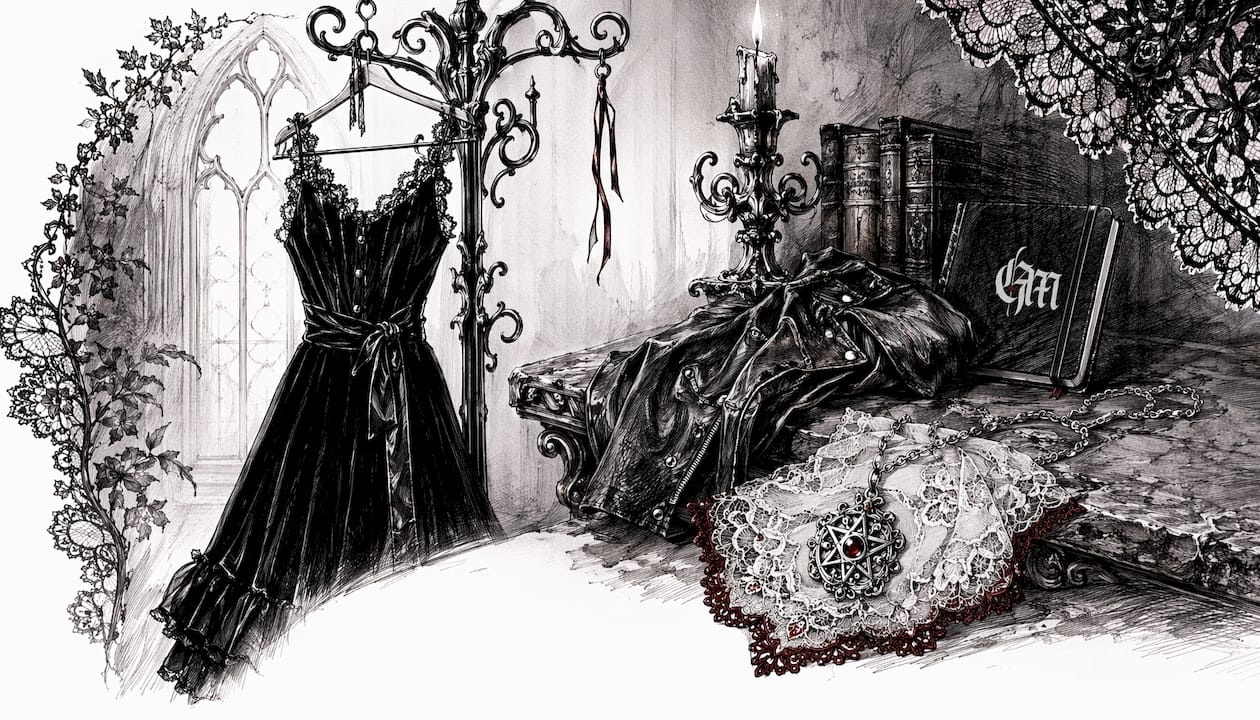
Velvet’s place in goth fashion isn’t accidental. It comes directly from Victorian and aristocratic dress, where the fabric appeared in mourning clothes, formal gowns, and the tailored jackets of the upper class. That history of luxury mixed with grief maps almost perfectly onto goth’s core emotional register: beauty, melancholy, and a certain theatrical seriousness about both.
When the goth subculture crystallized in the early 1980s, it pulled from those same Victorian references. Velvet’s historical use in mourning dress gave it an emotional resonance that synthetic fabrics could never replicate. The fabric wasn’t chosen for warmth or practicality. It was chosen because it meant something.
What makes velvet visually distinct is its pile structure. Unlike lace, which creates pattern through absence, or leather, which reflects light flatly, velvet’s soft pile absorbs and redirects light depending on the angle, giving black garments a sense of depth and movement. That quality keeps velvet relevant across decades of goth fashion evolution, from deathrock to Victorian goth to the softer, more wearable styles popular today.
How to style velvet in goth outfits without looking costumey
The biggest mistake with velvet in goth styling is going all-in without grounding the look. Velvet is opulent by nature, and stacking it with equally ornate pieces tips the whole outfit into costume territory fast.
Goth fashion experts, including Rey, consistently recommend anchoring velvet with harder, more casual textures. The logic is straightforward: velvet’s softness needs contrast to read as fashion rather than theater. A few approaches that work:
- Layer velvet with lace and leather. A velvet blazer over a lace top with leather trousers creates the texture contrast that defines authentic goth layering.
- Add heavy footwear. Platform boots or chunky combat boots pull velvet pieces back to earth. Goth.Market’s guide to goth boot styling covers exactly why footwear anchors the whole silhouette.
- Use velvet accessories for subtlety. A velvet choker or gloves let you introduce the fabric without committing to a full velvet look, which is useful for everyday wear.
- Try the 3-3-3 rule. Build outfits around three core textures, typically velvet, lace, and leather, to maintain cohesion and prevent any single material from overwhelming the look.
- Balance color. Deep burgundy or forest green velvet reads as goth without requiring all-black everything. Mixing one rich velvet piece with black basics keeps the palette dark but not monotonous.
Pro Tip: Pair a velvet midi dress, like the Annelise velvet midi dress from JV London, with a distressed leather jacket and platform boots. The contrast between the dress’s softness and the jacket’s edge is exactly what keeps the look wearable rather than theatrical.
Velvet works best as an anchor piece, not the entire outfit. Build around it, and the rest falls into place.
What velvet actually symbolizes in goth culture
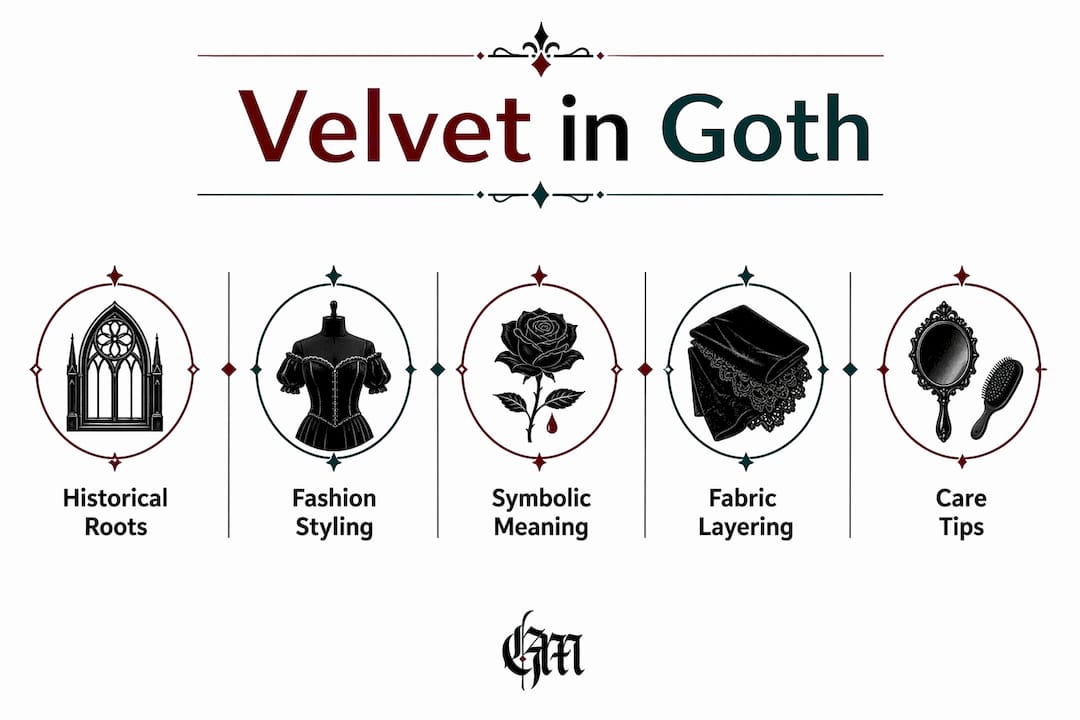
Velvet in goth fashion carries meaning that goes well beyond aesthetics. Within the subculture, it symbolizes romanticism, mystery, and quiet rebellion, a combination that sits at the heart of goth identity. Wearing velvet is a deliberate choice, a signal that you’re engaging with the subculture’s history and values rather than just wearing dark clothes.
The “armor” framing that goth fashion experts use for velvet is apt. A well-fitted velvet jacket or dress projects a silhouette that reads as composed, intentional, and slightly untouchable. That presence is part of what goth fashion is built to communicate: strength expressed through beauty rather than aggression.
Deep colors amplify this. Burgundy, plum, and midnight blue velvet all carry associations with aristocracy and mourning, the same Victorian gothic references that shaped the subculture’s visual language from the beginning. Black velvet, meanwhile, absorbs everything around it, creating a kind of visual gravity that other fabrics don’t produce.
Velvet also signals commitment. In a subculture that values authenticity over trend-chasing, choosing velvet over cheaper alternatives says something about how seriously you take the aesthetic.
Key goth fashion characteristics tied to velvet and fabric layering
Goth fashion aesthetics are built on texture contrast, and velvet sits at the center of that system. The fabric’s role becomes clearer when you look at how it interacts with everything else in a gothic wardrobe.
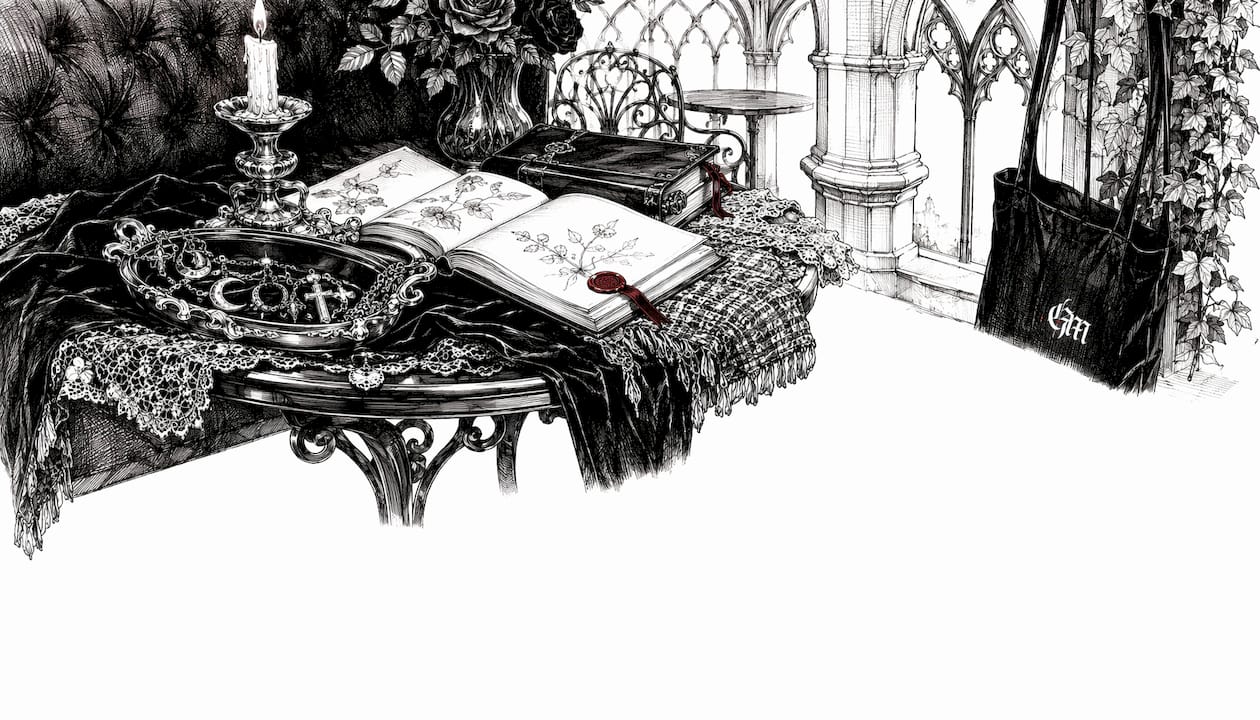
The core goth palette runs black first, with deep accent colors like burgundy, plum, and forest green. Velvet carries those colors better than almost any other fabric because its pile gives them dimension. A burgundy velvet skirt doesn’t just read as dark red. It reads as rich, with variation in tone depending on how the light hits it.
Key velvet garments in a goth wardrobe include:
- Dresses and skirts: Long, flowing velvet skirts and fitted dresses are staples, often paired with corsets or structured bodices. Victorian-inspired velvet corsets and long tailored jackets remain iconic across goth subgenres.
- Blazers and jackets: A velvet blazer functions as both a statement piece and a layering tool, working over everything from lace blouses to band tees.
- Tops and corsets: Velvet corset tops pair naturally with leather trousers or mesh skirts, creating the texture contrast that defines goth layering.
- Accessories: Velvet chokers, gloves, and hats add the fabric’s texture without requiring a full velvet outfit. A velvet choker is often the entry point for people new to incorporating the fabric.
Silver jewelry, particularly pieces with occult or religious motifs, complements velvet’s richness without competing with it. The combination of velvet and silver is one of the most consistent pairings across goth subgenres, from traditional goth to Victorian goth to soft goth.
How to care for velvet garments in your goth wardrobe
Velvet requires more attention than most goth fabrics, and getting it wrong can flatten the pile permanently. The good news is that the care routine is straightforward once you know the rules.
Brushing and pile maintenance come first. Always brush velvet in the direction of the pile using a soft-bristled garment brush or a velvet-specific brush. Brushing against the pile raises it temporarily but can cause uneven texture over time. After wearing, a quick brush removes surface debris and keeps the fabric looking fresh.
Washing is where most people go wrong. Most velvet garments, especially those with a silk or acetate base, should be dry-cleaned only. Velvet with a polyester or nylon backing can sometimes be hand-washed in cold water with a gentle detergent, but always check the care label first. Never wring velvet. Press out excess water gently and lay the garment flat to dry.
Storage matters more than most people realize. Hanging velvet long-term can distort the pile and stretch the fabric, particularly on heavier pieces like full-length dresses. Fold velvet loosely with acid-free tissue paper between layers, or store it flat in a breathable garment bag. Keep it away from direct sunlight, which fades deep colors faster than almost anything else.
Steaming is the safest way to remove wrinkles. Hold the steamer several inches from the fabric and work with the pile direction. Never iron velvet directly, even with a pressing cloth, as the heat and pressure crush the pile flat. If you need to press a seam, use a needle board or a thick towel underneath the garment.
For goth wardrobes where velvet pieces get regular wear, a monthly brushing routine and careful storage between uses will keep the fabric looking its best for years.
Key Takeaways
Velvet is goth fashion’s most symbolically loaded fabric, combining Victorian heritage, texture depth, and cultural identity into a single material choice.
| Point | Details |
|---|---|
| Velvet as anchor fabric | Use velvet as the outfit’s centerpiece, then build contrast with leather, lace, and heavy footwear. |
| Historical roots matter | Velvet’s Victorian mourning and aristocratic origins give it emotional resonance that synthetic alternatives lack. |
| Symbolism runs deep | Velvet signals romanticism, mystery, and commitment to goth identity, not just a fabric preference. |
| Layering prevents costume effect | Pairing velvet with distressed leather or fishnets keeps the look wearable rather than theatrical. |
| Care preserves the pile | Brush with the pile, steam rather than iron, and store flat to maintain velvet’s texture long-term. |