

Necklace Length Guide: Choose the Right Fit Every Time
Standard necklace lengths run from about 14" to 36"+, and the most common sizes — choker (14"–16"), princess (18"), matinee (20"–24"), opera (28"–36"), and rope (36"+) — each lands at a distinct point on the body. According to Blue Nile’s necklace length chart, these category names are used consistently across retailers and sizing guides, so they’re a reliable starting point for any purchase decision.
Here’s where each length typically falls:
- 14" — sits at the base of the neck, collar-style
- 16" — rests just below the collarbone; the most popular everyday length
- 18" — falls at the collarbone or just below; the default “princess” length
- 20"–24" — drops to mid-chest or just above the bust (matinee range)
- 28"–36" — reaches the bust or below (opera range)
- 36"+ — long rope-style; can be doubled or knotted
Knowing these positions gives you an instant shortcut: decide where you want the piece to land, then pick the length that gets you there.
Pro Tip: If you’re buying a pendant, don’t forget to account for the bail and drop. A 1"–2" pendant on an 18" chain can read visually like a 20" necklace once it’s hanging.
Key Takeaways
The single most useful rule in this guide: choose your chain length by where you want the pendant to land, then subtract the bail and drop to get the actual chain measurement you need.
| Point | Details |
|---|---|
| Standard lengths run 14"–36"+ | Choker (14"–16"), princess (18"), matinee (20"–24"), opera (28"–36"), rope (36"+) cover most needs. |
| Use 2-inch spacing for layering | Keep at least 2" between each layer to prevent tangling and give each piece its own visual lane. |
| Measure with string first | Drape string at your desired fall point, mark it, then measure flat for the most accurate chain length. |
| Subtract bail and drop | Desired pendant position minus bail length and pendant drop equals the chain length to order. |
| Goth carries curated lengths | Goth’s marketplace offers gothic and alternative necklaces in standard lengths, many with extenders included. |
Table of Contents
- What does a standard necklace lengths chart actually show you?
- How do you measure necklace length at home?
- Which necklace lengths work best with common necklines?
- How does chain type affect the way your necklace hangs?
- How do you layer necklaces so they look balanced and don’t tangle?
- What necklace lengths work best for men?
- How do pendant size, bail length, and drop affect your chain length?
- How do seasonal trends shift popular necklace lengths?
- How does body shape and neck size change which length you should choose?
- What most people get wrong about necklace length
- Gothic necklaces in the right lengths, curated for you
- Sources
- FAQ
What does a standard necklace lengths chart actually show you?
| Length | Common Name | Body Fall | Occasion Notes |
|---|---|---|---|
| 14" | Collar / Choker | Base of neck | Statement, editorial, gothic |
| 16" | Choker / Short | Just below collarbone | Everyday, layering base |
| 18" | Princess | At or below collarbone | Versatile, most popular |
| 20" | Matinee (short) | Upper chest | Business casual, casual |
| 22"–24" | Matinee | Mid-chest / above bust | Dressy-casual, layering mid-layer |
| 28"–30" | Opera (short) | At bust | Formal, statement |
| 28"–36" | Opera | Below bust | Formal, dramatic |
| 36"+ | Rope | Well below bust | Layering, knotting, bohemian |
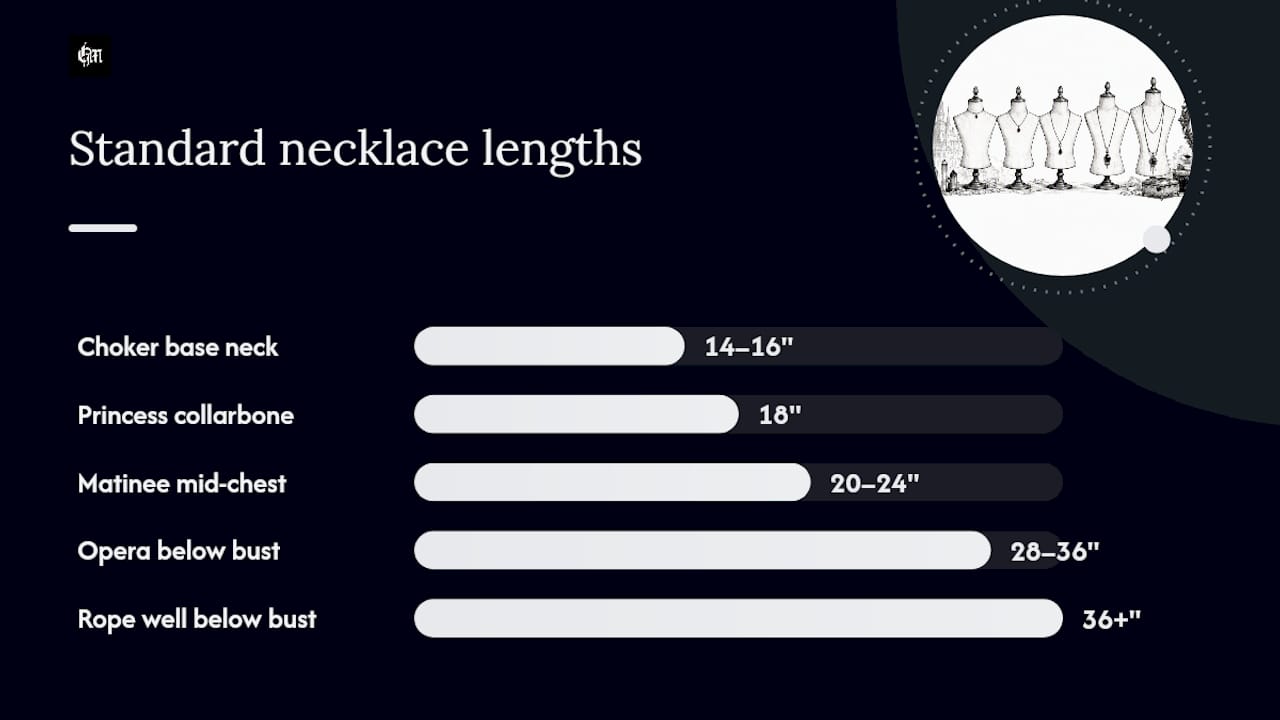
A few things the chart doesn’t tell you automatically: body proportions shift these positions. A longer torso pushes every length lower; a shorter torso brings it higher. Extender chains (typically 2"–3" add-ons) let you adjust without buying a new piece, and adjustable chains with sliding clasps cover a range of 2"–4" in a single purchase.
How do you measure necklace length at home?
Three methods work well, and you probably have everything you need already.
Method 1: Soft tape measure Wrap a soft measuring tape around your neck where you want the necklace to sit. Add 2"–4" to that number for a relaxed drape, or 1" for a snug fit. This gives you your target chain length before you shop.
Method 2: String on the neck Cut a piece of string and drape it around your neck at the desired fall point. Mark where it meets, then lay it flat against a ruler. This is the most accurate method for testing pendant placement because you can see exactly where the piece will land before buying.
Method 3: Measure an existing necklace Lay a necklace you already love flat on a table and measure end to end, including the clasp. James Allen’s chain length guide notes that this end-to-end measurement is the full chain length — add 1"–2" if you want a slightly looser feel than that piece gives you.
Pro Tip: Chain weight changes perceived length. A heavy curb chain pulls slightly lower than a delicate box chain at the same stated measurement. If you’re switching chain types, test the new one before assuming the length will land in the same spot.
Which necklace lengths work best with common necklines?
Matching length to neckline is the fastest way to avoid a piece that disappears into a collar or competes with a décolletage. Here’s a practical map:
- Crew neck: Go longer — 20"+ so the necklace clears the fabric. A 20"–24" matinee pendant sits cleanly below the neckline.
- Boat neck: 16"–18" works well; the wide neckline frames a shorter piece naturally.
- Scoop neck: 18"–22" fills the open space without crowding it.
- V-neck: Follow the V. A 20"–24" pendant that echoes the neckline’s angle looks intentional. Avoid 16" here — it fights the V.
- Sweetheart / strapless: 16"–18" sits above the neckline for a clean, polished look. Longer lengths can get lost against bare skin.
- Off-shoulder: 16"–18" at the collarbone draws the eye upward and balances the exposed shoulder line.
- Collared button-down: Wear a 20"+ piece outside the collar, or tuck a 16"–18" piece inside for a layered-under-collar effect.
- High neck / turtleneck: Skip necklaces entirely, or go very long (30"+) so the piece falls below the fabric.
Occasion quick notes:
- Work: 18"–20" princess or short matinee; clean and professional
- Casual: 16"–22"; anything goes, mix textures
- Formal: 16"–18" for a classic look, or 28"–36" opera for drama
- Wedding (guest): 16"–18" with a delicate pendant keeps it elegant
Thick knit sweaters are the exception to most of these rules. The fabric adds bulk and pushes a necklace outward, making a 16" piece feel like a 14". Go one size longer than you normally would.
How does chain type affect the way your necklace hangs?
Chain construction changes drape, weight, and durability — all of which affect which length you should buy. Baker Gold Chains’ overview of chain construction explains how different link styles affect both movement and longevity:
- Box chain: Smooth, square links lie flat. Rigid drape, minimal swing. Good for delicate pendants; resists kinking.
- Snake chain: Tightly coiled, fluid movement. Lies flat against skin. Elegant for lightweight pendants; can kink if bent sharply.
- Curb chain: Interlocking flat links. Heavier, holds shape. Suits larger pendants and men’s styles; durable.
- Figaro chain: Alternating short and long links. Slightly more visual interest than curb; similar weight and drape.
- Rope chain: Twisted strands. Heaviest common chain type. Holds larger pendants well; can be worn alone as a statement piece.
- Paperclip chain: Elongated rectangular links. Trendy, flat drape. Works best with minimal or no pendant.
- Beaded chain: Individual beads on wire or thread. Lightweight, flexible. Best for shorter lengths and lighter pendants.
Heavier chains pull a necklace lower than the stated length suggests. A 20" rope chain will sit noticeably lower than a 20" box chain on the same person. When you’re buying a heavier chain style, consider sizing down 1"–2" to land at the same visual position.
How do you layer necklaces so they look balanced and don’t tangle?
The core rule is simple: keep at least 2 inches between each layer. Catbird’s layering guide recommends this spacing so each piece has its own visual lane and the chains don’t compete or knot together.
TheCaratCut’s layering guide suggests a practical starter set of 16", 18", and 22" — adjust each by about 2" for smaller or larger necks. Three lengths with clear separation is the sweet spot.
Three example stacking combos:
- Everyday: 16" simple chain + 18" pendant necklace. Glamour’s stylist guide notes that two necklaces at these lengths is often enough for daily wear — clean, intentional, easy to manage.
- Dressy: 14"–16" choker + 20" pendant + 24" delicate chain. Three distinct layers, each with a different texture.
- Statement / gothic: 16" collar piece + 22" statement pendant + 30" long chain with charm. Vary chain weight so the longest piece anchors the look.
Anti-tangle tips:
- Fasten all clasps before putting on the stack, then slide the whole set over your head together.
- Use a necklace spacer or layering clasp to keep chains in separate lanes physically.
- Match metal colors within a stack to reduce visual clutter — same-metal stacks read cleaner, especially for gothic silver looks.
- Store layered sets already clasped together on a hook so they’re ready to wear without sorting.
Pro Tip: Start the shortest piece first when layering, then add longer ones. It’s easier to judge spacing when the anchor piece is already sitting correctly.
What necklace lengths work best for men?
Men’s necklace lengths follow the same body-fall logic, just shifted for a typically broader chest and longer torso. The most common range is 20"–26", with 22"–24" being the everyday standard for most men.
- 18"–20": Sits at or just below the collarbone. Works well with open-collar shirts; reads as intentional without being heavy.
- 22"–24": Falls to mid-chest. The most versatile length for men — visible with a V-neck or open button-down, tucked under a crew neck.
- 24"–26": Drops to the upper chest or sternum. Suits larger pendants and heavier chains; works well with casual or streetwear looks.
- 28"–30": Long, statement length. Better suited to layering or wearing alone as a focal piece.
For a single pendant, 22"–24" places it at a natural focal point on the chest. With a collared shirt, wear the chain outside the collar for visibility or tuck it in for a subtle look. For layering, the same 2-inch spacing rule applies — a 20" and 24" pairing is a clean two-layer stack for men. Less is more: two pieces with different chain weights read sharper than three competing chains.
How do pendant size, bail length, and drop affect your chain length?
A pendant changes the math. The chain length you buy is not where the pendant will sit — the bail and the pendant’s own drop add to that number.
Simple calculation: Desired pendant position (measured from neck) minus bail length and pendant drop = chain length needed.
Example: You want a pendant to sit at 22" from your neck. The bail adds 0.5" and the pendant itself is 1.5" long. You need a chain of roughly 20" so the bottom of the pendant lands at 22".
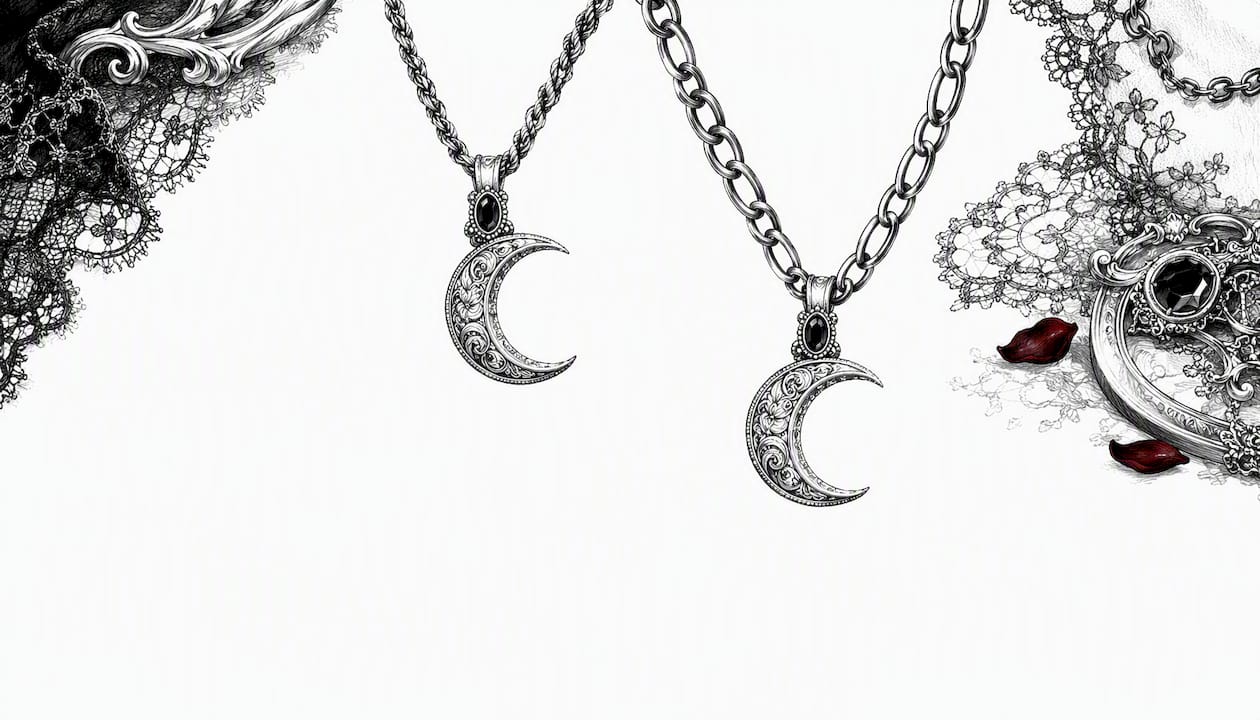
Heavier pendants pull a chain forward and slightly lower than expected. Tiffany & Co.'s layering guide recommends choosing a chain weight that can support the pendant without the chain bunching or shifting forward. A celestial moon pendant choker is a good example of a piece where bail scale matters — a larger crescent pendant on a 16" chain sits differently than a small charm on the same length.
Extenders are the practical fix for seasonal changes. A 2"–3" extender chain lets one necklace work with both a summer scoop neck and a winter crewneck without buying two separate pieces. For heavy or large pendants, consider an adjustable chain with a sliding clasp rather than a fixed-length chain.
How do seasonal trends shift popular necklace lengths?
Necklace length preferences do shift with seasons and broader fashion cycles, though the core sizing standards stay fixed.
Summer and spring styling tends to favor shorter lengths — 14"–18" chokers and princess-length pieces that sit above necklines on lighter fabrics and bare skin. Open necklines in warm weather make shorter pieces more visible and intentional.
Fall and winter push longer lengths into prominence. Layered looks over turtlenecks and thick knits call for 24"–36" opera-length pieces that fall below the fabric, or dramatic long chains worn as a single statement over a dark sweater. Gothic and alternative aesthetics lean into this seasonal shift naturally, with heavy chain styles and pendant-heavy opera lengths dominating darker-season wardrobes.
Trend cycles in 2025–2026 have brought the paperclip chain and chunky curb chain back strongly, both typically worn at 18"–24". Layered choker sets — a 14" collar paired with a 16"–18" chain — have remained a consistent trend in alternative and gothic fashion, partly because they photograph well and work across multiple necklines.
How does body shape and neck size change which length you should choose?
Body proportions shift where every length lands, which means the chart is a starting point, not a final answer.
Neck size: A larger neck circumference means a 16" chain sits higher than it would on a smaller neck — sometimes uncomfortably so. Add 1"–2" to standard lengths if your neck measures above average. Conversely, a smaller neck can wear a 14" choker comfortably where others cannot. TheCaratCut recommends adjusting each layer in a stack by about 2" to account for neck size differences.
Torso length: A longer torso pushes every length lower. An 18" princess-length chain on a tall person may land at mid-chest rather than the collarbone. Shorter torsos bring lengths higher — a 20" matinee can sit at the collarbone rather than the chest.
Shoulder width: Broader shoulders make shorter pieces look proportionally smaller. A 14" choker on a broad-shouldered person reads as a thin accent; on a narrower frame, the same piece is a statement.
Practical rule: If you’re between two lengths, go longer. You can always add a shorter piece to a layered stack, but a chain that sits too high is uncomfortable and harder to fix without an extender.
What most people get wrong about necklace length
The conventional advice is to match your necklace length to your neckline, and that’s correct as far as it goes. What most guides skip is the interaction between chain weight, pendant drop, and body proportion — three variables that can shift a necklace’s visual position by 2"–3" even when the stated length is identical.
The other thing worth saying: for gothic and alternative jewelry specifically, the “rules” are starting points, not constraints. A 14" collar chain layered with a 30" long pendant chain breaks every standard layering formula and looks exactly right on the right outfit. The role of silver in goth culture is partly about this deliberate subversion of proportion norms — heavy chains at unexpected lengths, pendants that sit lower than convention suggests.
Own a base length in at least two weights. A 16" delicate chain and a 16" heavier chain give you two completely different looks at the same measurement, and they layer differently with everything below them. That single investment doubles your options without adding complexity.
Gothic necklaces in the right lengths, curated for you
If you’ve worked out your ideal length and you’re ready to shop, Goth’s curated jewelry collection covers the full range — from 14" collar chains to long opera-length pendants, with extenders included on many pieces.
Independent creators on Goth’s jewelry marketplace specialize in exactly the kind of pendant-heavy, chain-forward pieces this guide covers: heavy curb chains, layered choker sets, and statement pendants with bail lengths already factored into the listing. A ready-made layered choker set takes the guesswork out of building a stack from scratch. Browse the full collection at Goth and filter by length to find pieces that fit your measurements exactly.
Sources
- Find the Perfect Necklace Length: Chart, Sizing Guide & Quiz
- The Art of Layering Your Necklace
- How To Layer Necklaces (2026 Guide) | TheCaratCut
- How to Layer Necklaces Like a Stylist
- Layering Necklaces & Necklace Stacks | Tiffany & Co. US
FAQ
What is the most popular necklace length for women?
18" (princess length) is the most widely purchased length for women. It sits at or just below the collarbone on most frames, works with nearly every neckline, and is the default length for most pendant necklaces sold by retailers.
How do I know what length necklace to get?
Decide where you want the piece to land on your body, then use the string method: drape a piece of string at that point, mark it, and measure flat. Cross-reference with the standard chart — 16" for collarbone, 18" for just below, 20"–24" for mid-chest. If buying a pendant, subtract the bail and drop from your target position to get the correct chain length.
What is a good necklace length for layering?
A starter set of 16", 18", and 22" gives you three distinct layers with clear 2-inch spacing between each. TheCaratCut recommends adjusting each length by about 2" for smaller or larger necks. For a simpler everyday stack, Glamour’s guide suggests 16" and 18" as a clean two-piece starting point.
What necklace length is best for men?
22"–24" is the most common everyday length for men, falling at mid-chest and sitting visibly below a crew neck or open collar. 20" works for a higher, collarbone-adjacent placement. For statement or layered looks, 24"–26" suits larger pendants and heavier chains.
How do I prevent layered necklaces from tangling?
Keep at least 2 inches of spacing between each layer, use a necklace spacer or layering clasp to hold chains in separate lanes, and fasten all clasps before putting the stack on. Storing layered sets already clasped together on a hook prevents tangling between wears.
Does pendant size affect which chain length I should buy?
Yes. A longer or heavier pendant adds visual and physical drop below the chain’s stated length. Measure your desired pendant position from the neck, then subtract the bail length and pendant drop to find the correct chain length. Heavier pendants also pull a chain slightly forward and lower, so a thicker or longer chain may be needed to maintain the intended placement.
What necklace length works with a turtleneck?
Skip shorter lengths entirely with a turtleneck. A 30"–36" opera-length chain falls below the fabric and reads as intentional. Alternatively, wear nothing at all and let the neckline be the statement — a 16"–24" piece will be hidden or awkwardly bunched against the fabric.
How do I choose a necklace length for a shorter neck?
Add 1"–2" to standard lengths. A shorter neck means a 16" chain sits higher and can feel tight; an 18" chain gives the same visual effect a 16" would on an average neck. Avoid very short chokers (14") unless you’re certain of the fit, and always test with the string method before buying.