

Lolita Gothic Style: History, Aesthetics, and Meaning
TL;DR:
- Gothic Lolita fashion combines Victorian-inspired silhouette with dark Gothic motifs and Japanese subcultural aesthetics. It emphasizes structured, modest clothing with jewel-tone palettes, symbolic accessories, and deliberate contrast. The style functions as serious self-expression and community identity rather than a costume.
Gothic Lolita fashion is defined as a Japanese street fashion substyle that fuses the modest, doll-like silhouette of Lolita fashion with dark Gothic motifs drawn from Victorian mourning attire and the visual kei music scene. If you’ve ever wondered what is lolita gothic style, the short answer is this: it’s a serious art form, not a costume. Originating in 1990s Japan, the style pairs knee-length bell skirts and structured bodices with lace, crosses, and deep jewel tones. Musician and designer Mana, founder of the brand Moi-même-Moitié, gave the substyle its formal vocabulary, including the term “Elegant Gothic Lolita.”
What are the defining visual elements of Gothic Lolita fashion?
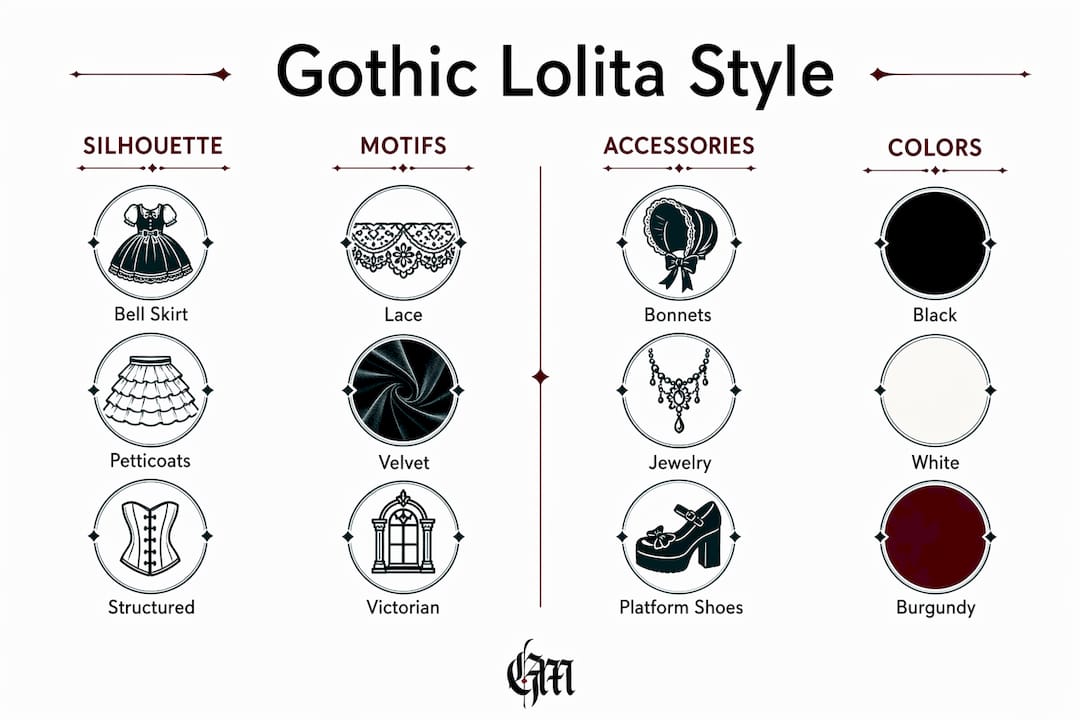
Gothic Lolita fashion is built on a specific silhouette: a knee-length, bell-shaped skirt supported by petticoats, paired with a fitted bodice and high collar or long sleeves. Modesty is structural, not incidental. Every garment choice reinforces a contained, deliberate shape that reads as elegant rather than revealing.
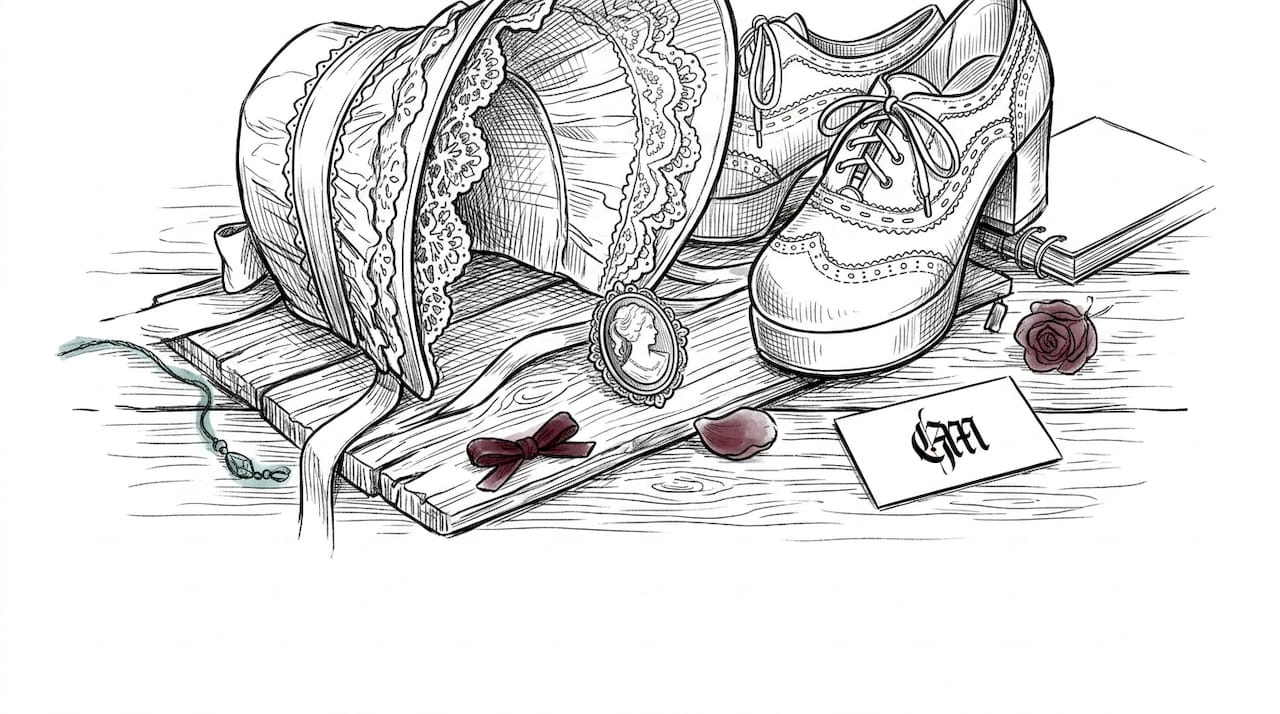
The color palette separates Gothic Lolita from every other Lolita substyle. Where Sweet Lolita reaches for pastels and printed fabrics, Gothic Lolita commits to black, deep red, navy, purple, and jewel tones. Solid colors and textures replace the printed florals common elsewhere in Lolita fashion. Velvet, lace overlays, and structured cotton are the preferred fabrics.
Decorative motifs carry the Gothic identity. The most common include:
- Crosses in silver or black hardware, worn as pendants, brooches, or embroidered details
- Skulls and coffins used sparingly as accent prints or jewelry
- Roses rendered in dark red or black, often in fabric form on headpieces
- Lace ruffles layered at hems, cuffs, and necklines for texture contrast
- Corset details on bodices, either functional or decorative, to reinforce the structured silhouette
Pro Tip: Avoid the all-black trap. Authentic Gothic Lolita looks use tonal contrast. A black dress with a white lace collar, deep burgundy accessories, or a navy overskirt creates far more visual depth than head-to-toe black.
Accessories complete the look. Headdresses, bonnets, and elaborate hair clips anchor the Victorian reference. Platform Mary Janes or heeled boots ground the silhouette. Wrist cuffs and chokers with cross pendants tie the Gothic elements together without overwhelming the overall composition.
How did Victorian and visual kei culture shape this style?
Gothic Lolita is a reinterpretation, not a reproduction, of European historical dress. That distinction matters. Wearers are not cosplaying Victorian England. They are filtering Rococo volume, Victorian mourning aesthetics, and Gothic architecture through a Japanese subcultural lens.
The result is something globally unique. Victorian mourning dress contributed the dark palette, the structured silhouette, and the symbolic use of crosses and black lace. Rococo fashion contributed the exaggerated skirt volume and ornamental layering. Japanese visual kei, a music scene defined by theatrical, gender-fluid costuming, contributed the theatrical intensity and the willingness to treat everyday dress as performance.
| Influence | Contribution to Gothic Lolita |
|---|---|
| Victorian mourning dress | Dark palette, structured silhouette, symbolic accessories |
| Rococo fashion | Bell-shaped skirts, layered ornamentation, volume |
| Japanese visual kei | Theatrical staging of dress, gender fluidity, subcultural identity |
| Japanese street fashion | Wearability, community context, substyle vocabulary |
Mana’s role in this history is specific and documented. As a visual kei musician performing with Malice Mizer in the 1990s, Mana popularized Gothic Lolita through both stage presence and the founding of Moi-même-Moitié. The brand introduced “Moitié blue,” a signature deep blue tone that became a marker of high-end Gothic Lolita. That single color choice illustrates how the style operates: through deliberate, codified aesthetic decisions rather than improvisation.
Why does Gothic Lolita function as identity and self-expression?
Gothic Lolita is a form of identity construction that negotiates femininity, autonomy, and visibility within alternative fashion subcultures. Wearers build visual personas that communicate a specific worldview. The clothes are not decorative. They are declarative.
“Gothic Lolita is often misunderstood as costume or Halloween style, but fans consider it a serious form of self-expression and escapism tied to storytelling and mood. The style emphasizes a ‘worldview,’ an immersive gothic fairy tale experience rather than a strict fashion code.”
That distinction between costume and worldview is the most misunderstood aspect of the style. A Halloween costume borrows an image for one night. Gothic Lolita builds a sustained visual identity across every wearing occasion, from tea parties to gallery openings to street photography sessions.
The community dimension reinforces this. Gothic Lolita practitioners gather at meetups, coordinate themed photoshoots, and maintain detailed style guides through forums and social media. This social infrastructure makes the style a subculture, not just an aesthetic. Participants share knowledge about brands, construction quality, and styling rules with the same seriousness that any craft community brings to its discipline.
The style also pushes back against mainstream fashion in a specific way. It does not reject femininity. It reclaims it on its own terms, pairing traditionally feminine silhouettes with dark, sometimes morbid symbolism. That combination creates a visual tension that reads as powerful rather than passive.
How can you authentically wear Gothic Lolita today?
Wearing Gothic Lolita well requires understanding its internal logic before buying a single piece. The style has rules, and those rules exist for aesthetic reasons, not gatekeeping. Following them produces a look that reads as intentional. Ignoring them produces a look that reads as costume.
Start with the silhouette. A proper petticoat is non-negotiable. Without it, the bell shape collapses and the entire visual structure falls apart. Choose a petticoat with enough volume to hold the skirt shape but not so much that it becomes unwieldy. The skirt hem should sit at or just below the knee.
Build your color palette deliberately:
- Anchor in black as the dominant tone, then introduce one or two accent colors
- Use deep jewel tones like burgundy, navy, or forest green for accessories and layering pieces
- Consider “Moitié blue” as a reference point for how a single signature color elevates a look beyond generic darkness
- Avoid mixing too many motifs in one outfit. One cross pendant, one skull detail, and one rose element is a composition. All three at maximum volume is visual noise.
Fabric quality signals authenticity immediately. Gothic fashion’s core textures include velvet, lace, and structured cotton. Cheap polyester collapses the silhouette and dulls the color. Invest in one quality piece per season rather than assembling a full look from budget sources.
Makeup follows the same logic. Pale foundation, dark eyeliner, and black or deep red lipstick are the standard references. The goal is a porcelain, slightly otherworldly finish that reinforces the Victorian reference without tipping into theatrical excess.
Pro Tip: Build your first Gothic Lolita look around a single statement skirt or dress, then add accessories that share one motif. Thematic consistency is what separates a styled look from a collection of dark pieces thrown together.
For Gothic accessories that align with these principles, the top gothic accessories guide at Goth covers current standout pieces worth considering. For broader styling context, the gothic fashion styling guide at Goth offers practical frameworks for building dark aesthetic looks with intention.
Key Takeaways
Gothic Lolita fashion is a codified Japanese substyle built on Victorian and Rococo silhouettes, dark motifs, and a deliberate worldview that functions as identity, not costume.
| Point | Details |
|---|---|
| Defined silhouette | Knee-length bell skirts with petticoats form the non-negotiable structural base. |
| Dark but not all-black | Authentic looks use jewel tones, signature colors, and tonal contrast, not flat all-black outfits. |
| Historical reinterpretation | The style filters Victorian and Rococo dress through Japanese visual kei culture, not direct reproduction. |
| Identity over aesthetics | Gothic Lolita functions as a sustained worldview and community identity, not a costume or trend. |
| Quality over quantity | Velvet, lace, and structured fabrics signal authenticity; one strong piece outperforms a full budget look. |
Gothic Lolita as a living art form
I’ve spent years watching alternative fashion cycles accelerate and collapse. Trends arrive, peak on social media, and disappear within a season. Gothic Lolita does not behave this way. It has maintained a committed global community for over three decades, and the reason is structural: the style demands investment.
You cannot half-commit to Gothic Lolita. The petticoat, the quality fabric, the thematic consistency, all of it requires deliberate choices. That barrier to casual adoption is exactly what preserves the style’s integrity. The people who wear it seriously understand its internal logic, and that shared understanding creates genuine community.
What strikes me most is the East-West hybridization at its core. Gothic Lolita takes European historical dress, which was itself a product of specific social hierarchies and mourning rituals, and reframes it through Japanese subcultural aesthetics. The result belongs to neither tradition entirely. It is something new, and that newness has proven durable.
For fashion enthusiasts who want to understand alternative fashion at its most considered, Gothic Lolita is the clearest example of what happens when a subculture treats dress as a serious discipline. The craftsmanship, the community, and the visual vocabulary all reflect that seriousness.
— Rey
Where to find authentic Gothic Lolita pieces
Gothic Lolita rewards careful sourcing. The difference between a quality piece and a cheap imitation shows immediately in fabric weight, construction, and color depth.
Goth curates gothic fashion and accessories from independent creators who understand the style’s internal logic. The marketplace connects enthusiasts with pieces that reflect genuine Gothic Lolita aesthetics, from structured skirts and lace overlays to cross pendants and velvet accessories. Whether you are building your first look or adding to an established wardrobe, Goth’s curated selection offers pieces that align with the style’s standards rather than approximating them. Independent creators on the platform bring the same commitment to craft that the style itself demands.
FAQ
What is Gothic Lolita fashion?
Gothic Lolita fashion is a Japanese substyle that combines Lolita’s modest silhouette with Gothic motifs from Victorian mourning dress and visual kei culture. It features knee-length bell skirts, dark jewel-tone palettes, lace, and symbolic accessories like crosses and roses.
How is Gothic Lolita different from Sweet Lolita?
Gothic Lolita uses dark palettes, solid fabrics, and Gothic motifs like skulls and crosses, while Sweet Lolita favors pastel colors and printed florals. Gothic Lolita avoids the prints common in Sweet Lolita, focusing instead on texture and structured detail.
Who popularized Gothic Lolita style?
Mana, the visual kei musician and founder of Moi-même-Moitié, popularized Gothic Lolita in the 1990s and introduced the term “Elegant Gothic Lolita.” The brand’s signature “Moitié blue” became a defining color reference for the substyle.
Is Gothic Lolita considered a costume?
Gothic Lolita is not a costume. Practitioners treat it as a serious form of self-expression and identity construction, built around a sustained worldview rather than a single-occasion look.
What fabrics are used in Gothic Lolita fashion?
Velvet, lace, and structured cotton are the primary fabrics in Gothic Lolita. These textures reinforce the Victorian reference and signal authenticity in a way that synthetic fabrics cannot replicate.