

What Does Gothic Aesthetic Mean? 12th Century Origins Explained
Most people think gothic aesthetic means throwing on black clothes and calling it a day. That’s like saying a cathedral is just a big building. The origins of Gothic art reveal a rich medieval tradition rooted in spiritual aspiration, architectural innovation, and symbolic depth. This guide unpacks the real meaning behind gothic aesthetic, from 12th century French cathedrals to modern occult jewelry, so you can express your style with authentic cultural understanding.
Table of Contents
- Introduction To Gothic Aesthetic: Historical Origins
- Key Visual And Thematic Elements Of Gothic Aesthetic
- Literary And Symbolic Dimensions Of Gothic Aesthetic
- Gothic Fashion And Occult Lifestyle Expression
- Common Misconceptions About Gothic Aesthetic
- Evolution Of Gothic Aesthetic And Modern Subcultures
- Applying Gothic Aesthetic: Style And Lifestyle Tips
- Explore Authentic Gothic Style And Accessories At GothMarket
Key Takeaways
| Point | Details |
|---|---|
| Gothic aesthetic originated in 12th century France | Emphasized spiritual aspiration through architectural verticality and light symbolism |
| Defined by specific visual elements | Pointed arches, flying buttresses, stained glass, intricate ornamentation create signature look |
| Literary themes enrich the aesthetic | Mystery, supernatural, mortality themes from gothic literature influence modern fashion and occult practice |
| Fashion expresses cultural identity | Victorian inspired elements like lace, velvet, and symbolic jewelry convey spiritual and aesthetic values |
| Common myths oversimplify its depth | Gothic aesthetic involves historical symbolism far beyond black clothing or horror imagery |
Introduction to Gothic Aesthetic: Historical Origins
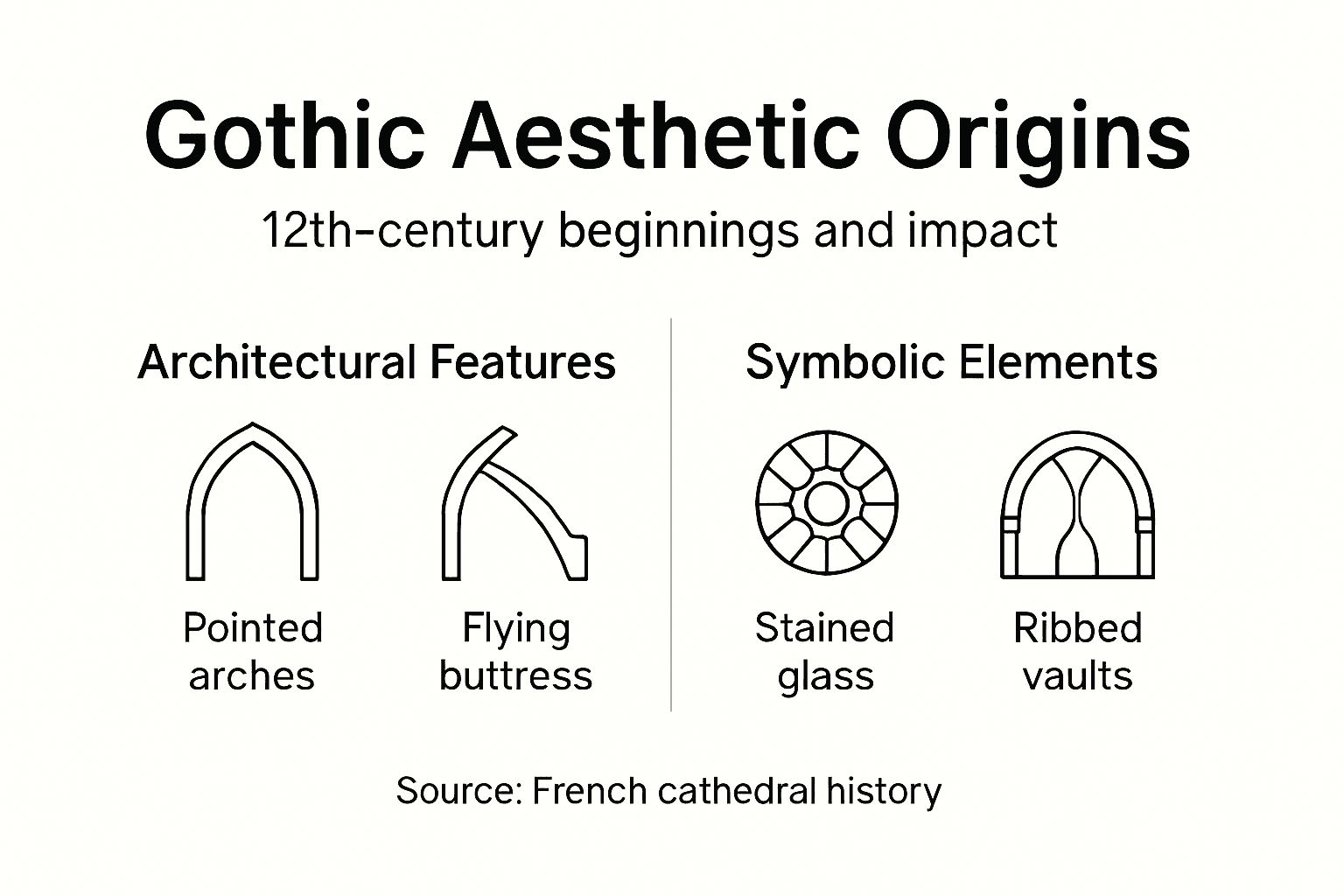
The gothic aesthetic originated in 12th century France with the rise of Gothic architecture, emphasizing verticality, lightness, and intricate ornamentation to symbolize spiritual aspiration. This wasn’t about darkness initially but about reaching toward heaven through innovative building techniques. Cathedral architects pioneered flying buttresses, pointed arches, and rib vaults that allowed walls to soar higher than ever before.
These structural breakthroughs enabled massive stained glass windows that flooded interiors with colored light, transforming worship spaces into ethereal experiences. Light became a metaphor for divine presence, with every architectural choice serving symbolic purpose. The term Gothic was originally a Renaissance pejorative linking the style to perceived barbarism of the Goths, but has been reappropriated to represent a rich, expressive cultural movement.
Understanding this historical foundation matters because modern gothic fashion and occult symbolism draw directly from these medieval roots. When you wear a cross pendant or appreciate pointed arch motifs, you’re connecting to centuries of spiritual and artistic tradition. The aesthetic’s depth comes from this layered history, not from surface level darkness.
Key architectural innovations that defined the original gothic aesthetic include:
- Flying buttresses that transferred weight outward, enabling thinner walls
- Pointed arches creating upward visual momentum toward the divine
- Rib vaults distributing ceiling weight elegantly across stone ribs
- Rose windows featuring intricate tracery and colored glass narratives
- Gargoyles and grotesques serving both drainage and spiritual protection functions
This spiritual foundation explains why gothic aesthetic resonates so powerfully with occult practitioners today. The original builders encoded meaning into every stone.
Key Visual and Thematic Elements of Gothic Aesthetic
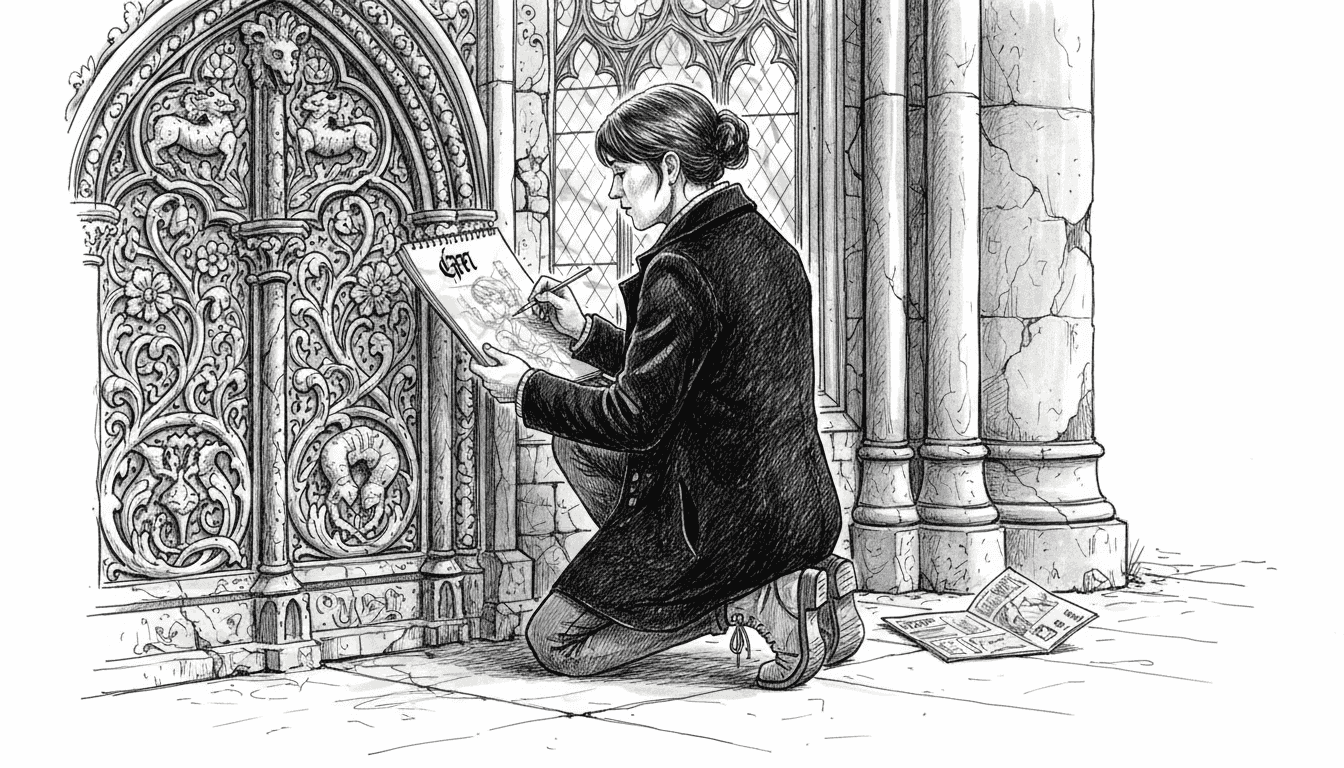
Gothic architecture introduced flying buttresses, pointed arches, and ribbed vaults, allowing thinner walls and larger stained glass windows to flood cathedrals with colored light, symbolizing divine presence. These weren’t just practical solutions but deliberate aesthetic choices that created signature visual language. Verticality became the dominant theme, pulling eyes and spirits upward.
Intricate ornamentation covered every surface with naturalistic carvings of plants, animals, and symbolic figures. Nothing was left plain or utilitarian. Gothic art shifted from medieval stylization to realism and emotional expressiveness, portraying lifelike figures with dynamic compositions and symbolic motifs reflecting spiritual and cultural identity. This transition brought humanity and emotion into religious art.
The following table breaks down core visual elements and their symbolic meanings:
| Element | Visual Characteristics | Symbolic Meaning |
|---|---|---|
| Pointed Arch | Tall, narrow, ascending shape | Directs focus heavenward, represents aspiration |
| Flying Buttress | External support structure | Transfers earthly weight, enables spiritual lightness |
| Stained Glass | Colorful translucent panels with imagery | Divine light filtering into mortal realm |
| Rib Vault | Intersecting stone ribs on ceiling | Web of spiritual connection and support |
| Rose Window | Circular window with radiating tracery | Wholeness, eternal cycles, divine geometry |
Understanding the role of art in Gothic style helps you recognize authentic gothic motifs versus generic dark imagery. Real gothic aesthetic carries this historical weight and symbolic intention. When you see these elements in modern gothic fashion styling, you’re witnessing centuries of visual tradition.
Key thematic elements that persist from medieval to modern gothic include:
- Tension between earthly and spiritual realms
- Beauty found in complexity and intricate detail
- Light emerging from or contrasting with darkness
- Mortality acknowledged rather than hidden
- Nature represented symbolically, not literally
These traits differentiate true gothic aesthetic from other dark styles lacking historical and symbolic grounding.
Literary and Symbolic Dimensions of Gothic Aesthetic
Gothic literature emerged in the 18th century, introducing themes of horror, mystery, and the supernatural that deepened the aesthetic beyond architecture. Authors like Horace Walpole and Ann Radcliffe created atmospheric tales set in crumbling castles where past and present collided. These stories added psychological depth to visual gothic traditions.
Gothic symbolism often uses motifs such as skulls, bats, crosses, and obscure occult signs, each loaded with layered meanings that relate to mortality, spirituality, and mystery, bridging aesthetic and occult practice. A skull isn’t just morbid decoration but a memento mori reminding us to live meaningfully. Bats represent transformation and night wisdom. Crosses carry both Christian and pre Christian protective symbolism.
Gothic aesthetics maintain a significant symbolism link to spiritual transcendence, as exemplified by architecture designed to manifest divine light through stained glass and verticality, influencing modern occult symbols. This spiritual dimension explains why gothic aesthetic appeals so strongly to practitioners exploring mystical paths. The visual language already speaks to transcendence and hidden knowledge.
Common symbolic motifs in gothic aesthetic include:
- Skulls and bones representing mortality awareness and life’s transience
- Ravens and crows symbolizing mystery, intelligence, otherworldly messages
- Crosses expressing spiritual protection across multiple traditions
- Pentagrams indicating elemental balance and occult knowledge
- Moons and celestial imagery connecting to cycles and feminine power
- Thorns and roses juxtaposing beauty with pain or protection
The role of mythology in Gothic art enriches these symbols with archetypal meanings that resonate across cultures. When you incorporate symbolic jewelry or imagery into your style, you’re participating in this ancient visual language.
Pro tip: Research the specific historical and cultural context of symbols before adopting them. A pentagram worn by a medieval scholar meant something different than its modern Wiccan usage. Understanding these layers makes your expression more authentic and personally meaningful.
Gothic Fashion and Occult Lifestyle Expression
Gothic fashion blends dark color palettes with Victorian inspired elements and symbolic occult jewelry to express spiritual identity and cultural heritage. Black dominates but isn’t exclusive. Deep reds, purples, and forest greens appear in velvet, lace, and brocade fabrics that reference Victorian mourning wear and aristocratic elegance.
Corsets, layered skirts, tailored coats, and dramatic sleeves create silhouettes that honor historical fashion while allowing modern interpretation. These aren’t costumes but carefully chosen pieces that communicate aesthetic values. Gothic aesthetics maintain spiritual symbolism through fashion choices that embody mystery and transcendence. Your clothing becomes a statement about what you value culturally and spiritually.
Occult symbolic jewelry like crosses, pentagrams, moon phases, and protection amulets serves both aesthetic and spiritual functions. These pieces aren’t just accessories but tools for expressing beliefs and intentions. Silver and blackened metals reference historical jewelry traditions while gemstones like onyx, amethyst, and garnet carry specific energetic associations.
Modern trends in gothic fashion include:
- Romantic goth combining Victorian elements with flowing fabrics and soft textures
- Corporate goth adapting dark aesthetic for professional environments
- Whimsygoth blending gothic with cottagecore and mystical elements
- Cyber goth fusing industrial and futuristic components with traditional darkness
- Traditional goth maintaining classic 1980s post punk influences
Explore curated GothCore fashion collections that honor these traditions while offering contemporary interpretations. The Whimsygoth style demonstrates how gothic aesthetic evolves while maintaining core symbolic elements.
Pro tip: Build your gothic wardrobe around versatile foundational pieces with authentic historical or symbolic roots rather than trendy fast fashion. A well made velvet coat or meaningful pendant will serve you for years while deepening your connection to the aesthetic. Quality over quantity creates more powerful personal expression.
Common Misconceptions about Gothic Aesthetic
A common misconception is that gothic aesthetic equates only to wearing black clothing; actually it involves rich historical and symbolic layers. Black is prominent but serves as canvas for texture, silhouette, and symbolic detail rather than being the sole defining feature. Real gothic style requires understanding what the darkness represents.
Another myth suggests gothic aesthetic is purely horror focused or satanic. While gothic literature explored supernatural horror, the aesthetic encompasses romantic melancholy, spiritual seeking, and appreciation for beauty in decay. Medieval gothic cathedrals were Christian worship spaces, not temples of darkness. Modern gothic communities include diverse spiritual paths from Wicca to atheism.
Some believe gothic aesthetic is a modern invention born from 1980s goth music subculture. The truth reveals continuous cultural thread from 12th century architecture through Victorian romanticism to contemporary expression. Each era reinterpreted gothic themes while maintaining core elements. Understanding this historical continuity prevents superficial engagement.
Key misconceptions to avoid:
- Gothic aesthetic is only about black clothing without considering texture, silhouette, or symbolism
- All gothic imagery is satanic or evil rather than spiritually diverse and often protective
- Gothic style is purely modern without recognizing centuries of historical foundation
- Gothic aesthetic and general dark fashion are identical despite symbolic differences
- Gothic communities are uniform rather than encompassing diverse interpretations and subcultures
Clearing these misunderstandings helps you engage authentically with gothic aesthetic as a rich cultural tradition rather than superficial style trend. Your personal adoption becomes more meaningful when grounded in accurate knowledge.
Evolution of Gothic Aesthetic and Modern Subcultures
Medieval gothic focused on spiritual architecture where every element served religious symbolism and communal worship. Light, space, and ornamentation created transcendent experiences. Victorian gothic introduced romantic melancholy through literature, fashion, and art that emphasized emotion, mystery, and fascination with death. Mourning clothing became elaborate aesthetic statement.
The gothic aesthetic transitioned from medieval art to Victorian romanticism and evolved into modern goth subcultures maintaining core themes of darkness and spirituality. The 1980s birthed goth music subculture drawing from post punk, new wave, and gothic rock. Bands like Bauhaus and Siouxsie and the Banshees created soundscapes matching visual darkness.
Historical core themes persist through adaptations in fashion, art, music, and occult practice in gothic communities. Each generation reinterprets but maintains threads of mystery, spiritual seeking, beauty in darkness, and symbolic expression. This continuity creates living tradition rather than static museum piece.
| Era | Fashion Elements | Cultural Focus | Symbolic Themes |
|---|---|---|---|
| Medieval (12th-15th c.) | Ecclesiastical robes, rich fabrics, religious jewelry | Spiritual transcendence through architecture and art | Divine light, heavenly aspiration, sacred geometry |
| Victorian (19th c.) | Mourning wear, corsets, lace, jet jewelry, dramatic silhouettes | Romantic melancholy, mortality, gothic literature | Death acceptance, emotional depth, supernatural mystery |
| Modern (1980s-present) | Band shirts, leather, velvet, DIY elements, symbolic jewelry | Music subculture, occult exploration, alternative identity | Individuality, spiritual diversity, cultural resistance |
Understanding this evolution helps you place your personal style within historical continuum. You’re not inventing something new but participating in centuries old conversation about beauty, darkness, and meaning. Explore curated gothic art examples showing how visual themes persist across eras.
Applying Gothic Aesthetic: Style and Lifestyle Tips
Select colors and materials carrying symbolic weight beyond simple appearance. Black absorbs and protects energetically while providing visual foundation. Deep burgundy references blood, passion, and Victorian mourning. Emerald green connects to nature’s darker aspects and pre Christian traditions. Velvet, lace, brocade, and leather each bring textural richness and historical associations.
Incorporate historically resonant fashion elements rather than generic dark clothing. Corsets reference Victorian silhouettes while creating dramatic shape. Layered skirts and coats add dimension and movement. Pointed collars echo gothic arches architecturally. Details matter more than dramatic overstatement. Subtle symbolic touches often communicate more effectively than obvious costume.
Use accessories with meaningful occult or spiritual significance chosen intentionally. Research symbol origins before wearing them. A pentagram, ankh, or runic pendant should reflect your actual beliefs or studies rather than being random decoration. Meaningful jewelry becomes talismanic rather than merely decorative.
Balance tradition with personal creativity for authentic expression. Study historical gothic elements then adapt them to your body, lifestyle, and spiritual path. You don’t need to recreate Victorian dress exactly but can reference its principles through modern cuts and sustainable fabrics. Authenticity comes from understanding and intention, not perfect historical reproduction.
Practical tips for authentic gothic style:
- Start with quality black basics then add symbolic and textural elements gradually
- Research historical context of symbols and garments before purchasing
- Invest in fewer meaningful pieces rather than many disposable items
- Adapt gothic principles to your daily life context, whether casual or professional
- Extend aesthetic beyond clothing into home decor, art choices, and reading material
- Connect with gothic communities online and locally to deepen understanding
The role of art in gothic style’s modern impact extends beyond fashion into home environments. Consider goth home decor that reflects aesthetic principles through candlelight, vintage mirrors, occult artwork, and carefully chosen antiques. Your living space can embody gothic values of beauty in darkness and meaningful symbolism.
Pro tip: Build a personal grimoire or style journal documenting symbols, historical references, and outfit combinations that resonate with you. This practice deepens your relationship with gothic aesthetic while creating reference for future choices. Photography, sketches, or written notes all work. The act of reflection makes your style evolution more intentional.
Explore the guide to gothic art curation for bringing authentic gothic visual elements into your space through paintings, prints, and sculpture that honor the aesthetic’s rich traditions.
Explore Authentic Gothic Style and Accessories at GothMarket
When you understand gothic aesthetic’s deep historical and symbolic roots, your style choices gain authentic meaning. GothMarket offers curated collections inspired by these traditions, from Victorian influenced fashion to occult symbolic jewelry. Each piece connects to the rich cultural heritage explored throughout this guide.

Discover the gothic fashion styling guide for detailed advice on building your wardrobe with meaningful pieces. Browse gothic symbolic jewelry featuring crosses, moons, and protective amulets that express your spiritual path. The Celestial Chain Choker exemplifies how modern gothic accessories honor astronomical symbolism while creating striking visual impact. Explore curated collections that respect gothic aesthetic’s complexity while supporting independent creators in alternative communities.
What Does Gothic Aesthetic Mean? Frequently Asked Questions
Is wearing black the only way to express gothic aesthetic?
Black is prominent in gothic fashion but the aesthetic encompasses much more than color choice. True gothic style integrates symbolic jewelry, historically inspired silhouettes, meaningful textures like velvet and lace, and understanding of cultural context. Gothic aesthetic expresses spiritual identity and appreciation for beauty in darkness through multiple visual elements working together.
How does gothic literature influence gothic fashion and style?
Gothic literature introduced themes of mystery, supernatural, mortality, and romantic melancholy that fashion translates into visual language. The atmospheric settings, emotional depth, and symbolic imagery from 18th and 19th century gothic novels inspire modern clothing choices, jewelry designs, and overall aesthetic presentation. Fashion becomes narrative expression of literary themes.
Can gothic aesthetic be personalized while respecting tradition?
Absolutely. The most authentic gothic expression blends historical understanding with individual interpretation. Research traditional symbols and garments, then adapt them to your unique spiritual path, body type, and lifestyle needs. Personalization strengthens rather than diminishes gothic aesthetic when grounded in genuine knowledge and intentional choices.
What differentiates gothic aesthetic from other dark fashion styles?
Gothic aesthetic carries specific historical roots in medieval architecture, Victorian romanticism, and literary traditions with embedded spiritual symbolism. Other dark styles may emphasize visual darkness without this layered cultural foundation. Gothic fashion intentionally references these historical elements through silhouettes, symbols, and thematic depth rather than simply choosing black clothing.
How do I start building an authentic gothic wardrobe on a budget?
Begin with versatile black basics in quality natural fabrics, then gradually add symbolic accessories and historically inspired pieces. Thrift stores often carry Victorian influenced items and vintage jewelry. Prioritize meaningful pieces with authentic symbolism over quantity. DIY modifications like adding lace trim or replacing buttons with symbolic alternatives personalize existing clothing affordably while deepening your connection to gothic traditions.