

Role of Community in Goth Markets: 63% More Local Impact
Many assume goth fashion is dominated by mainstream brands churning out mass-produced items, but the reality flips this perception completely. Real goth communities actively resist commodification, choosing handcrafted products from independent vendors who uphold subcultural authenticity. Understanding how community shapes goth markets reveals the mechanisms that sustain identity, creativity, and economic vitality within gothic subcultures. This article explores the crucial interplay between community and commerce in goth markets.
Table of Contents
- Introduction To Goth Community And Market Interplay
- How Community Shapes Goth Market Identity
- Community As The Economic And Social Engine In Goth Markets
- Challenges Of Commodification And Maintaining Authenticity In Goth Markets
- Community Empowerment In Curated Goth Marketplaces
- Conclusion And Practical Takeaways For Goth Enthusiasts And Vendors
- Explore Authentic Goth Markets At Goth.Market
Key Takeaways
| Point | Details |
|---|---|
| Community drives authenticity | Goth communities validate authentic products, guiding consumer choices away from mass-market alternatives. |
| Independent vendors sustain culture | Supporting indie creators preserves unique offerings and strengthens subcultural economic networks. |
| Active resistance to commodification | Goth markets prioritize handcrafted, occult-themed goods to maintain subcultural purity. |
| Markets foster social cohesion | Community markets recirculate funds locally while building cultural connections beyond transactions. |
| Curation empowers members | Engaged communities shape marketplace offerings through feedback, preserving goth identity. |
Introduction to Goth Community and Market Interplay
Goth subculture centers on dark aesthetics, occult motifs, and distinctive visual style that sets members apart from mainstream culture. Community reinforces this identity through shared consumption of curated products that reflect subcultural values. Goth consumption practices prioritize dark aesthetics and macabre elements, creating cohesive community identity through deliberate purchasing choices.
Markets historically act as venues where economic transactions intertwine with social and cultural life. Markets function as central institutions integrating cultural and spiritual dimensions, making them ideal spaces for subcultures like goth and witchcraft communities. These marketplaces become gathering places where members exchange not just goods but ideas, aesthetics, and validation.
Consumption choices within goth markets carry symbolic weight beyond mere purchasing. Every item bought signals belonging, taste, and commitment to subcultural identity. This makes goth markets fundamentally different from conventional retail spaces.
Key characteristics of goth market consumption include:
- Preference for handcrafted items over factory-produced goods
- Emphasis on occult symbolism and dark romantic aesthetics
- Support for independent creators and small vendors
- Rejection of mainstream fashion trends and commodified alternatives
- Community validation as the primary measure of product authenticity
These patterns demonstrate how goth home decor and fashion choices function as cultural statements. Members curate their purchases to reflect both personal expression and collective subcultural values, making every transaction a form of identity work.
How Community Shapes Goth Market Identity
Community validation defines what qualifies as authentically goth, guiding consumer choices through informal consensus. Subcultural capital, the prestige gained through demonstrating knowledge and taste within the community, influences which products gain acceptance. Wearing goth fashion serves as identity formation supported by community validation and shared aesthetic standards.
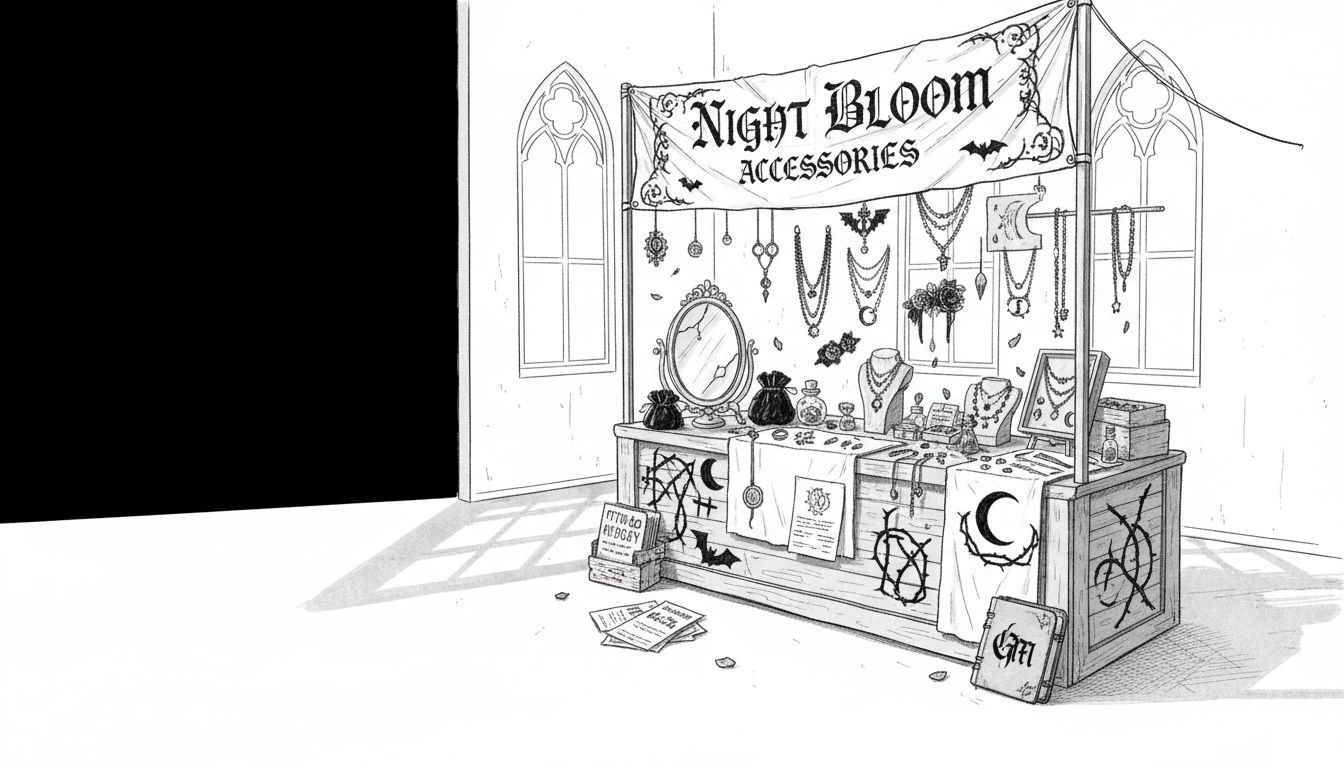
Members seek unique, handcrafted products that signal both individuality and subcultural belonging. Mass-produced items lack the distinctive character that earns community respect. This preference creates market demand for one-of-a-kind pieces, occult-themed jewelry, and artisan clothing that can’t be replicated by fast fashion.
Consumption becomes a dual signal: it expresses personal style while demonstrating alignment with community values. Purchasing decisions reflect awareness of subcultural history, aesthetic principles, and ethical considerations around supporting independent creators. Community feedback continuously shapes evolving trends within goth markets.
Factors influencing goth market identity:
- Peer validation of aesthetic choices and product authenticity
- Subcultural capital earned through knowledgeable consumption
- Preference for items with occult, macabre, or romantic gothic symbolism
- Rejection of mainstream alternatives perceived as diluting subculture
- Support for vendors who demonstrate understanding of goth aesthetics
Pro Tip: Build subcultural capital by learning the history behind gothic symbols and motifs before making purchases. This knowledge helps you identify truly authentic pieces and connect more deeply with vendor stories and craftsmanship.
Understanding these dynamics helps both consumers and vendors navigate gothic fashion styling effectively. Community norms aren’t arbitrary rules but evolved standards protecting subcultural integrity. Respecting these standards strengthens the entire goth market ecosystem and preserves the reasons people choose gothic style as meaningful personal expression.
Community as the Economic and Social Engine in Goth Markets
Community markets generate significant local economic impact compared to conventional retail. Research shows community markets recirculate 63 pence per pound locally versus 40 pence at supermarkets, demonstrating superior economic benefit for communities. This recirculation pattern applies directly to goth markets supporting independent vendors.
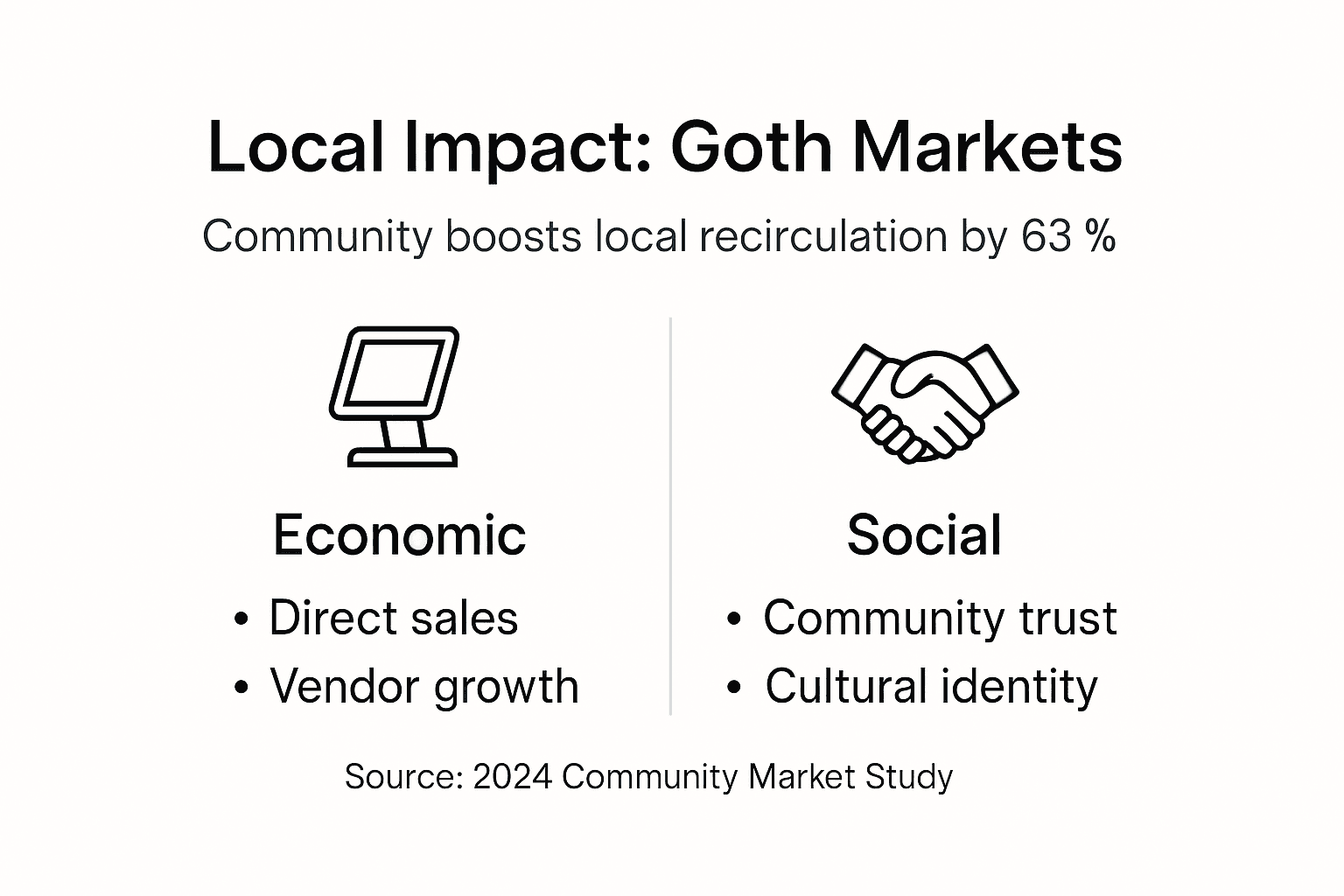
| Market Type | Local Recirculation | Community Benefit |
|---|---|---|
| Community Markets | 63p per £1 | High local economic impact, job creation |
| Supermarkets | 40p per £1 | Lower local benefit, profits leave community |
| Goth Vendor Markets | Similar to community markets | Sustains independent creators, preserves uniqueness |
Direct sales at community markets enable independent goth vendors to maintain sustainable businesses without intermediary costs. This structure preserves unique product offerings that would disappear under mainstream retail models. Vendors retain creative control, pricing autonomy, and direct customer relationships that inform their work.
Local vendor markets create jobs and support unique offerings while enhancing community identity and economic sustainability. Beyond pure economics, these markets foster social cohesion through cultural exchange and shared experiences. Transactions become social interactions reinforcing community bonds.
Economic and social benefits include:
- Higher local economic recirculation supporting community prosperity
- Job creation for artisans, vendors, and market organizers
- Environmental benefits from local production reducing shipping impacts
- Cultural preservation through sustained authentic product offerings
- Social cohesion built through face-to-face vendor-customer relationships
This economic engine sustains goth markets beyond simple commerce, creating infrastructure for subcultural continuity. Money spent in goth markets stays within the community ecosystem, funding the next generation of creators and preserving goth home decor and fashion production. The economic vitality directly enables cultural vitality.
Challenges of Commodification and Maintaining Authenticity in Goth Markets
Mass-market brands attempting to capitalize on goth aesthetics face widespread distrust from goth communities. Goth communities resist commodification by favoring unique, independent vendor items over mass-produced alternatives that threaten subcultural authenticity. This resistance isn’t mere preference but active defense of community identity.
Commodification threatens to dilute goth aesthetics into hollow fashion trends stripped of subcultural meaning. When mainstream retailers copy goth styles without understanding their cultural context, they reduce rich symbolism to superficial costume elements. Community members recognize and reject these hollow imitations.
Strategies for preserving authenticity require constant vigilance and community coordination. Members educate newcomers about the importance of supporting independent vendors and recognizing authentic craftsmanship. Market organizers curate vendor selections to maintain quality standards and subcultural alignment.
Key resistance strategies include:
- Prioritizing handcrafted items made by community members or aligned artisans
- Supporting locally made products reducing dependence on mass manufacturers
- Emphasizing occult and historical accuracy in symbolic elements
- Educating community about recognizing authentic versus commodified goods
- Building direct vendor-customer relationships that resist corporate intermediation
These practices maintain goth market purity against external pressures. Choosing gothic style becomes a deliberate act of cultural preservation rather than passive consumption. Community members understand their purchasing power as votes for the kind of market ecosystem they want to sustain.
The tension between accessibility and authenticity requires careful navigation. While goth markets benefit from growth, rapid expansion risks attracting vendors who lack genuine subcultural connection. Communities balance welcoming newcomers with maintaining standards that preserve the role of mythology in gothic style and other core aesthetic principles.
Community Empowerment in Curated Goth Marketplaces
Engaged goth communities drive marketplace authenticity through active participation in curation and feedback. Community involvement sustains goth markets by preserving authenticity and maintaining resistance to mainstream dilution through collective effort. This participatory model makes every community member a stakeholder in market quality.
The goth market operates through layered community structure where independent creators, sellers, and consumers actively define trends and subcultural capital. Each layer reinforces the others, creating resilient market ecosystem resistant to external commodification pressures.
Steps for community-driven marketplace success:
- Establish clear curation criteria reflecting subcultural values and aesthetics
- Create feedback mechanisms allowing members to report concerns about authenticity
- Support vendor education programs teaching goth history and symbolism
- Build digital platforms extending community access while maintaining ethos
- Organize regular events strengthening vendor-customer relationships
- Document and share vendor stories highlighting craftsmanship and subcultural commitment
Digital goth marketplaces enhance accessibility without sacrificing community connection. Online platforms allow geographically dispersed members to access authentic products while maintaining curation standards. Successful digital markets integrate community features like reviews, forums, and vendor profiles building trust.
| Platform Feature | Community Benefit | Authenticity Impact |
|---|---|---|
| Vendor Stories | Builds trust, showcases craftsmanship | High |
| Member Reviews | Validates quality, warns about issues | High |
| Curation Standards | Filters mass-market goods | Very High |
| Direct Messaging | Enables custom orders, relationships | Medium |
| Community Forums | Shares knowledge, builds cohesion | Medium |
Pro Tip: When shopping online goth markets, read vendor stories and check community reviews before purchasing. This research ensures your money supports authentic creators while building your own subcultural knowledge.
Examples of successful community-driven goth markets demonstrate this model’s viability. Platforms prioritizing gothic art curation and vendor authenticity over pure profit maximize community benefit. These marketplaces become cultural institutions preserving the role of art in gothic style for future generations.
The GothCore curated collection exemplifies community-focused curation bringing together independent vendors whose work meets high authenticity standards. Such collections make authentic shopping accessible while maintaining the selectivity that preserves subcultural integrity.
Conclusion and Practical Takeaways for Goth Enthusiasts and Vendors
Community remains essential for sustaining goth market identity and economic viability. Without active community participation in validation, curation, and vendor support, goth markets would collapse into generic alternative fashion retail. Every purchase decision either strengthens or weakens this community infrastructure.
Supporting independent vendors preserves the authenticity and uniqueness that define goth markets. Your choices directly impact whether future generations access genuine subcultural products or only mass-produced imitations. Engage actively in community feedback, attend market events, and build relationships with vendors whose work resonates with you.
Practical actions for supporting authentic goth markets:
- Purchase from curated community marketplaces prioritizing independent vendors
- Research vendor backgrounds and craftsmanship before buying
- Share authentic vendors with community members expanding their reach
- Provide constructive feedback helping vendors improve while maintaining standards
- Educate newcomers about importance of supporting authentic sources
- Attend local goth markets and events strengthening in-person community bonds
Be wary of mass-produced alternatives marketed as goth but lacking subcultural substance. Learn to recognize authentic craftsmanship, meaningful symbolism, and genuine vendor commitment to goth aesthetics. Use vendor profiles and community resources to find creators aligned with your values.
Your participation in goth markets extends beyond consumption into cultural stewardship. Understanding why gothic subcultures matter motivates the intentional choices that preserve these spaces for current and future community members. Every authentic purchase votes for the kind of market ecosystem you want to inhabit.
Explore Authentic Goth Markets at Goth.Market
Ready to put these insights into practice? Goth.Market offers curated collections supporting independent creators who embody authentic goth aesthetics. Our platform connects you directly with vendors committed to subcultural values, not mass-market profits. Discover how gothic fashion styling transforms personal expression into community participation.
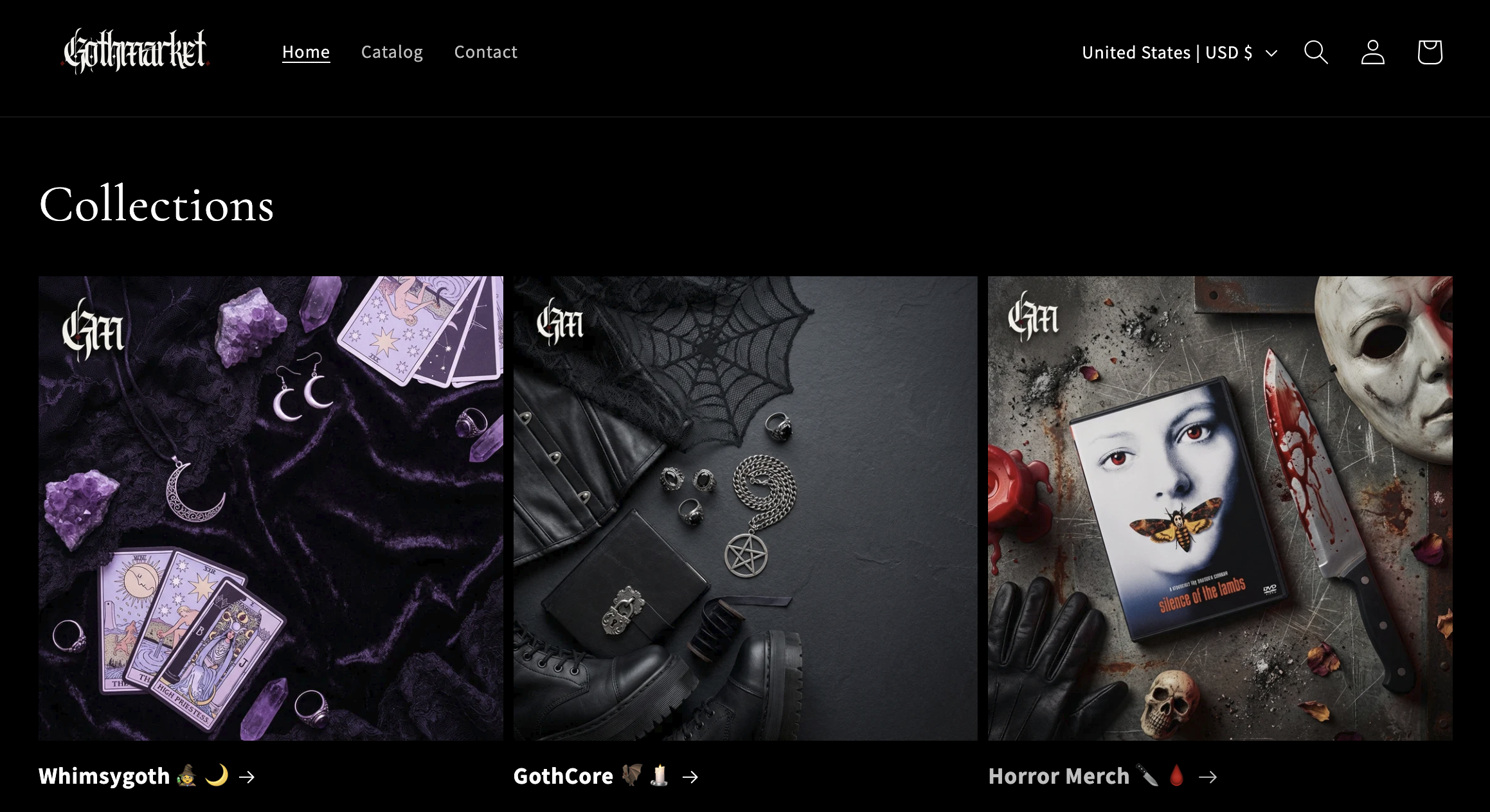
Explore the GothCore collection featuring exclusive items from vetted independent vendors. Learn how art shapes gothic style through our educational resources designed for both newcomers and experienced community members. Your purchases support the authentic goth market ecosystem while building your unique dark aesthetic.
FAQ
What makes goth markets different from mainstream fashion markets?
Goth markets prioritize authentic, handcrafted products through active community curation, rejecting the mass-produced items dominating mainstream fashion. Community validation shapes product offerings, ensuring items reflect genuine subcultural aesthetics rather than hollow trend imitation. This fundamental difference makes goth markets cultural institutions rather than mere retail spaces.
How can I support independent goth vendors effectively?
Purchase from curated community marketplaces and local goth markets that prioritize independent creators over mass-market brands. Engage with vendor stories, share feedback that boosts their visibility, and promote sellers on community platforms. Prefer handcrafted, unique items demonstrating genuine craftsmanship over generic alternatives, making each purchase a vote for authentic subcultural sustainability.
Why is community involvement crucial in goth markets?
Community involvement ensures marketplaces stay true to goth aesthetics and values rather than drifting toward mainstream commodification. Active feedback and curation prevent dilution of subcultural identity while building connections that reinforce shared belonging. This collective stewardship creates economic sustainability supporting independent vendors who might otherwise disappear under mainstream retail pressures.
How do goth communities resist commodification?
By favoring handcrafted and unique products, goth communities avoid generic mass-produced items that threaten to dilute subcultural meaning into hollow fashion trends. Community education about authenticity helps members recognize and reject commodified goods lacking genuine subcultural connection. Active curation in markets and feedback systems maintain purity by filtering vendors who don’t demonstrate understanding of gothic style beyond superficial aesthetics.