

Collectors' Tip: Sample Test Enamel Pin Backs for Silk and Heavy Pins
For most enamel pins, a rubber clutch is your best everyday backing, comfortable, cheap to replace, and fine for light jackets and totes. For anything valuable, heavy, or 3D, switch to a locking (deluxe) pin back. Silk, thin knits, and delicate fabrics deserve a magnetic back instead. Check the types comparison and checklist below before you buy in bulk.
TL;DR:
- Rubber clutch backs are suitable for most everyday pins but degrade over time with heat and UV exposure, reducing their grip.
- Locking and double-lock clutch backs provide increased security for valuable or heavy pins, especially on jackets or backpacks subject to frequent movement.
- Magnetic backs are ideal for delicate fabrics like silk but are less effective on thick textiles and pose safety concerns around medical devices or magnetic cards.
- For larger or top-heavy pins, adding a second post or spur helps prevent rotation and improves stability.
- Testing a small sample of backing types on your fabric before bulk ordering saves time and minimizes the risk of mismatched hardware.
Table of Contents
- What Are the Main Types of Enamel Pin Backs?
- How Do You Choose the Right Pin Back?
- How Do You Attach, Remove, and Care for Pin Backs?
- What Backing Works Best for Delicate Fabrics, Heavy Pins, and Bags?
- Why Trust This Guide to Enamel Pin Backs?
- How Can Goth.Market Help You Find the Right Pin Backs?
- What Do Collectors Actually Do Differently With Pin Backs?
- Sources
- FAQ
What Are the Main Types of Enamel Pin Backs?
Every enamel pin backing does the same basic job: it clamps onto the pin’s post and stops the pin from sliding out of the fabric. How each one does that job, and how well, varies a lot more than most buyers expect.
The butterfly clutch, also called a military clutch, is the one you probably picture first. It’s a small metal clip shaped like butterfly wings that slides over the post and grips it through spring tension. It’s fast to attach, fast to remove, and it’s been the default on military and fraternal pins for decades. The tradeoff is security: enough jostling, and it walks its way off the post.
The rubber clutch (usually PVC) is the softer, quieter cousin. It slides on the same way but relies on friction from the rubber itself rather than a metal spring. Collectors like it because it sits low against the fabric and doesn’t dig into skin the way metal can. The catch is durability: rubber degrades with heat and UV exposure over time, and a clutch that’s been sitting in a hot car or a sunlit display case will grip far less firmly than a fresh one. It’s still the most common default included with pin orders because it balances comfort and cost so well.
Deluxe and locking clutches solve the security problem the butterfly and rubber backs can’t. Inside a locking back is a small ball bearing or spring mechanism that clicks into a groove on the post and holds until you deliberately release it. You’ll feel a distinct click when it locks, and a light squeeze or lever release when you take it off. These are the backs collectors reach for when a pin is heading onto a backpack, a jacket that gets thrown around, or a jean jacket that sees daily wear.
Allen-key (set-screw) locks take security a step further. A tiny hex screw tightens directly against the post, and it takes an actual allen wrench to loosen it. That makes it the strongest mechanical hold available, but also the least convenient, since you can’t swap it out on the fly without a tool in your pocket.
Magnetic backs skip the post system altogether. A magnet on the front of the garment pairs with a magnet on the back, so nothing pierces the fabric. They’re the right call for silk, cashmere, and other fabrics you don’t want to put a hole in, but they lose grip fast on thick or heavy material, and they carry real cautions around credit cards, hotel key cards, and certain medical devices, a point worth taking seriously if you’re pinning near a chest pocket.
Two more specialty options round out the field:
- Safety-pin style backs fold into a pin shape, useful for tote bags, hats, or ribbon lanyards where you want a hinge rather than a straight post.
- Screw-on backs and jewelry clutches borrow hardware from earring backs, sometimes used for smaller decorative pins that pull double duty as lapel jewelry.
How Do You Choose the Right Pin Back?
Run through this five-step check before you commit to a backing, especially if you’re ordering multiples or filling out a bulk order form.
- Weigh the pin and note its dimensions. A flat, single-layer enamel pin under an inch wide behaves very differently than a thick, 3D-cast piece. Heavier pins put more torque on the post and need a backing that resists both pulling and spinning.
- Check the fabric. Denim and canvas tolerate a post just fine. Silk, fine knits, and vintage garments you can’t risk puncturing call for a magnetic back or a fabric-safe alternative instead.
- Decide how often you’ll swap the pin. If you rotate pins daily on a jacket, a butterfly or rubber clutch keeps things quick. If the pin is going up once and staying there, a locking or allen-key back is worth the extra ten seconds.
- Confirm post compatibility. Standard lapel pin posts run 8mm to 10mm, and most clutches are built around that range. Oversized or novelty posts sometimes need a specific backing style, so measure before you order in bulk.
- Run the safety checks. Skip magnets around pacemakers or other medical devices, keep small locking parts away from young kids, and if you’re sensitive to nickel, look for pins listed as nickel-free or hypoallergenic before locking one against your skin all day.
Pro Tip: Order a small sample pack of two or three backing types before committing to a bulk purchase. Suppliers consistently recommend testing compatibility with your actual fabric first, and it’s a lot cheaper to discover a mismatch on five pins than on five hundred.
How Do You Attach, Remove, and Care for Pin Backs?
Attaching most backs is simple: line up the post, push the clutch straight down until it seats, and give it a gentle tug to confirm it’s holding. Locking backs need a firmer push until you hear the click; allen-key backs need the screw tightened just enough to grip without bending the post.
Removal reverses the process. Butterfly and rubber clutches pull straight off with light pressure. Locking backs need you to squeeze or lever the release point first, never yank straight up, or you risk bending the post. Magnetic backs simply separate.
A few habits keep backings working longer:
- Check posts for bends before storage; a jammed lock is often caused by a post that’s been knocked slightly out of true.
- If a pin feels loose or spins in place, add a second post or a spur detail. Manufacturers recommend a second post on larger or top-heavy pins to prevent rotation specifically to stop rotation.
- Wipe metal backs occasionally to prevent tarnish, and replace rubber clutches once they feel stiff or brittle rather than springy.
- Store loose pins post-up in a foam-lined box rather than tossed in a drawer, where posts can bend against each other.
Pro Tip: If a rubber clutch feels loose but the pin is otherwise fine, don’t toss the whole piece. Replacement clutches are sold in bulk packs for pennies each, and swapping one takes seconds.
What Backing Works Best for Delicate Fabrics, Heavy Pins, and Bags?
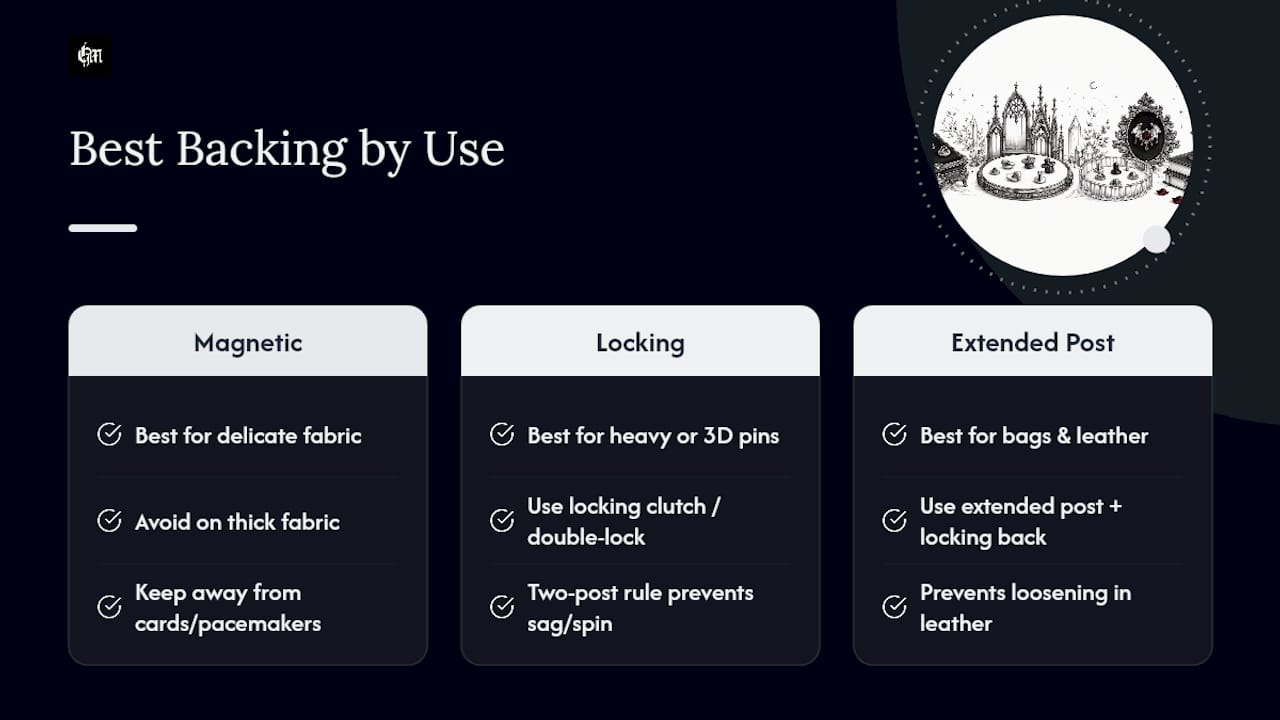
Silk blouses, cashmere sweaters, and other fine garments are where magnetic backs earn their keep, since nothing pierces the material. Just remember magnets lose effectiveness on thicker fabric and carry cautions around cards and certain medical devices, so they’re not a universal fix. For genuinely irreplaceable fabric, a fabric-safe finishing approach borrowed from other crafts, like the reinforcement techniques cross-stitchers use to protect finished textile pieces, can also apply.
Heavy or 3D pins need the opposite approach. Locking clutches or double-lock systems are the standard recommendation for backpacks and high-movement wear, and anything with real heft benefits from the two-post rule to stop sag and spin entirely.
Bags and leather call for extended posts paired with locking backs, since leather doesn’t flex the way fabric does and a short post can work loose over time. And regardless of use case: keep magnetic backs away from pacemakers, treat any small locking hardware as a choking hazard around kids, and watch for nickel sensitivity on anything worn directly against skin for hours.
Why Trust This Guide to Enamel Pin Backs?
Goth.Market runs a curated marketplace built around gothic, occult, and alternative-aesthetic goods, including enamel pins like our bat-themed brooch sets, and hardware questions come up constantly from the independent creators and collectors who use the platform.
The most common return or complaint we see isn’t about the artwork on a pin, it’s about the backing that came with it. A rubber clutch that hardened in shipping, or a butterfly clutch too loose for a heavier 3D piece, causes more frustration than almost anything else in the buying experience.
That feedback loop, sellers hearing directly from buyers about which backs held up and which didn’t, shaped the practical advice in this guide. It’s also why sample testing gets recommended so often here: it’s the cheapest insurance against a backing mismatch you’ll only discover after the pin’s already on your jacket.
How Can Goth.Market Help You Find the Right Pin Backs?
An online marketplace carries enamel pins and accessories from independent creators who work in gothic, occult, and horror aesthetics, and many listings include backing details right in the product description so you’re not guessing before checkout. If you’re outfitting a jacket full of pins or building out a collection for display, a small sample pack of backing styles is a smart first order before you commit to anything bulk.
Unlike big-box costume shops where hardware is an afterthought, vendors often are the same people making the pins, so questions about post length or locking mechanisms go straight to someone who actually knows the piece. Browse the enamel pin and accessory listings to compare backing types across sellers, or reach out to a vendor directly if you need a specific fastener for a heavier or 3D design. Either way, checking compatibility before you buy in bulk saves you the return headache later.
What Do Collectors Actually Do Differently With Pin Backs?
Three habits separate people who never lose a pin from people who are constantly digging through couch cushions.
First, carry a spare locking back in your bag or wallet when you travel with a valuable pin. Butterfly clutches vanish in transit more than people expect, and a five-second swap at the airport beats losing a pin entirely.
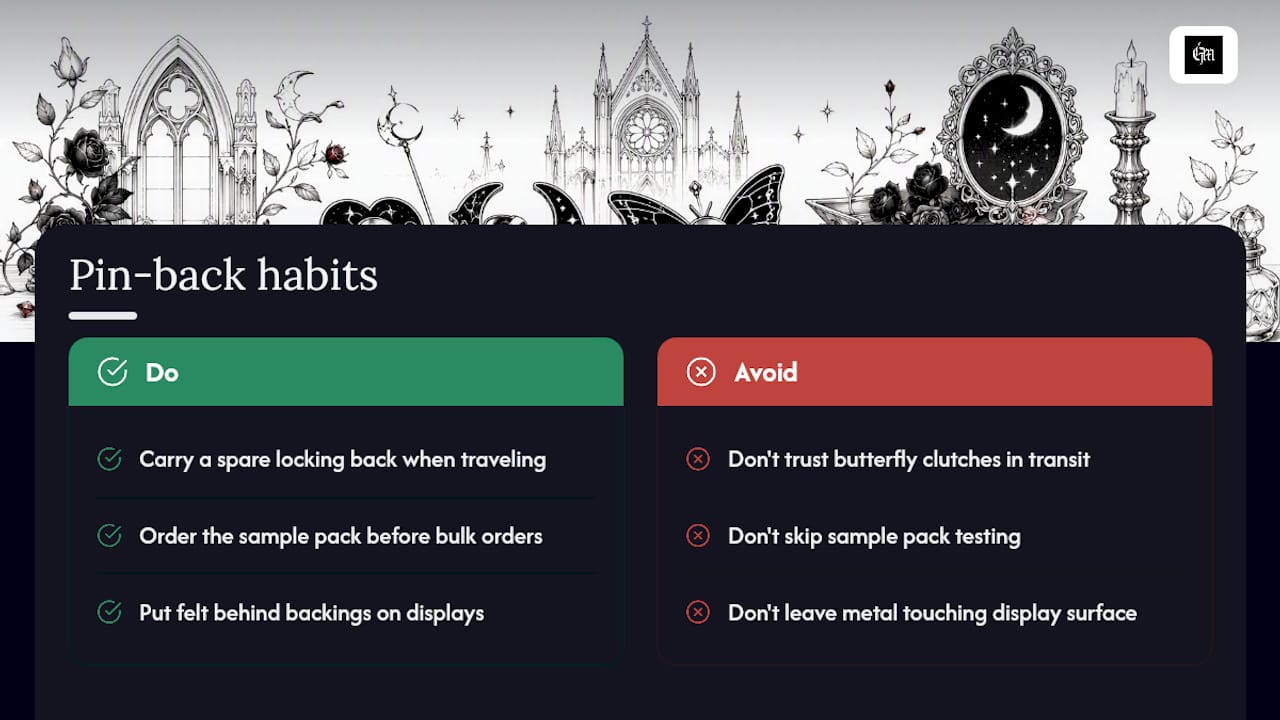
Second, order the sample pack before the bulk order, every time. It feels like an extra step until the one time it saves you from three hundred mismatched clutches.
Third, if you display pins rather than wear them, put a scrap of felt or soft fabric behind the backing on the display board. It protects both the pin’s finish and whatever display case or curio cabinet you’re using, and it costs you nothing.
— Rey
Sources
- The Ultimate Authority Guide to Pin Backs: Which Pin Attachment is Right for You? | Enamel Pin Manufacturer in China
- Types of Pin Backs: A Complete Guide
- Pin Back Guide: Types, Pros, Cons & Selection Tips | BLOG | PinKeepers
- How to Choose the Right Enamel Pin Backings (2026 Guide) | CreatePins
FAQ
What Are the Best Backings for Enamel Pins?
For everyday wear, a rubber clutch offers the best mix of comfort and cost. For valuable, heavy, or frequently jostled pins, a locking or deluxe clutch is the stronger choice because its internal mechanism resists accidental release far better than a standard butterfly clutch.
Where Can I Find Replacement Pin Backings?
Most pin sellers, including individual vendors on marketplaces like Goth.Market, sell replacement clutches in small bulk packs. Craft stores and general pin suppliers also carry universal rubber and butterfly clutches that fit the standard 8mm to 10mm post size.
How Do I Keep My Enamel Pins From Falling Off?
Using a locking clutch and ensuring post integrity, plus adding a second post or spur when appropriate, helps keep pins secure. A snug, properly seated backing is the biggest factor, since a loose or degraded clutch is the most common cause of lost pins.
Where Can I Find Locking Backs for Enamel Pins?
Locking pin backs are sold individually or in packs through most enamel pin suppliers and craft retailers, and many pin listings on marketplaces now offer a locking upgrade at checkout. Look for a description mentioning a ball-bearing or spring mechanism, since that’s the feature that gives locking backs their extra hold.
Can I Use a Regular Butterfly Clutch on a Heavy 3D Pin?
You can, but it’s risky. Heavy or thick 3D pins put more strain on a single post than a standard clutch is built to resist, so a locking back or a second post is the safer setup to prevent sag and spin.
Do Rubber Pin Backs Wear Out?
Yes. Rubber clutches lose their grip over time, especially with heat or UV exposure, and a clutch that once felt snug can turn stiff or slack after months in a sunny spot. Swapping a hardened rubber back for a fresh one takes seconds and costs very little.
Are Magnetic Pin Backs Safe to Use on Any Fabric?
Magnetic backs work well on light, delicate fabrics like silk where you don’t want to pierce the material, but they lose holding power on thicker fabric and aren’t recommended near pacemakers, other medical devices, or cards with magnetic strips.