

Best Alternative Fashion Platforms for 2026: Ranked
Goth.Market is the top pick for gothic, occult, and curated indie creators. For everyone else, the right platform depends on whether you’re hunting preloved pieces, testing handmade designs, or chasing fast alt trends. The short list: Goth.Market (gothic/occult curation), Etsy (handmade indie), Depop (preloved/resale), Garmentory (higher-end indie labels), and eBay (vintage rare finds).
- Goth.Market — curated gothic, occult, and witchy marketplace; best for dark-aesthetic shoppers and indie creators
- Etsy — broad handmade marketplace; best for indie makers testing one-of-a-kind pieces
- Depop — peer-to-peer resale app; best for preloved and trend-driven alt styles
- Garmentory — boutique aggregator; best for higher-end indie labels and curated discovery
- eBay — global resale; best for vintage, rare, and auction-priced alt finds
- Dolls Kill / RebelsMarket — mass alt retailers; best for affordable trend drops
Pro Tip: Decide your platform type before you search. Curated marketplaces (Goth.Market, Garmentory) filter for quality and niche fit. Peer-to-peer apps (Depop, eBay) give you volume and price variety. Mass alt retailers (Dolls Kill, RebelsMarket) move fast but trade uniqueness for speed.
Table of Contents
- Which alternative fashion platform is right for you?
- Why Goth.Market leads for gothic and occult shoppers
- Etsy — best for indie makers and handmade alt pieces
- Depop — best for secondhand, streetwear, and youth-driven alt styles
- Garmentory — best for small independent designers and higher-end indie labels
- Mass alt retailers: what Dolls Kill and RebelsMarket actually offer
- eBay — best for vintage, one-off rare finds, and budget hunting
- How to pick the right alternative fashion platform
- Why curated marketplaces matter for alt fashion brands right now
- Which platforms have the best mobile apps?
- How does customer support compare across these platforms?
- Key Takeaways
- The case for curation in alternative fashion
- Goth.Market: the curated dark-aesthetic marketplace
- Useful sources and further reading
Which alternative fashion platform is right for you?
The table below covers the platforms most relevant to alternative fashion shoppers and sellers in the U.S. Columns reflect what actually matters when choosing where to buy or list.
| Platform | Best for | Price range | Seller-friendly for new brands | Product range | Curation / aesthetic focus | Sustainability / resale | Ships to US & returns | Size inclusivity |
|---|---|---|---|---|---|---|---|---|
| Goth.Market | Gothic, occult, witchy shoppers & indie creators | $$ | Yes — commission model, indie-first | Clothing, accessories, occult, decor, art | High — dark/gothic editorial curation | Some indie makers offer limited runs | Yes / varies by seller | Varies by seller |
| Etsy | Handmade & one-of-a-kind alt pieces | $–$$$ | Yes — listing fee + transaction % | Clothing, accessories, home, art | Low — open marketplace | Some vintage/preloved | Yes / seller-set | Varies by seller |
| Depop | Preloved, streetwear, Gen Z alt styles | $–$$ | Yes — seller account, % fee | Clothing, accessories | Low — feed-based discovery | High — circular/preloved focus | Yes / seller-set | Varies by seller |
| Garmentory | Higher-end indie labels & boutique discovery | $$–$$$$ | Selective — boutique/designer vetting | Clothing, accessories | High — editorial, boutique-curated | Low | Yes / varies | Varies by boutique |
| Dolls Kill | Bold, affordable alt trend drops | $–$$ | No — direct retail only | Clothing, accessories, shoes | Medium — trend-driven alt | Low | Yes / standard returns | Extended sizing available |
| RebelsMarket | Mass alt styles across subcultures | $–$$ | Marketplace for sellers | Clothing, accessories | Medium — broad alt coverage | Low | Yes / varies | Varies |
| eBay | Vintage, rare, auction-priced alt finds | $–$$$$ | Yes — open seller platform | Clothing, accessories, collectibles | Low — open listings | High — secondhand/vintage | Yes / seller-set | Varies |
| Killstar | Brand-driven gothic ready-to-wear | $$–$$$ | No — direct retail only | Clothing, accessories, home | High — consistent gothic brand | Low | Yes / standard | Extended sizing available |
| Disturbia | Affordable darkwear, seasonal alt pieces | $–$$ | No — direct retail only | Clothing, accessories | Medium — mainstream dark alt | Low | Yes / standard | Limited |
| Foxblood | Handcrafted occult jewelry & accessories | $$–$$$ | No — direct retail only | Jewelry, accessories | High — occult/handmade | Low | Yes / standard | N/A |
| Blackcraft Cult | Occult apparel & community merch | $$–$$$ | No — direct retail only | Clothing, accessories, merch | High — occult brand identity | Low | Yes / standard | Extended sizing available |
| Attitude Clothing | Broad multi-brand alt selection | $–$$$ | No — wholesale/retail only | Clothing, accessories, shoes | Medium — multi-subculture | Low | Yes / standard | Varies |
| Stay Cold Apparel | Modern gothic silhouettes, indie label | $$–$$$ | No — direct retail only | Clothing, accessories | High — curated indie dark | Low | Yes / standard | Limited |
| Shibori Threads | Textile-craft, small-batch alt pieces | $$–$$$ | No — direct retail only | Clothing, textiles | High — handcraft focus | Medium — small-batch | Yes / standard | Limited |
| Clocks & Colours | Statement gothic metal jewelry | $$$–$$$$ | No — direct retail only | Jewelry | High — gothic metalwork | Low | Yes / standard | N/A |
| GTHIC | Curated gothic apparel & accessories | $–$$$ | No — direct retail only | Clothing, accessories, jewelry | High — gothic boutique | Low | Yes / standard | Varies |
| Blackwood Castle | Gothic home decor & lifestyle | $$–$$$ | No — direct retail only | Decor, clothing, ritual objects | High — gothic lifestyle | Low | Yes / standard | N/A |
How to read this table:
- Best for identifies the narrowest use case each platform genuinely wins.
- Price range uses $ (budget) through $$$$ (premium); ranges reflect typical listing prices, not platform fees.
- Seller-friendly means a new indie brand can open a storefront or list without a wholesale relationship.
- Curation focus rates how editorially filtered the platform is (High = vetted/themed; Low = open listings).
- Sustainability reflects whether the platform’s model supports preloved, circular, or small-batch production.
Garmentory aggregates a large number of emerging designers and independent boutiques into a single checkout, making it one of the most concentrated curated discovery points for indie labels in the U.S.
Why Goth.Market leads for gothic and occult shoppers
Goth.Market is built around one thing: the dark aesthetic. Gothic clothing, occult jewelry, witchcraft supplies, horror art, dark home decor, and collectibles from independent creators. That specificity is the point. You’re not searching through thousands of unrelated listings hoping the algorithm surfaces something relevant. Every product on the platform belongs there.
Who it serves best: Gothic, witchy, and occult shoppers who want curated discovery rather than open-marketplace noise. Also indie creators in the dark-aesthetic space who want their work shown alongside products that share their sensibility.
Pros:
- Niche editorial curation means higher buyer intent per visit
- Commission-based model keeps upfront costs low for new sellers
- Product categories span clothing, accessories, occult goods, art, and decor in one place
- Community-oriented; buyers and sellers share a subculture, which builds trust
Cons:
- Smaller overall traffic volume than Etsy or eBay
- Audience is specific — broad mainstream alt styles may underperform here
- Seller payout terms and storefront features are not all publicly listed; confirm directly before listing
Seller notes: Onboarding is built for independent creators. The commission model means you pay when you sell, not before. Product pages benefit from editorial storytelling — detailed descriptions, quality photos, and subcultural context convert better than bare listings. Goth’s editorial resources (including alternative fashion styling guides) give sellers a reference point for how to present dark-aesthetic pieces effectively.
Pro Tip: New Goth.Market sellers: lead your product descriptions with the subculture or aesthetic the piece belongs to (e.g., “Victorian mourning revival” or “chaos witch aesthetic”) before describing materials. Buyers here shop by identity, not just style.
Etsy — best for indie makers and handmade alt pieces
Etsy’s strength for alternative fashion is discoverability at scale. Millions of buyers search it daily, and handmade or one-of-a-kind pieces surface well when listings are optimized. For an indie maker testing a new design or selling custom alt pieces, Etsy offers reach no niche marketplace can match at launch.
Pros:
- Massive buyer base with strong search intent for handmade and custom items
- Flexible for early-stage sellers; low barrier to open a shop
- Good for custom orders, which alt-fashion buyers often want
Cons:
- Listing fee ($0.20 per item) plus transaction and payment processing fees add up quickly at volume
- Search competition is intense; generic alt-fashion listings get buried
- No aesthetic gatekeeping — your gothic piece sits next to baby shower decorations
Seller notes: Etsy’s algorithm rewards shops with consistent sales history, strong reviews, and complete listings. New alt-fashion sellers should niche their shop title and tags tightly (e.g., “gothic jewelry” rather than “alternative accessories”) and use all available photo slots. Etsy’s open marketplace means you build your own brand identity rather than borrowing the platform’s.
Pro Tip: On Etsy, your shop banner and About section do more work than most sellers realize. Buyers browsing alt fashion want to know who made the piece. A short, specific story about your aesthetic converts browsers into buyers.
Depop — best for secondhand, streetwear, and youth-driven alt styles
Depop runs on a circular fashion model: buy preloved, sell what you no longer wear, discover one-off pieces through a style feed that works more like Instagram than a traditional shop. For alternative fashion, that means a constant stream of vintage band tees, Y2K-alt pieces, goth staples, and rare finds that no retailer stocks anymore.
Pros:
- Strong circular-economy focus; ideal for shoppers who prioritize preloved over new
- Feed-based discovery surfaces items by aesthetic, not just keyword
- Low barrier to sell; photograph it, list it, ship it
Cons:
- No platform-level quality control; seller reliability varies widely
- Condition descriptions are self-reported, so photos matter more than words
- Depop takes a percentage of each sale; combined with PayPal fees (where applicable), margins on low-priced items shrink fast
Seller notes: Depop rewards sellers who treat their profile like a curated feed. Consistent aesthetic across listings, fast shipping, and detailed condition notes build the follower base that drives repeat sales. Pricing vintage alt pieces competitively against eBay listings keeps you from leaving money on the table.
Garmentory — best for small independent designers and higher-end indie labels
Garmentory aggregates boutiques and emerging designers into a single shopping experience with one checkout. For a small alt-fashion label that wants boutique-level presentation without managing its own e-commerce infrastructure, it offers a real alternative to building from scratch.
Pros:
- Editorial brand pages and designer features improve discovery and conversion for indie creators compared with undifferentiated open listings
- Single checkout across multiple boutiques reduces friction for shoppers
- Curated positioning signals quality to buyers willing to pay boutique prices
Cons:
- Selective vetting means not every brand gets in
- Price points skew higher; budget shoppers look elsewhere
- Less suited to gothic/occult niche specifically; broader indie-fashion focus
Seller notes: Garmentory handles parts of order communication and keeps shoppers informed through the order lifecycle, which reduces operational load for small brands. The platform performs best for labels with a clear aesthetic identity and photography that reads as boutique-quality.
Mass alt retailers: what Dolls Kill and RebelsMarket actually offer
Dolls Kill and RebelsMarket occupy the same lane: fast, affordable, trend-driven alternative fashion for shoppers who want the look without hunting for it. Both stock across subcultures — goth, punk, rave, Y2K, e-girl — and drop new product frequently.
Pros:
- Wide style coverage across multiple alt subcultures in one place
- Affordable price points; frequent sales and drops
- No search effort required; editorial curation by trend, not niche
Cons:
- Mass production means limited uniqueness; you’ll see the same pieces on many people
- Ethical sourcing practices are not prominently disclosed on either platform
- Neither is a marketplace for indie sellers; both are direct retailers
Seller considerations: Neither Dolls Kill nor RebelsMarket functions as an open marketplace for new indie brands in the same way Etsy or Goth.Market does. RebelsMarket has historically offered a seller-facing marketplace component, but indie brands seeking genuine curation and community fit will find Goth.Market a stronger environment.
eBay — best for vintage, one-off rare finds, and budget hunting
eBay remains the deepest pool for vintage and rare alternative fashion in the U.S. The auction format surfaces estate finds, deadstock, and one-off pieces that no curated marketplace stocks. For a shopper hunting a specific vintage Bauhaus tour tee or a 1990s goth label piece, eBay is often the only place it exists.
Pros:
- Auction format creates genuine price discovery; rare items sometimes sell below market value
- Global seller base means rare and regional pieces surface that domestic platforms miss
- Buy-it-now option gives price certainty when you don’t want to wait
Cons:
- No aesthetic curation; finding alt pieces requires precise search terms
- Seller reliability varies; condition photos and descriptions are self-reported
- Returns policies are seller-set and inconsistent
Buyer tips: Filter by “sold listings” to calibrate what a piece is actually worth before bidding. Check seller feedback scores and read negative reviews specifically. For high-value vintage pieces, request additional photos before committing.
Pro Tip: eBay’s “Completed listings” filter shows what items actually sold for, not just what sellers are asking. Use it before you bid on any vintage alt piece to avoid overpaying on a slow auction.
How to pick the right alternative fashion platform
The decision comes down to four questions. Answer them in order and the right platform becomes obvious.
- Are you buying or selling? Sellers need to check fee structures, payout timelines, and whether the platform vets new brands. Buyers need to check curation quality and return policies.
- What’s your style focus? Gothic and occult pieces belong on Goth.Market or Killstar. Preloved and vintage go to Depop or eBay. Higher-end indie labels fit Garmentory. Broad alt trends land on Dolls Kill or RebelsMarket.
- What’s your budget? eBay and Depop cover the $10–$50 range for preloved. Etsy and Goth.Market span $20–$200+ for handmade and indie pieces. Garmentory, Clocks & Colours, and Foxblood skew toward $100 and above.
- How much do you value uniqueness? Curated marketplaces and resale apps surface one-of-a-kind pieces. Mass retailers move volume but not rarity.
Questions to ask any platform before you list or buy:
- What percentage does the platform take per sale, and when do sellers get paid?
- Does the platform vet sellers or accept anyone?
- What is the return policy, and who pays return shipping?
- Does the platform have a mobile app with full functionality?
- How does the platform handle disputes between buyers and sellers?
Red flags to watch for:
- No visible seller verification or review system
- Fees disclosed only at checkout, not upfront
- Payout windows longer than 30 days with no explanation
- No clear returns policy or buyer protection language
- Homepage cues that feel generic rather than community-specific (a platform that says “shop fashion” rather than naming its aesthetic signals low curation)
Quick-match guide:
| Shopper/seller profile | Best platform type | Example |
|---|---|---|
| Gothic/occult indie creator | Curated niche marketplace | Goth.Market |
| Handmade alt maker, early stage | Open handmade marketplace | Etsy |
| Preloved hunter, Gen Z | Peer-to-peer resale app | Depop |
| Vintage rare-piece seeker | Global resale/auction | eBay |
| Higher-end indie label | Curated boutique aggregator | Garmentory |
| Trend-driven alt shopper | Mass alt retailer | Dolls Kill |
Why curated marketplaces matter for alt fashion brands right now
Teen Vogue reports that alt style is resurging, with women driving the current wave. That demand is real, and it creates a specific problem for indie brands: where do you put your work so the right buyers find it?

Open marketplaces like Etsy give you reach but no context. A gothic jewelry piece listed next to farmhouse decor doesn’t convert the same way it does when it’s surrounded by occult accessories and dark-aesthetic clothing. Curation does conversion work that SEO alone can’t.
Garmentory’s model demonstrates this clearly: aggregating 3,000+ designers and 1,000+ boutiques into a single editorially organized checkout reduces the discovery friction that kills small brands on open platforms. Dedicated brand pages, lookbooks, and editorial features increase conversion for independent creators compared with undifferentiated listings. That principle applies across curated platforms, including Goth.Market.
Ethical and B Corp-style practices are also becoming a differentiator. Platforms like Wolf & Badger have built their identity around ethical, direct-to-consumer curation, and that positioning attracts shoppers who treat their purchases as values statements. For alt-fashion brands with a sustainability angle or small-batch production model, leading with that story on a curated platform converts better than burying it in a product description on an open marketplace.
The circular economy is now a permanent fixture in alt fashion, not a trend. Preloved buying and selling communicates subcultural identity in a way new fast-fashion pieces can’t. Platforms that support resale (Depop, eBay) and small-batch production (Shibori Threads, Foxblood) are structurally aligned with how alt-fashion shoppers actually think about consumption.
Pro Tip: Before launching on any marketplace, read its homepage the way a buyer would. Platforms that use editorial language (“discover independent designers,” “shop by aesthetic”) signal active curation. Platforms that lead with “millions of items” signal volume over fit.
Pro Tip: New indie brands: list on one curated platform first and optimize it fully before expanding. A complete, story-driven storefront on Goth.Market outperforms half-finished listings on three platforms simultaneously.
Which platforms have the best mobile apps?
Mobile experience varies significantly across these platforms, and for alt-fashion shoppers who discover new pieces through feeds rather than search, it matters.
Depop is built mobile-first. Its app mirrors the social-feed experience that makes it popular with younger shoppers; discovery, messaging, and checkout all work smoothly on mobile. Etsy’s app is fully functional for both buyers and sellers, with push notifications for shop activity and a solid search experience. eBay’s app handles bidding, buying, and selling well, though the interface is dense given the platform’s breadth.
Goth.Market operates as a web-based marketplace; mobile browser access works, though a dedicated app is not publicly listed. For sellers managing listings on the go, this is worth confirming directly with the platform. Garmentory’s mobile experience is browser-based rather than app-driven, which is functional but less fluid than Depop’s native app.
Dolls Kill has a dedicated shopping app with push notifications for drops and sales, which fits its trend-drop model well. Killstar and Disturbia operate standard e-commerce mobile sites without dedicated apps. Blackcraft Cult, Stay Cold Apparel, GTHIC, and Blackwood Castle are all standard mobile-optimized e-commerce stores rather than app-based platforms.
For sellers who need to manage inventory, respond to buyers, and track orders from a phone, Etsy and Depop offer the most complete mobile seller experiences among the platforms listed.
How does customer support compare across these platforms?
Support quality splits roughly along platform type: large marketplaces have structured (if sometimes slow) support systems; direct retailers vary widely.
Etsy offers seller support via email and live chat, with a well-documented Help Center. Response times can lag during peak periods, and complex disputes sometimes require escalation. Buyer protection is clear and enforced. Depop provides support primarily through in-app messaging and a help center; response times are inconsistent, and peer-to-peer disputes require seller cooperation to resolve. eBay has the most structured buyer protection of any platform here, with Money Back Guarantee covering most purchases. Seller support is available by phone and chat, though navigating it takes patience.
Goth.Market support details are not all publicly listed; sellers and buyers should confirm response times and dispute resolution processes directly before transacting. Garmentory handles order communication between boutiques and buyers, which adds a layer of support infrastructure, though resolution ultimately depends on the individual boutique.
Direct retailers like Killstar, Dolls Kill, Disturbia, Blackcraft Cult, Attitude Clothing, Stay Cold Apparel, Foxblood, Shibori Threads, Clocks & Colours, GTHIC, and Blackwood Castle each operate their own customer service. Quality varies; check recent reviews on independent platforms before purchasing from any brand you haven’t bought from before.
Key Takeaways
Goth.Market is the strongest choice for gothic, occult, and witchy shoppers and indie creators who want curated niche discovery rather than open-marketplace noise.
| Point | Details |
|---|---|
| Curated beats open for niche alt styles | Niche platforms like Goth.Market convert better for gothic/occult buyers than open marketplaces. |
| Platform type determines fit | Match your need: curated niche (Goth.Market), handmade (Etsy), preloved (Depop), vintage/rare (eBay), boutique indie (Garmentory). |
| Seller fees vary widely | Check transaction percentages, listing fees, and payout timelines before committing to any platform. |
| Mobile experience matters for discovery | Depop and Etsy offer the strongest mobile seller and buyer experiences among the platforms reviewed. |
| Goth.Market leads for dark-aesthetic sellers | Commission model, gothic editorial curation, and indie-creator focus make it the recommended first listing destination for alt/occult brands. |
The case for curation in alternative fashion
The conventional wisdom says more reach equals more sales. List everywhere, cast wide, let the algorithm sort it out. For mainstream fashion, that logic holds. For alternative fashion, it usually doesn’t.
Alt-fashion shoppers aren’t browsing. They’re looking for something that reflects a specific identity, and when they find it surrounded by pieces that share that sensibility, they buy with more confidence and spend more. A gothic jewelry piece on Goth.Market sits in context. The same piece buried in Etsy’s search results competes with ten thousand unrelated listings for the same keyword.
The platforms that have figured this out — Garmentory for indie labels, Depop for circular preloved culture, Goth.Market for the dark-aesthetic community — all share one thing: they’ve made a curatorial decision about who they’re for. That decision is a feature, not a limitation. The brands and shoppers who understand that tend to get more out of these platforms than the ones chasing raw traffic numbers.
What actually matters when choosing where to buy or sell alternative fashion isn’t the platform’s total user count. It’s whether the platform’s audience already wants what you’re offering.
Goth.Market: the curated dark-aesthetic marketplace
If you’ve read this far and your style sits anywhere in the gothic, occult, witchy, or dark-alternative space, Goth.Market is built for exactly that. It’s a curated marketplace where independent creators sell gothic clothing, occult jewelry, witchcraft supplies, dark home decor, horror art, and collectibles to buyers who already know what they’re looking for.
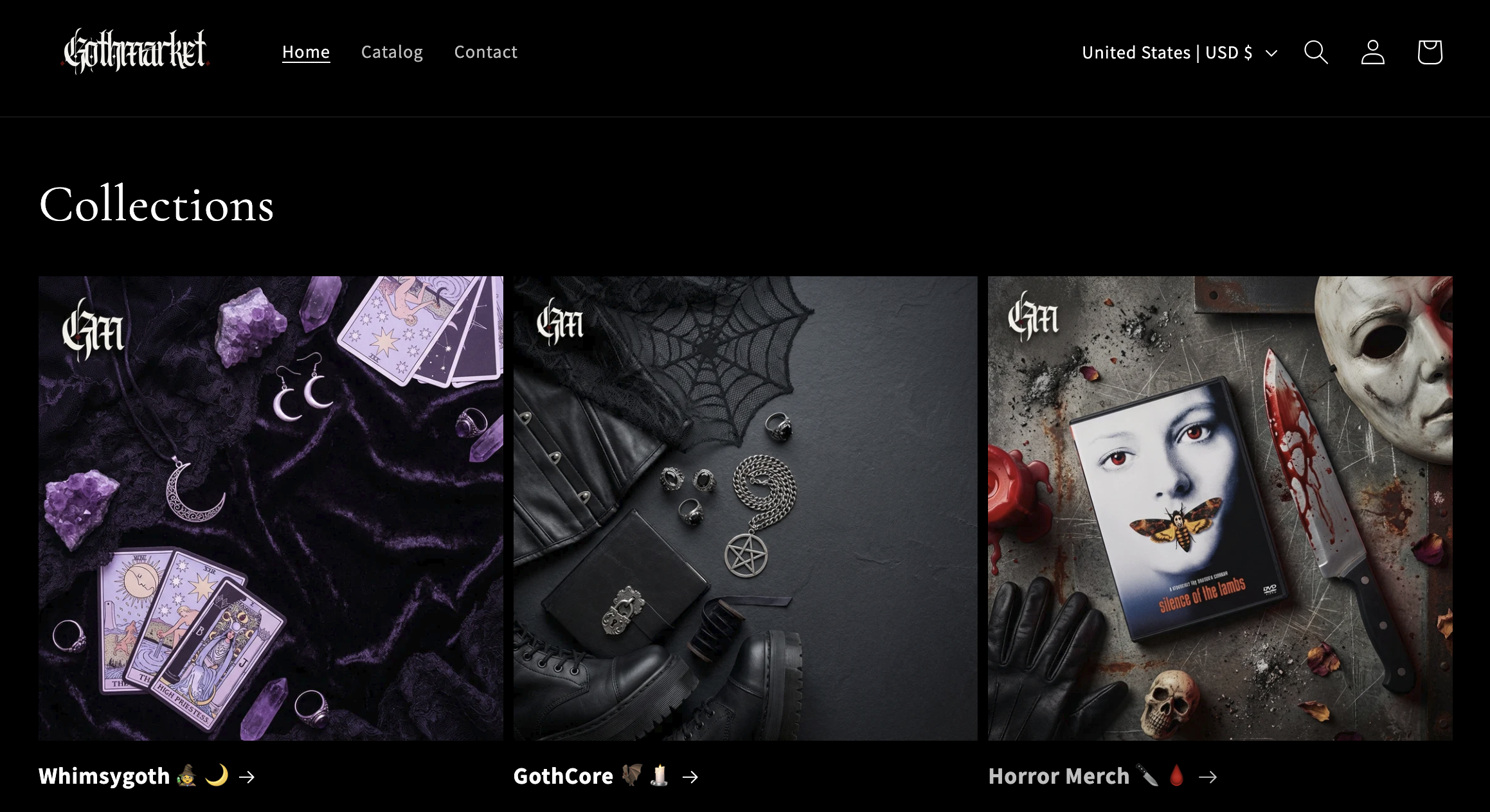
For shoppers, that means less scrolling and more finding. For indie sellers, it means your work is shown to buyers who came specifically for the dark aesthetic, not stumbled across it between unrelated listings. The commission model keeps upfront costs low; you pay when you sell.
Browse the marketplace or open your storefront at goth.market. Disclosure: this article is published by Goth.Market. The recommendation reflects genuine editorial assessment of platform fit for gothic and alternative-fashion shoppers and sellers.
Useful sources and further reading
- Depop — Depop’s own platform explains its circular-fashion model and seller onboarding; useful for understanding how peer-to-peer resale works before listing.
- Garmentory — Garmentory’s site details how boutiques and designers onboard and how the single-checkout model works for indie labels.
- Teen Vogue: Alt Style Is Coming Back — Editorial coverage of the current alt-style resurgence; useful for understanding demand-side trends.
- What Is Alternative Clothing? Styles, Trends & Identity — Goth’s own guide to alternative clothing categories and subcultures; start here if you’re matching your style to a platform.
- Top 8 Darkwearhub.com Alternatives 2026 — Internal roundup of alternative-clothing destinations; useful for comparing platform types side by side.
- Your Guide to Alternative Lifestyle Fashion Styles — Breaks down specific alt styles (goth, punk, witchy) and helps you match platform choice to aesthetic.
- Top 6 Best Gothic Clothing Brands 2026 — Brand-level comparison useful when deciding between direct retailers like Killstar, Blackcraft Cult, and Disturbia.