

Wǔfú to Camazotz: Bat Jewelry Meanings from Chinese Luck to Gothic
Bat jewelry carries three main threads of meaning that rarely overlap in the way people assume. In East Asia, a bat charm usually signals good fortune, tied to a centuries-old pun on the word for luck. In modern Western spiritual and gothic circles, the same shape gets read as rebirth or shadow work. Go back further and you find protective amulets, mourning jewelry, and even a Maya death god named Camazotz. The style, orientation, and material of the piece almost always tell you which tradition you’re actually looking at.
TL;DR:
- Mismatch in material and orientation can reveal whether a bat jewelry piece signals East Asian luck, gothic shadow work, or ecological respect.
- Unique traditional meanings include upside-down bats representing luck in Chinese culture, while European folklore associates them with death and the supernatural.
- Modern interpretations often focus on transformation, resilience, and nature, especially with realistic animal depictions and ecological motifs.
- Jewelry type influences symbolism: necklaces and pendants often carry strong messages, while rings and brooches tend to be more personal or decorative.
- Always verify the maker’s notes to understand a piece’s cultural or spiritual background, avoiding misinterpretation or cultural appropriation.
Table of Contents
- What do bats symbolize in East Asian jewelry, and why?
- How did Art Nouveau designers use bat motifs in jewelry?
- What did bats mean in European history and Victorian-era jewelry?
- How do modern spiritual and gothic communities interpret bat jewelry today?
- Does the jewelry type and design change the meaning?
- How do you choose or gift bat jewelry respectfully and meaningfully?
- How does Goth curate bat jewelry, and why does that matter?
- Why cultural context matters when you wear bat jewelry
- Where can you find curated bat jewelry with real symbolic context?
- Sources
- FAQ
What do bats symbolize in East Asian jewelry, and why?
The answer starts with a pun. In Chinese, the word for bat (蝠, fú) sounds identical to the word for good fortune (福, fú). That homophone turned the animal into one of the most enduring lucky symbols in Chinese decorative art, showing up on everything from Qing dynasty imperial robes to carved jade pendants. Group bats together in a traditional set called Wǔfú, representing the Five Blessings including longevity, wealth, health, virtue, and a peaceful death. Bat Conservation International traces this motif back many centuries across domestic objects and court regalia, which is a strong indicator this isn’t a recent marketing invention.
Orientation matters here in a way it doesn’t in most Western jewelry. An upside-down bat isn’t a design accident. It plays on a second pun, since “upside-down” and “arrive” share a similar sound pattern in Chinese, so a downward-facing bat signals that luck has already shown up, not that something has gone wrong.
Traditional East Asian bat pieces tend to pair the motif with specific symbols and materials:
- Coins, for wealth arriving alongside the bat’s blessing
- Peaches, representing longevity
- Stylized clouds, suggesting a heavenly or auspicious origin
- Jade, gold, and cloisonné enamel as the historical materials of choice
How did Art Nouveau designers use bat motifs in jewelry?
Bats became a favorite motif of Art Nouveau jewelers between roughly 1890 and 1910, and almost none of it had to do with fear. The movement prized flowing natural lines, asymmetry, and plaque à jour enamel, techniques that let a bat’s wing membrane look almost translucent, like stained-glass. Designers were drawn to bats partly through the era’s fascination with Asian art and partly because the creature’s silhouette fit the movement’s obsession with transformation and metamorphosis.
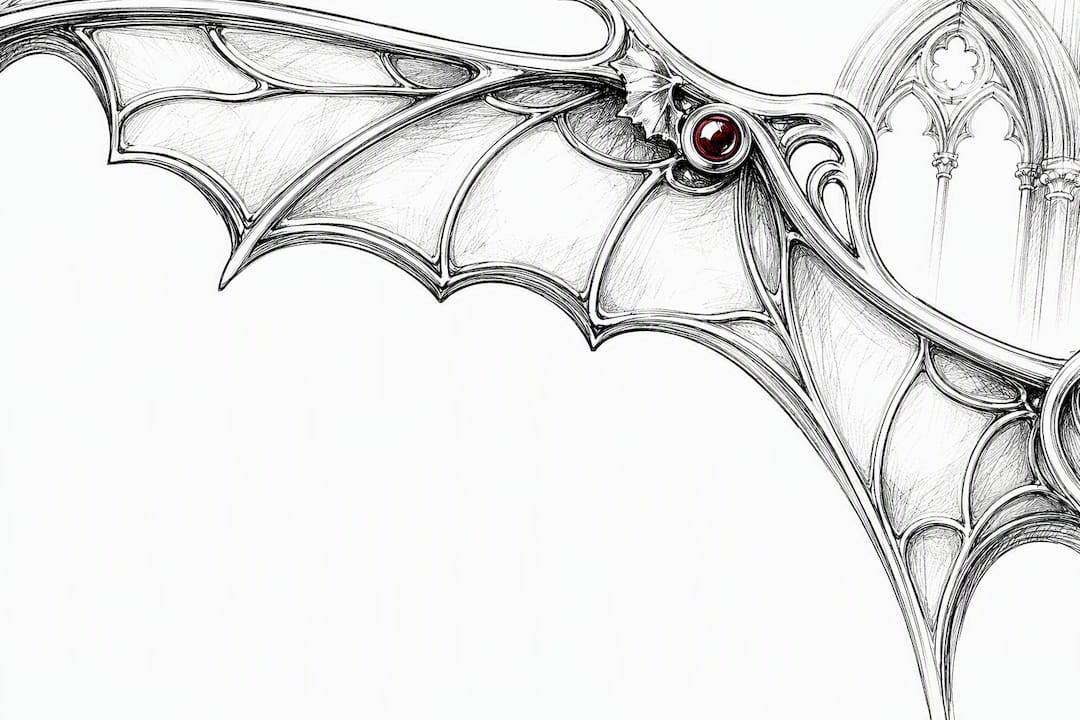
Antique Trader’s coverage of Art Nouveau bat jewelry notes that makers like René Lalique used bats for their visual dynamism and exotic associations, framed at the time as sophisticated taste rather than anything macabre. A bat brooch from this period was closer to a butterfly pin in intent: decorative, elegant, a little daring. If you find a bat piece with sinuous enamel wings and naturalistic detail rather than sharp gothic lines, it’s speaking that design language, not the vampire one.
What did bats mean in European history and Victorian-era jewelry?
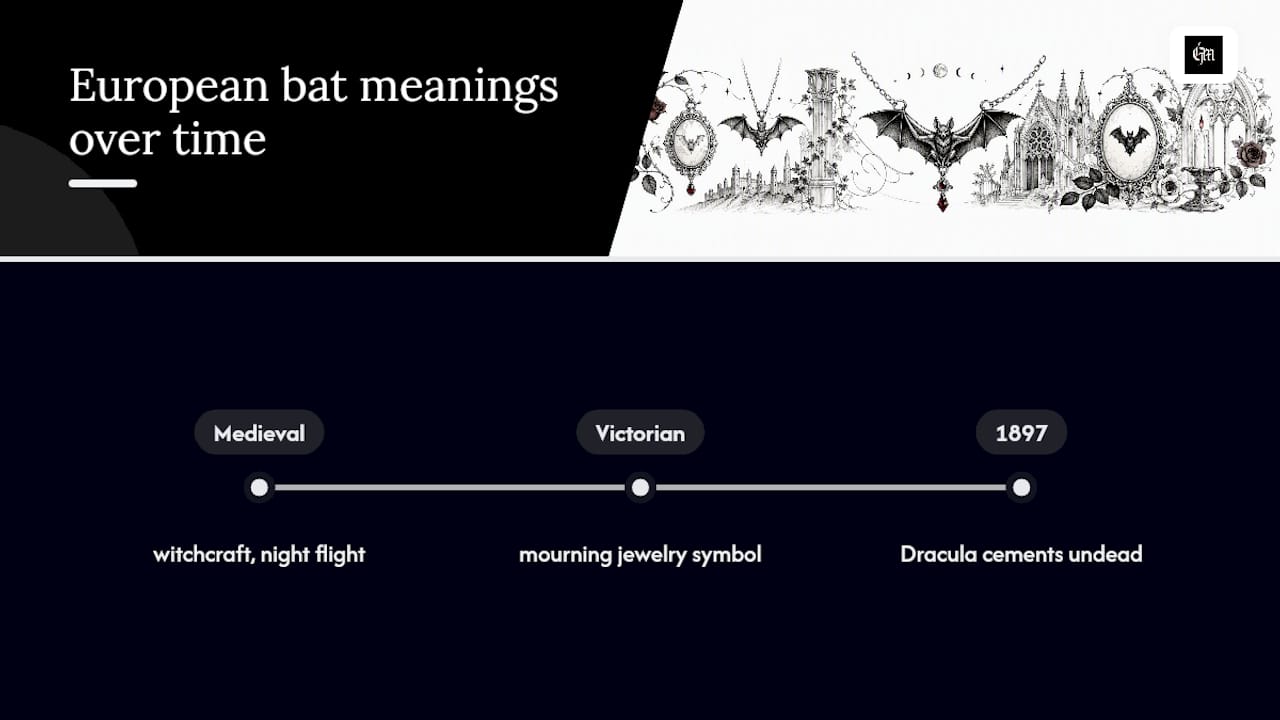
Long before Art Nouveau softened the image, European folklore had already made bats sinister. Medieval and early-modern witch lore linked bats to familiars and night flight, and that association stuck around for centuries. By the Victorian era, bats occasionally surfaced in mourning jewelry alongside more common memento mori symbols like skulls, hourglasses, and weeping willows, standing in for death’s nocturnal, unseen nature.
Then came the fiction. Bram Stoker’s Dracula and the wave of vampire literature that followed cemented bats as shorthand for the undead in the popular imagination, an association strong enough that it still shapes how most people read a bat pendant today, even when the wearer means something else entirely.
How do modern spiritual and gothic communities interpret bat jewelry today?
Contemporary spiritual and alternative-fashion circles have largely moved past the horror framing and settled on bats as symbols of rebirth, transformation, and intuition. One tracing of the “bat spirit animal” concept links this reading to pop-spirituality texts like Ted Andrews’s Animal Speak, and it’s worth noting this modern lens often flattens older, richer traditions into a single feel-good message.
Three distinct modern readings show up in circulation right now:
- Rebirth and transformation — drawn from the bat’s nocturnal habits and echolocation, read metaphorically as trusting senses beyond sight.
- Shadow work and resilience — popular in gothic subculture, where the bat stands for embracing what’s usually hidden rather than fearing it.
- Ecological respect — some designers lean into bats’ real-world role in pollination and pest control, using the motif to celebrate the animal itself rather than a myth about it, a point Symbolara’s overview of bat symbolism also picks up on.
A realistic, anatomically detailed bat pendant usually points toward that last, nature-focused reading. A stylized, sharp-winged silhouette usually points toward gothic identity and shadow work instead.
Does the jewelry type and design change the meaning?
Yes, and this is the single most useful trick for reading a piece you don’t have context for. A Nobbier points out that material and scale are reliable clues when you don’t know a piece’s origin story.
- Rings tend to read as intimate and personal, often tied to protection or a private shadow-work practice worn close to the body.
- Pendants and necklaces sit in view and often carry the strongest symbolic intent, since they’re chosen to be seen and discussed.
- Brooches, especially Art Nouveau ones, lean decorative and status-signaling rather than mystical.
- Orientation still matters: upside-down leans East Asian luck symbolism, upright with spread wings leans Western Gothic or vampiric.
- Materials carry their own dialect: jade and gold suggest the traditional luck reading, while oxidized silver and blackened metal suggest the modern gothic one.
Pro Tip: If a listing doesn’t specify the tradition behind a bat design, look at the metal first. Warm gold or jade almost always signals the East Asian luck reading; cold, darkened silver almost always signals the modern gothic one.
How do you choose or gift bat jewelry respectfully and meaningfully?
Start with the maker’s own notes before you assume a meaning. A well-documented occult jewelry piece usually states its symbolic intent directly, which saves you from projecting a reading the designer never intended.
- Check whether the listing names a tradition (Wǔfú, gothic shadow work, memento mori) rather than guessing from the shape alone.
- If you want the East Asian luck reading specifically, favor jade, gold, or pieces explicitly grouped in fives.
- For gifting, consider the recipient’s own cultural background. Handing someone a piece tied to a tradition they don’t share can land as appropriation rather than a compliment.
- Don’t assume every bat pendant is a vampire reference. It’s the most common misread in the category.
- Do ask the seller directly if the symbolism isn’t stated. Most independent jewelry makers are glad to explain their intent.
How does Goth curate bat jewelry, and why does that matter?
Goth.Market exists specifically for buyers who want more than a generic “gothic bat necklace” listing with no context. As a curated marketplace built around occult, witchy, and alternative aesthetics, it works with independent creators who write their own product notes, which means the symbolic framing behind a given piece is usually stated rather than left for you to guess.
That curation approach shows up a few ways:
- Product descriptions that name the intended tradition or aesthetic behind a design
- Editorial content from writers like Rey that walks through why occult jewelry resonates the way it does
- A marketplace structure that favors independent makers over mass-produced pieces with no story attached
For a category this loaded with cross-cultural meaning, that context is the difference between buying a symbol and buying a shape.
Why cultural context matters when you wear bat jewelry
The mistake I see most often is treating bat symbolism as one universal idea instead of several unrelated ones that happen to share an animal. A bat pendant can mean prosperity to one person and shadow work to another, and both readings are completely valid at the same time. What matters is knowing which tradition you’re actually invoking before you wear it or give it away.
Ask where a design comes from. Ask what the maker meant. That curiosity is worth more than any single definition I could hand you here.
— Rey
Where can you find curated bat jewelry with real symbolic context?
If you’ve made it this far, you already know a bat pendant isn’t just a bat pendant. It’s a choice between several distinct traditions, and the wrong pairing of metal and shape can send a message you didn’t intend. Goth.Market solves the problem most bat jewelry shoppers run into elsewhere: listings that show a picture and a price with zero context about what the design is actually referencing.
Every independent maker on the marketplace writes their own product notes, so you can see whether a piece leans toward East Asian luck symbolism, gothic shadow work, or straightforward Halloween styling like this vampire bat necklace and earring set. Browse the Goth and check the maker’s notes before you buy, so the piece you choose says what you actually want it to say.
Sources
- Good Luck Bats - Bat Conservation International
- Bats Soar High in Art Nouveau Jewelry
- Bat spirit animal meaning: Camazotz, Chinese Fú, Aristotle’s problem, European witches, and the 1993 pop source
- Bat symbolism in jewelry: history, meanings, and how to wear
FAQ
What are bats the symbol of?
Bats symbolize different things depending on the tradition: good fortune and the Five Blessings in Chinese culture, transformation and shadow work in modern Western spirituality, and death, witchcraft, or mourning in older European folklore. Mesoamerican cultures also link bats to death gods like Camazotz.
What does a bat ring mean?
A bat ring usually carries a more personal or private meaning than a pendant, since rings sit close to the body and are seen mostly by the wearer. In gothic contexts, that often reads as an ongoing personal practice, like shadow work or self-protection, rather than a public statement.
What does an upside-down bat represent?
An upside-down bat in East Asian design represents the arrival of good luck, based on a homophone pun where “upside-down” sounds like “arrive” in Chinese. Outside that tradition, an inverted bat usually has no special meaning beyond mimicking how bats actually roost.
What do bats symbolize biblically?
Biblical references to bats are limited and largely negative; the Book of Leviticus lists bats among unclean creatures not to be eaten. This is a much narrower reference than the rich symbolic traditions found in Chinese or Mesoamerican culture, and it hasn’t strongly shaped modern bat jewelry meanings.
Is bat jewelry considered lucky or unlucky?
It depends entirely on the tradition behind the piece. In Chinese design, bats are unambiguously lucky, tied to the word for fortune itself. In older European folklore, bats leaned unlucky or ominous, which is the association most Western pop culture still runs on today.
How can you tell what a specific bat jewelry piece is meant to represent?
Look at the material, orientation, and style together. Jade or gold with an upside-down bat points to East Asian luck symbolism, oxidized silver with sharp lines points to gothic shadow work, and naturalistic enamel detailing points to an Art Nouveau or ecological reading. When in doubt, check the maker’s product notes directly.