

6 Outfit Formulas That Reveal Goth vs Emo Fashion with Goth.Market
Goth fashion builds a theatrical, historically inspired look centered on near-total black, while emo fashion is a youth-driven, casual style built around band culture with black clothing accented by color. Goth pulls from Victorian mourning wear and gothic horror to create a look of macabre romance and artistic performance. Emo, by contrast, grew out of confessional lyrics and suburban teen scenes, favoring raw emotional honesty over aesthetic grandeur; this style became prominent especially in the early 2000s.
TL;DR:
- Goth fashion emphasizes flowing, structured silhouettes with black lace, velvet, and leather, while emo favors close-fitting streetwear with bright accents and graphic prints.
- Goth draws inspiration from Victorian mourning wear and gothic horror, whereas emo originates from 1980s emotional hardcore punk and became a mainstream youth style in the early 2000s via social media.
- Clothing choices reflect identity: goth outfits prioritize artisanal, vintage pieces like corsets and platform boots, while emo wardrobes rely on jeans, band tees, and layered casualwear.
- Makeup and hair for goth tends toward dramatic, sculptural looks with dark lips and jet-black or contrasting colors, while emo features softer, smudged eyeliner and choppy, layered hair with streaks.
- Combining elements is possible with deliberate styling, but blending the aesthetic signals between goth and emo requires careful pairing of signature pieces and silhouettes.
Table of Contents
- What visual cues separate goth and emo clothing, accessories, and silhouettes?
- What are the origins and major historical moments for goth and emo?
- How do goth and emo communities differ in values and identity?
- Which garments and fabrics are signature to each style and how to prioritize purchases?
- What makeup and hair choices typically identify goth versus emo looks?
- What are some quick outfit formulas to try for each style?
- What does Goth.Market’s perspective add to understanding goth style?
- What does wearing these styles actually feel like from the inside?
- Where can you find curated goth pieces to build your look?
- Where can you read more on goth and emo fashion history?
- Sources
- FAQ
What visual cues separate goth and emo clothing, accessories, and silhouettes?
Silhouette is the fastest tell. Goth outfits tend toward flowing, structured drama: floor-length skirts, fitted corsets, tailored coats with sharp lines. Emo outfits stay closer to streetwear, with skinny jeans, fitted tees, and layered hoodies built for movement rather than spectacle.
Color use diverges just as clearly. Goth fashion leans on an almost exclusively black palette, with texture doing the visual work instead of color. Emo style keeps black as a base but adds deliberate bright accents, stripes, or graphic prints. Fabric choice follows the same split: goth favors lace, velvet, and leather, while emo relies on cotton, denim, and knits.

Goth remains almost exclusively black, while emo often includes brighter accent colors as part of its visual identity, according to Wikipedia’s overview of gothic fashion. That single distinction explains why a goth outfit photographs as monochrome drama and an emo outfit reads as busier and more graphic.
Quick checklist for spotting the difference at a glance:
- Silhouette: goth flows and structures, emo fits close and casual.
- Palette: goth stays black throughout, emo adds color accents.
- Fabric: goth uses lace, velvet, and leather, emo uses cotton and denim.
- Accessories: goth wears occult jewelry and platform boots, emo wears studded belts and skate shoes.
What are the origins and major historical moments for goth and emo?
Goth fashion traces back to the late 1970s British post-punk scene, where bands and fans built a look around Victorian and Edwardian mourning dress, gothic horror imagery, and occult symbolism. That aesthetic language has kept renewing itself for decades rather than following a single trend cycle, according to scholars interviewed by University of Illinois News, who describe goth as an “undead” subculture that persists by constantly reinventing its visual and artistic references.
Emo’s roots sit in the 1980s emotional hardcore music, a harder, more confessional offshoot of punk. The style did not become a recognizable fashion movement until the 2000s, when it turned into a youth-driven, internet-connected scene. Early social platforms were central to that spread, according to BBC News reporting on the emo revival, which notes that MySpace and similar sites let fans trade style cues and mix aesthetics in real time.
A short timeline:
- Late 1970s: post-punk goth emerges in the United Kingdom, borrowing from Victorian dress and gothic literature.
- 1980s: emotional hardcore lays the musical groundwork for what becomes emo.
- 2000s: emo becomes a mainstream youth fashion movement, spread largely through MySpace and LiveJournal.
- 2010s onward: both styles persist in altered, hybridized forms across music and fashion subcultures.
The Oxford English Dictionary ties goth to both music and appearance, while its emo entry stays rooted in the music genre rather than a specific look, a distinction that still shapes how each subculture dresses today.
How do goth and emo communities differ in values and identity?
Goth culture treats clothing as artistic performance. Participants build looks around romantic melancholy, gothic literature, and horror aesthetics, and the community has stayed active for decades because it shares a visual and artistic vocabulary rather than a single sound or trend, according to scholars quoted by University of Illinois News. Dressing goth is less about fitting in and more about crafting a personal aesthetic statement.
Emo culture centers on emotional transparency. The scene grew up alongside early social media, where teenagers formed identity and community through shared playlists, journal entries, and photos as much as clothing. That digital-first formation shaped emo into something more collective and confessional than goth’s individual artistry.
Both communities get flattened by outsiders into “phases” or warning signs, but sociologists caution that clothing choices in both scenes reflect identity and resistance rather than danger signals. Gender expression tends to be fluid in both, with makeup, dyed hair, and androgynous silhouettes worn regardless of gender.

Which garments and fabrics are signature to each style and how to prioritize purchases?
Goth wardrobes reward investment in a few structured pieces: a well-made corset, a tailored coat, and platform boots will outlast trend cycles and anchor dozens of outfits. Lace and velvet pieces are worth buying secondhand when possible, since vintage textiles often have a richness that new synthetic versions lack.
Emo wardrobes work differently. Skinny jeans, band tees, and canvas sneakers are the backbone, and budget shopping makes sense here since the look leans on quantity and layering rather than a handful of statement pieces.
Goth essentials:
- Corsets, maxi skirts, and lace tops for structured drama.
- Velvet or leather outerwear for texture and silhouette.
- Platform boots as the go-to footwear.
Emo essentials:
- Skinny jeans and layered hoodies as the daily base.
- Band tees that signal music taste.
- Studded belts and canvas sneakers to finish the look.
Pro Tip: Mix one vintage or higher-quality piece, like a real velvet coat or leather boots, with budget basics elsewhere. It reads more authentic than an outfit built entirely from fast fashion.
What makeup and hair choices typically identify goth versus emo looks?
Goth makeup favors a pale base, dark lips in black or deep burgundy, and theatrical eye shapes built with heavy black liner or smoky shadow. Contouring tends to emphasize sharp cheekbones and a dramatic, almost sculptural finish.
Emo makeup is softer but still eyeliner-heavy: thick black liner rimming the eyes, sometimes smudged for a “just cried” look, paired with flushed cheeks rather than pale contouring. Hair takes on more visual weight in emo styling, with choppy, side-swept fringe as a signature element.
- Goth hair: often jet black, sometimes with dramatic color contrasts like white or deep red streaks.
- Emo hair: frequently dyed black or paired with bright streaks, styled with heavy layering and a swept fringe.
- Maintenance: both styles rely on regular touch-up dyeing and, for lighter shades, careful bleaching to avoid damage.
What are some quick outfit formulas to try for each style?
Three goth formulas to start with:
- Black lace top, floor-length velvet skirt, platform boots, and a silver pendant with occult imagery.
- Tailored black coat over a fitted corset, straight-leg trousers, and combat boots.
- Victorian-inspired blouse, high-waisted maxi skirt, and a choker for a romantic, period-influenced look.
Three emo formulas to start with:
- Band tee, skinny jeans, a studded belt, and canvas sneakers.
- Fitted hoodie layered over a striped long-sleeve shirt, paired with skinny jeans and skate shoes.
- Flannel shirt tied at the waist over a graphic tee, dark jeans, and a beanie.
Shopping order for either style: start with a base layer (shirt or top), add outerwear or a layering piece, choose footwear that matches the silhouette, then finish with jewelry or accessories.
Pro Tip: Pick one style’s silhouette and stick with it per outfit. Mixing a goth corset with emo skinny jeans and band patches can read as accidental crossover rather than an intentional hybrid look.
What does Goth.Market’s perspective add to understanding goth style?
Goth fashion treats clothing as symbolic rather than decorative. Occult jewelry, lace, and Victorian-inspired silhouettes carry meaning tied to mourning traditions and gothic literature, which is why many enthusiasts prioritize curated pieces from independent creators over mass-market basics. Readers who want a deeper look at that symbolism can explore Goth, and those building a wardrobe from scratch can check the breakdown of what defines goth clothing today.
What does wearing these styles actually feel like from the inside?
For many who wear goth or emo clothing, the style is less costume than shorthand for belonging. Goth crowds often become spaces for people who found comfort in aesthetic ritual and shared references to horror and romance. Emo scenes, especially in the MySpace era, gave teenagers a place to be openly emotional without judgment. Neither deserves to be reduced to a stereotype about danger or instability.
— Rey
Where can you find curated goth pieces to build your look?
If the corset-and-coat formula above appealed to you more than skinny jeans and band tees, Goth.Market’s GothCore collection is a solid starting point for structured, classic goth basics. For softer, more romantic pieces, the Whimsigoth collection leans into witchy, ethereal styling, and Curated Finds rotates unique pieces from independent creators you will not find on mass-market sites.
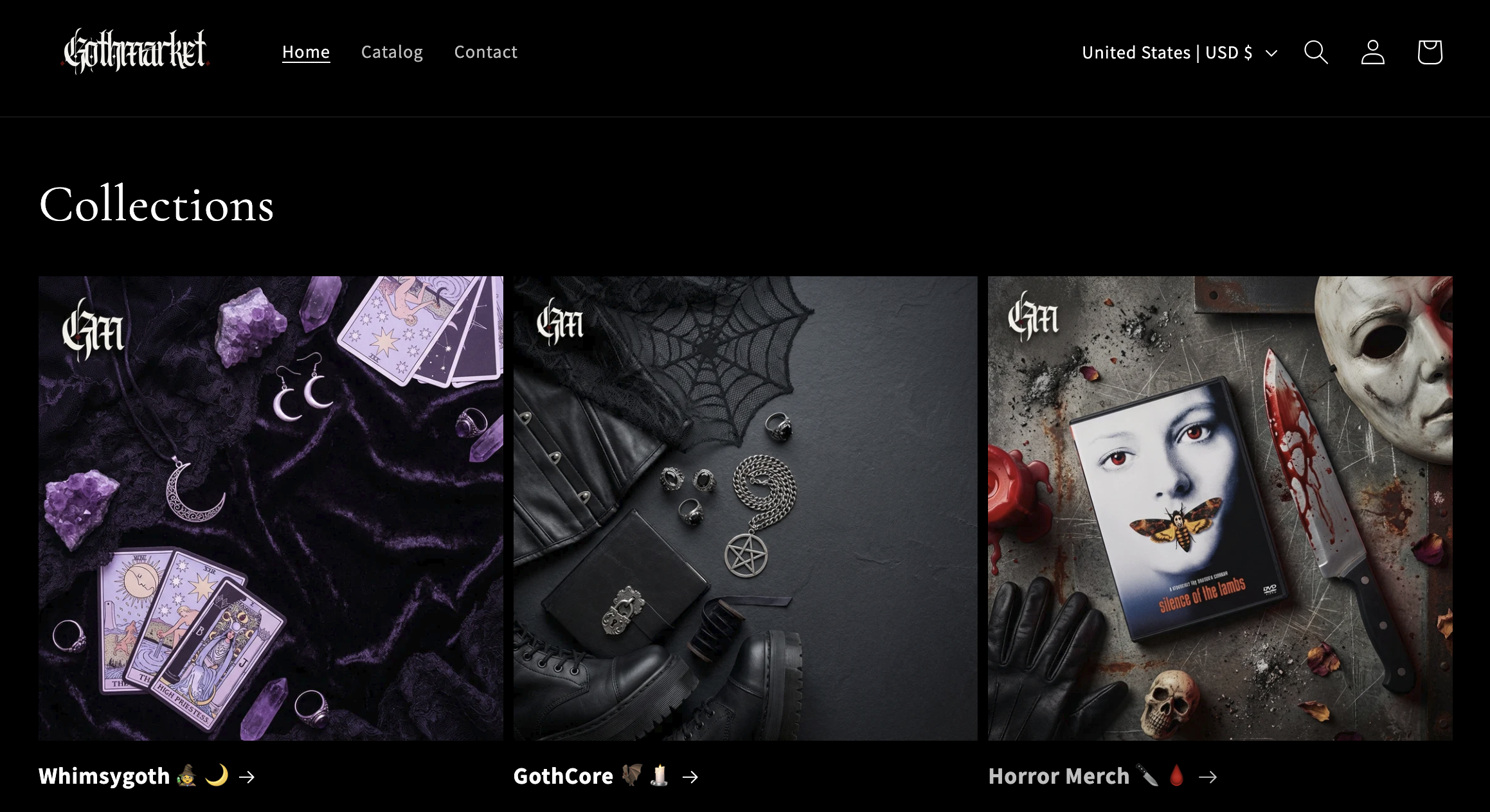
Goth.Market focuses on curated items from independent makers rather than mass-produced basics, which matters if you want pieces that actually look like the outfit formulas above instead of a diluted version of them.
Where can you read more on goth and emo fashion history?
- University of Illinois News covers goth’s academic standing as a lasting subculture.
- Wikipedia details gothic fashion’s historical and stylistic staples.
- BBC News traces emo’s 2000s rise and MySpace-era spread.
Sources
- Gothic fashion — Wikipedia
- ‘Oh My Goth’: Dark cultural phenomenon thriving, scholars say — University of Illinois News
- Emos and scenes relive their teenage years in the noughties — BBC News
- How are goth, emo and scene different from one another? — BBC News (magazine)
FAQ
Are goth and emo the same style?
No, they are related but distinct. Both use dark palettes and heavy eyeliner, but scholars distinguish them by cultural philosophy: goth centers on macabre romance and artistic exploration, while emo centers on raw emotional honesty and confessional expression. They share the broader “alternative” umbrella but keep separate identities.
How do you tell if you are goth or emo?
Look at what draws you in first. If you are pulled toward Victorian silhouettes, occult symbolism, and theatrical black-on-black outfits, that points to goth. If you gravitate toward band tees, skinny jeans, and emotionally direct lyrics as a form of self-expression, that points to emo. Many people mix elements without needing to pick one label.
Is Wednesday Addams emo or goth?
Wednesday Addams reads as goth rather than emo. Her style draws on gothic literary tradition, dramatic silhouettes, and a macabre sense of humor rather than the band-culture, confessional aesthetic that defines emo fashion.
Is Billie Eilish a goth?
Billie Eilish’s style borrows visual elements from goth, such as dark colors and dramatic silhouettes, but it also pulls from streetwear and pop aesthetics that do not map neatly onto either subculture. She is better described as alternative rather than strictly goth or emo.
What decade did emo fashion peak in popularity?
Emo fashion was most visibly prominent in the early 2000s, becoming a well-known youth subculture partly spread through MySpace and similar early social platforms, according to BBC News. Bands that blended emo elements into mainstream rock helped push the look beyond niche music scenes.
Where did goth fashion originally come from?
Goth fashion started in the late 1970s British post-punk scene, drawing on Victorian and Edwardian mourning dress along with gothic horror imagery. The style has kept evolving for decades rather than fading after one trend cycle, since it functions as a shared aesthetic language rather than a single look.
Can you combine goth and emo elements in one outfit?
You can, but it works best when done intentionally rather than by accident. Pair one clearly goth piece, like a velvet coat or occult jewelry, with one emo staple, like skinny jeans or a band tee, and keep the rest of the outfit simple so the combination reads as a deliberate hybrid instead of mismatched signals.
Does hair color matter for telling goth and emo apart?
Hair color alone will not tell you much, since both styles often use black dye or bold color streaks. The bigger difference is styling: goth hair tends toward sleek or dramatically voluminous looks, while emo hair typically features choppy layers and a heavy, side-swept fringe.