

Condition Every 2 to 3 Months: Vegan Leather Care for Gothic Wardrobes
The safest routine for most vegan leather is simple: wipe it down with a soft microfiber cloth dampened in warm water and a drop of mild soap, then dry it immediately with a clean cloth. That covers the vast majority of PU and PVC pieces you’ll find on hangers or shelves. The one exception is plant-based leather (piñatex, apple, mycelium), which sometimes needs the maker’s specific instructions instead of the general method. Treated right, a well-made vegan leather piece can last for years; treated with heat or harsh solvents, it can crack or peel within months.
TL;DR:
- Vegan leather made from polyurethane or PVC can be cleaned easily with mild soap and warm water, but plant-based varieties often need specific care instructions.
- Regular wiping with a damp microfiber cloth and avoiding harsh chemicals or abrasive scrub pads can keep vegan leather in good condition for years.
- Stains like ink respond well to alcohol, while grease is best absorbed with baking soda; heavy scrubbing or bleach can cause irreversible damage.
- Conditioning vegan leather is unnecessary and can be harmful if using products designed for animal leather; instead, use products made specifically for synthetic surfaces.
- Store vegan leather items away from direct sunlight and heat, and handle with care to prevent cracking, fading, or warping over time.
Table of Contents
- What Is Vegan Leather and How Do Types Change Care?
- How Do You Clean Vegan Leather Step by Step?
- How Do You Treat Stains, Ink, and Odors on Vegan Leather?
- Should You Condition Vegan Leather, and What Product Should You Use?
- How Should You Store and Prevent Damage to Vegan Leather Items?
- What Should You Avoid Doing to Vegan Leather?
- What Should You Know Before Buying Vegan Leather for a Curated Wardrobe?
- How We Think About Care and Sustainability at Goth.Market
- Where to Find Curated, Care-Friendly Vegan-Leather Pieces on Goth.Market
- Sources
- FAQ
What Is Vegan Leather and How Do Types Change Care?
“Vegan leather” isn’t one material. It’s an umbrella term covering polyurethane (PU), polyvinyl chloride (PVC), and a newer wave of plant-based alternatives made from pineapple leaf fiber, apple peel waste, cactus, or mycelium. PU and PVC both work the same basic way: a plastic coating bonded to a fabric or foam backing, which is why they’re durable and mostly waterproof. Plant-based versions are different. Many still rely on plastic binders to hold their fibers together, but the surface layer itself can be thinner and more delicate, and some require different, gentler care than standard PU.
The rule of thumb that saves you guesswork:
- PU and PVC: tolerate a diluted mild soap solution without much fuss.
- Plant-based blends: check the brand’s care tag before you clean, since formulations vary widely between makers.
- Anything with visible texture or a matte, paper-like finish: treat as delicate until proven otherwise.
How Do You Clean Vegan Leather Step by Step?
You don’t need a cabinet full of products. Gather two or three microfiber cloths, a small bowl of warm water, a mild soap (dish soap diluted heavily, or baby shampoo works fine), a few cotton swabs, and a soft-bristled brush for crevices and seams.
Here’s the sequence that keeps you from doing any damage:
- Wipe off loose dust and dirt with a dry microfiber cloth before you introduce any liquid.
- Test your soap solution on a hidden spot, like the inside of a strap or a bottom seam, and wait a few minutes to check for discoloration.
- Mix a few drops of mild soap into warm (not hot) water in a bowl or spray bottle.
- Dampen a cloth, wring it out well, and wipe the surface in small sections rather than soaking the whole item at once.
- Go over each section again with a clean, barely damp cloth to lift off any leftover soap.
- Pat dry with a fresh towel and let the piece air-dry completely before you use or store it.
Because most faux leather is a sealed, non-porous surface, dirt tends to sit on top rather than soak in, which is why a quick wipe handles the majority of everyday grime. A light wipe-down every few weeks, or whenever you notice buildup, is plenty for items in regular rotation.
Watch for a few red flags that mean you should stop and check the manufacturer’s guidance instead of improvising:
- The surface feels tacky or gummy even when dry.
- You spot bubbling, flaking, or a chalky white residue.
- The item has mixed materials (suede panels, metallic finishes, embroidery) that plain soap and water could stain.
How Do You Treat Stains, Ink, and Odors on Vegan Leather?
Ink comes off with a tiny amount of isopropyl alcohol on a cotton swab. Test a hidden spot first, then dab gently at the mark instead of rubbing, which just spreads it further into the seams.
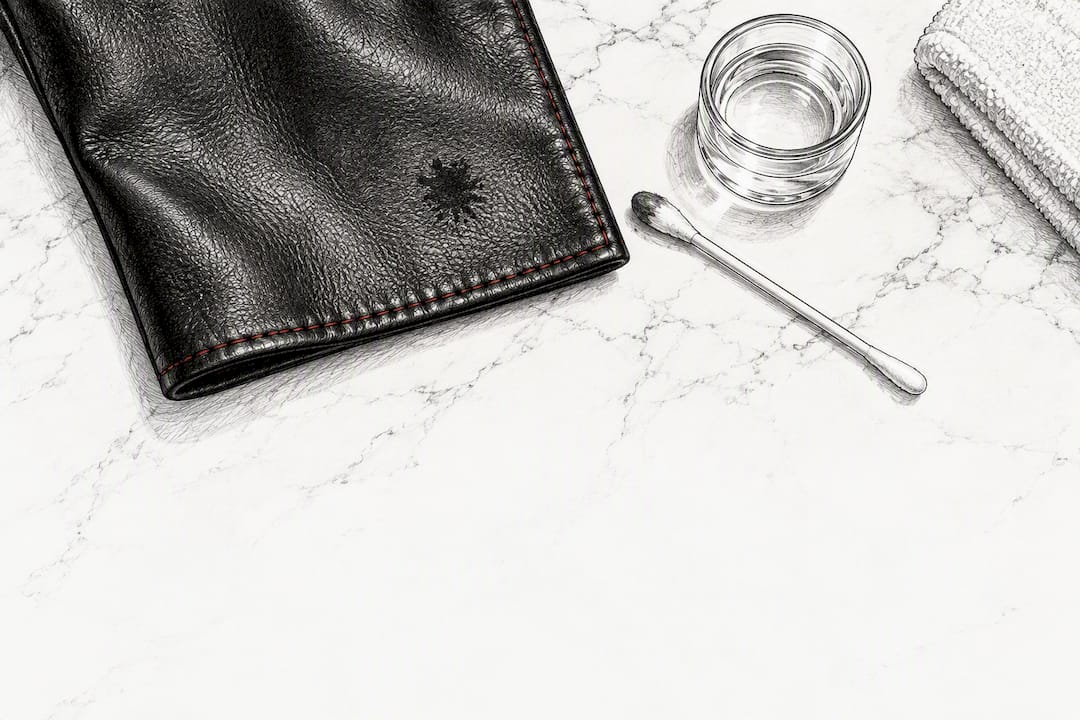
Grease and oil respond well to baking soda. Sprinkle it over the spot, let it sit for 15 to 20 minutes to absorb the oil, brush it away, then follow with a standard mild soap wipe to clear any residue.
Dye transfer (from dark jeans onto a light bag, for instance) and light scuffs usually lift with a gentle eraser or the same soap-and-water method. Skip bleach entirely and avoid heavy scrubbing, which can wear through the coating faster than the stain itself would fade.
Odor is a lining problem more often than a surface one. Air the item out somewhere ventilated, and tuck a small baking soda sachet inside overnight to absorb smells. Resist the urge to spray the outer surface with vinegar repeatedly. It won’t do much for the odor and can dull the finish over time.
Should You Condition Vegan Leather, and What Product Should You Use?
Skip anything labeled for genuine leather. Traditional leather conditioners are formulated for animal hide and typically leave a greasy, uneven residue on synthetic surfaces instead of soaking in the way they’re designed to.
Use a product made specifically for faux or vegan leather, and apply it sparingly. A small amount, tested on a hidden area first, goes a long way. For bags, jackets, or shoes in heavy rotation, conditioning every two to three months helps keep the surface from drying out and cracking. For items you wear occasionally, regular cleaning and a soft buff with a dry cloth are usually enough on their own.
Pro Tip: Apply conditioner with a cloth, not directly onto the leather. It spreads more evenly and you’ll use far less product overall.
How Should You Store and Prevent Damage to Vegan Leather Items?
Sunlight and heat are the two biggest threats to any faux leather piece. UV exposure fades color and dries out the coating, while heat from radiators, car dashboards, or hair dryers can warp or crack it outright. If something gets rained on, let it air-dry fully away from any direct heat source.
A few habits protect shape and structure over time:
- Store bags and jackets on padded hangers, or stuff bags lightly with tissue paper to hold their form.
- Rotate which bag or jacket you wear regularly instead of running one piece into the ground.
- Smooth wrinkles with steam held a few inches away, never with a direct iron.
What Should You Avoid Doing to Vegan Leather?
Bleach, strong solvents, abrasive scrub pads, and any oil formulated for animal leather all cause more harm than good. These can trigger delamination, where the plastic surface separates from its backing, along with surface clouding, sticky residue, and faster microplastic shedding. Coconut oil and Vaseline are two of the most common myths. Both often leave synthetic surfaces gummy rather than nourished, and neither of the reverses cracking that’s already started.
What Should You Know Before Buying Vegan Leather for a Curated Wardrobe?
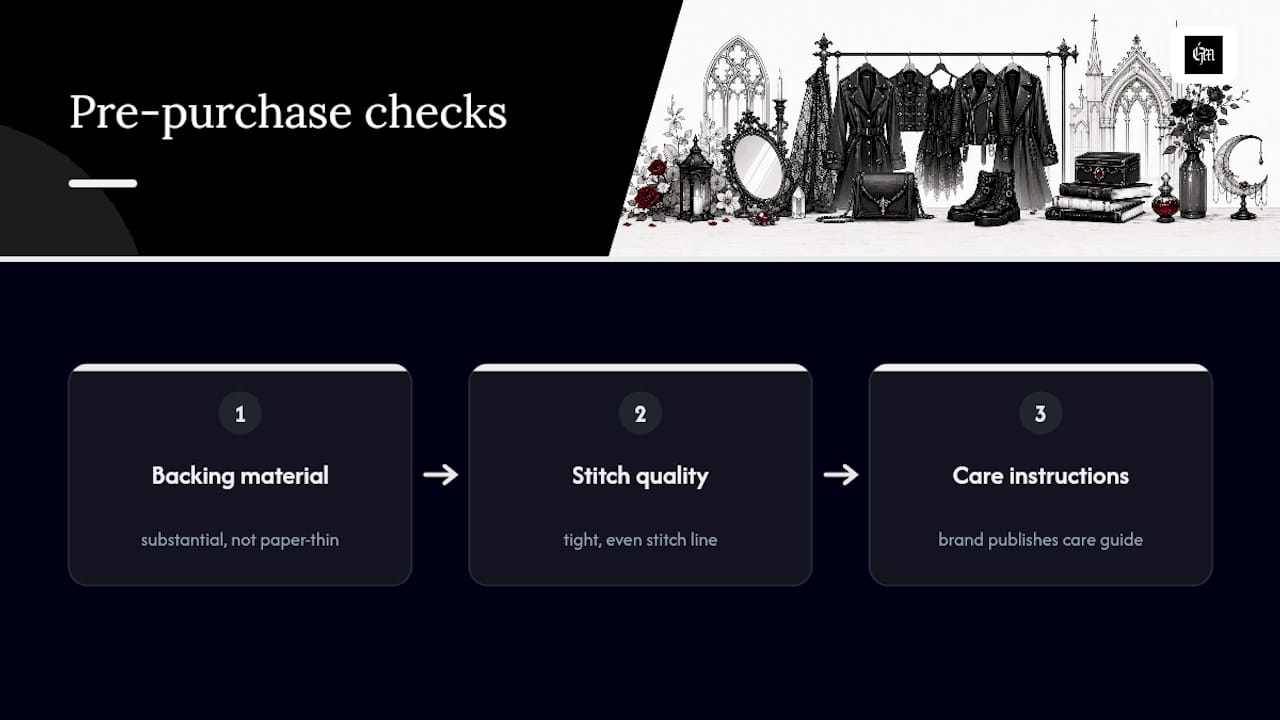
Before you buy, check three things: the backing material, the stitch quality, and whether the brand publishes care instructions at all. A tight, even stitch line and a substantial (not paper-thin) backing usually signal a piece built to survive real wear.
For everyday bags, boots, or jackets, sturdy PU tends to outlast delicate plant-based alternatives, which fit better as occasional or statement pieces. Goth.Market’s own care guide for alternative fashion walks through more of these buying signals in detail.
How We Think About Care and Sustainability at Goth.Market
Mending a scuffed jacket beats replacing it, and rotating pieces instead of wearing one into the ground stretches its life further than any single cleaning trick. Stash a few silica packets with stored items, invest in padded hangers, and pledge to give your pieces a break between wears.
— Rey
Where to Find Curated, Care-Friendly Vegan-Leather Pieces on Goth.Market
This marketplace offers vegan leather items curated from independent makers who focus on construction and finish, aiming to provide pieces with quality backing and stitch work.

If you’re building a wardrobe that leans into gothic, witchy, or dark romantic aesthetics, start with the GothCore collection for structured jackets and boots, or browse Whimsigoth finds for softer, flowing pieces. Prefer a broader mix across styles and materials? The Curated Finds collection pulls together higher-quality vegan leather items vetted for durability alongside aesthetic. Browse a collection now and check each listing’s material notes before you add it to your cart.
Sources
A few sources back the guidance above and are worth a closer read if you want more depth:
- How to Clean Vegan Leather (Daniel Wellington, 2025)
- How to clean a vegan leather jacket (Sherpa Leather)
- What is vegan leather (Manuel Dreesmann blog)
- Vegan leather isn’t as sustainable as brands claim (The Conversation, 2026)
- How to clean a vegan leather bag (Foley + Corinna)
FAQ
What Is the Downside of Vegan Leather?
The main downside is durability under stress from heat and harsh cleaners. Many vegan leathers, especially PVC and some plant-based blends, are more prone to cracking, peeling, or delamination over time than genuine leather, and some plant-based versions still rely on plastic binders that complicate both longevity and recycling.
What’s the Best Thing to Clean Vegan Leather With?
A soft microfiber cloth dampened with warm water and a small amount of mild soap is the safest and most widely recommended method. Wipe in sections, remove soap residue with a second clean damp cloth, then dry immediately rather than letting it air-dry on its own.
What Is the Lifespan of Vegan Leather?
With proper care, a well-made vegan leather item commonly lasts several years of regular use. Routine gentle cleaning and sensible storage tend to extend functional life meaningfully, even though full restoration isn’t always possible once the coating starts to crack.
Can You Use Dawn Dish Soap on Faux Leather?
Yes, heavily diluted Dawn or a similar mild dish soap works fine for most PU and PVC pieces, as long as you test a hidden spot first. Use only a few drops in a bowl of warm water. Full-strength dish soap can strip finishes or leave a dulling residue on some coatings.
Do You Need to Condition Vegan Leather Like Real Leather?
No. Traditional leather conditioners are made for animal hide and often leave synthetic surfaces greasy or sticky. Use a conditioner labeled specifically for faux or vegan leather, applied sparingly, roughly every two to three months for items in heavy rotation.
How Do You Get Ink Out of Vegan Leather?
Dab a small amount of isopropyl alcohol onto a cotton swab and gently press it against the ink mark after testing a hidden area first. Avoid rubbing, since that spreads the stain, and follow up with a light soap-and-water wipe to remove any leftover residue.