

Step-by-step gothic fashion care for lasting style
TL;DR:
- Proper care and storage significantly extend the lifespan of gothic fashion pieces. Different materials like leather, velvet, lace, and cotton require specific cleaning and handling methods. Regular inspection and mindful maintenance help preserve the aesthetic and storytelling of gothic attire.
Gothic fashion is built to make a statement, but even the most striking velvet coat or aged leather jacket can lose its edge without proper care. Beloved pieces crack, fade, and lose their shape not from age alone, but from avoidable mistakes like plastic storage, over-washing, or a quick pass with the wrong iron. This guide walks you through a clear, sequential process to maintain your alternative wardrobe from cleaning to long-term storage, so the pieces that define your aesthetic stay exactly the way you intended them.
Table of Contents
- What you need: Essentials for gothic fashion care
- Step 1: Cleaning gothic fashion basics
- Step 2: Drying and storage to maximize longevity
- Step 3: Troubleshooting and common care mistakes
- Step 4: Verifying results and ongoing garment care
- Hard truths about caring for gothic attire: experience over perfection
- Enhance your gothic style with curated accessories
- Frequently asked questions
Key Takeaways
| Point | Details |
|---|---|
| Material-specific care | Leather, velvet, and structured pieces need tailored cleaning and storage techniques for best results. |
| Smart storage extends life | Using padded hangers, flat storage, and breathable bags keeps gothic attire wearable for years. |
| Wash less, wear more | Washing cotton pieces less frequently can double their lifespan without sacrificing style. |
| Embrace imperfections | Minor aging and signs of wear can actually enhance the unique gothic character of your wardrobe. |
What you need: Essentials for gothic fashion care
Before touching a single garment, knowing what you’re working with makes all the difference. Gothic wardrobes are built from materials that each demand their own approach. Treating a velvet cape the same way you’d handle a cotton band tee is a fast track to ruin.
Core gothic materials and their care profiles:
- Leather and faux leather: Prone to cracking without regular conditioning. Leather items require specific tools and storage to prevent long-term damage.
- Velvet: Crushes easily and attracts dust. Needs soft handling and careful washing.
- Lace: Delicate and prone to snagging. Always treat with minimal agitation.
- Cotton blends: The most forgiving, but still benefit from reduced washing frequency.
Essential tools to have on hand:
- Damp lint-free cloths for leather wiping
- Gentle, fragrance-free detergent
- Soft bristle brush for velvet pile restoration
- Padded hangers for structured garments
- Breathable cotton or muslin storage bags
- Cedar blocks or dried lavender for moth deterrence
| Material | Recommended tool | Storage method |
|---|---|---|
| Leather | Conditioning cream, damp cloth | Padded hanger, cool dark space |
| Velvet | Soft bristle brush | Hanging, breathable bag |
| Lace | Gentle detergent, mesh laundry bag | Folded flat, cotton wrap |
| Cotton blends | Standard gentle wash | Folded, cedar-protected drawer |
Proper storage alone does significant work. Proper storage doubles the lifespan of cotton clothing, which means your gothic wardrobe essentials can stay pristine with minimal extra effort.
Pro Tip: Reduce how often you wash cotton gothic pieces. Spot clean between wears and only run a full wash when genuinely necessary. This single habit can effectively double how long your pieces hold their shape and color.
Step 1: Cleaning gothic fashion basics
With your materials and tools ready, cleaning becomes much less stressful when you follow a material-specific approach. The golden rule is simple: always check the garment label before anything else.
Cleaning by material, step by step:
- Leather: Wipe the surface gently with a slightly damp cloth to remove surface dust and oils. Apply a leather conditioner in circular motions, then let the piece air out in a shaded, ventilated space. Never soak leather or expose it to direct heat.
- Velvet: Velvet demands dry cleaning as the preferred method. If dry cleaning isn’t practical, hand wash in cool water with a small amount of gentle detergent, working as little as possible to avoid crushing the pile.
- Lace and cotton blends: Use a gentle machine cycle in a mesh laundry bag, or hand wash in cool water. Avoid wringing. Lay flat to reshape while damp.
- Embellished pieces: Spot clean around hardware, studs, or embroidery using a damp cloth. Full submersion risks loosening adhesives or oxidizing metal details.
Avoid direct sunlight and humidity during and after cleaning. Both cause irreversible fading, fiber weakening, and mildew growth on dark fabrics.
| Cleaning method | Best for | Avoid for |
|---|---|---|
| Dry cleaning | Velvet, structured pieces | Everyday cotton items |
| Hand wash (cool) | Lace, velvet (backup) | Leather, heavily embellished |
| Gentle machine cycle | Cotton blends, knits | Velvet, leather, corsets |
| Spot cleaning | All materials | Full-coverage stains |
Some sources allow hand washing velvet in emergencies, but the label is always the highest authority. When in doubt, choose the most conservative method available. Tips for caring for black clothing can also help you preserve color intensity between washes.
Pro Tip: Use a garment steamer instead of a traditional iron on delicate fabrics like velvet and lace. Steam relaxes fibers without the crushing pressure of a hot iron plate, keeping texture and shape intact.

Step 2: Drying and storage to maximize longevity
Cleaning is only half the equation. How you dry and store gothic fashion pieces determines whether they stay gallery-worthy or slowly deteriorate between wears.
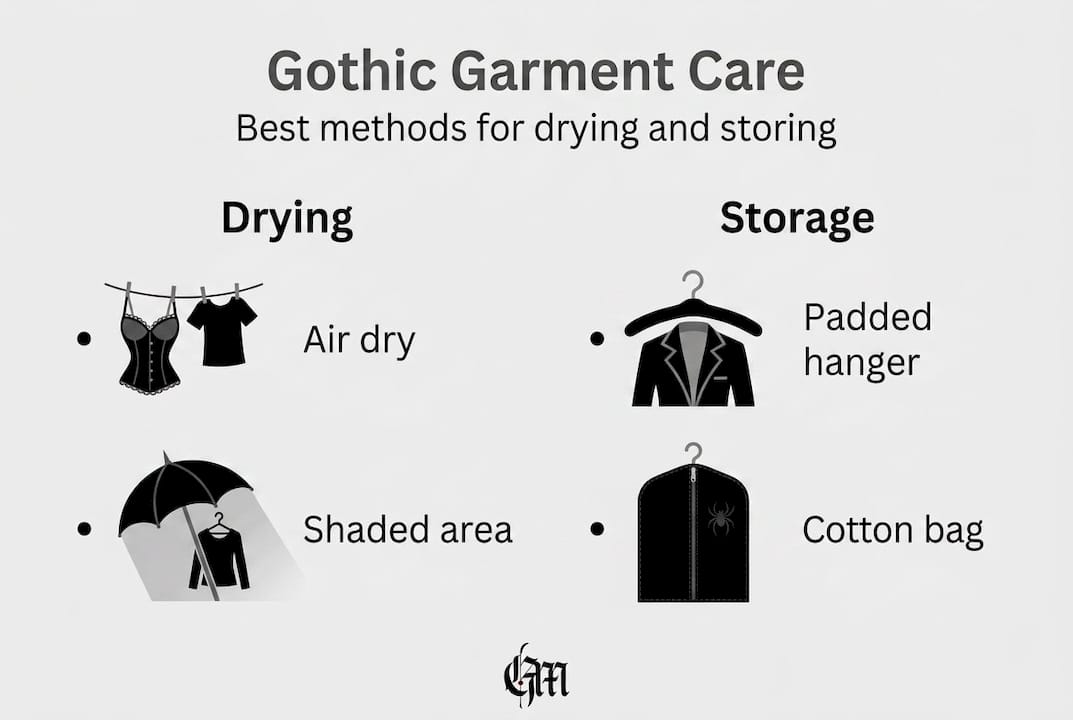
Drying rules by garment type:
- Lay flat: corsets, structured bodices, lace pieces, and any garment with boning
- Hang on padded hangers: coats, velvet dresses, structured jackets
- Never use a tumble dryer on leather, velvet, or lace
- Air dry in a shaded, ventilated space away from direct sunlight
Storage dos and don’ts:
- Do use breathable cotton or muslin bags for long-term storage
- Do add cedar blocks or dried lavender to deter moths naturally
- Do store garments in a cool, dry, dark environment
- Don’t use plastic bags or airtight containers for clothing storage
- Don’t hang knits or lace for extended periods as they stretch under their own weight
- Don’t stack leather items under heavy objects
Storage best practices include padded hangers for most pieces, flat storage for corsets and structured garments, breathable bags instead of plastic, and cedar or lavender as natural moth deterrents in a cool, dry, dark space away from sun and humidity. These simple conditions apply directly to every piece in your gothic wardrobe storage rotation.
| Item type | Drying method | Storage method |
|---|---|---|
| Leather jacket | Air dry, shaded | Padded hanger, breathable bag |
| Corset | Lay flat | Flat in cotton wrap |
| Velvet dress | Padded hanger, no heat | Hanging in breathable bag |
| Lace blouse | Lay flat on towel | Folded flat, cotton tissue |
Pro Tip: When airing out leather, choose a ventilated shaded area and give it at least six hours before returning it to storage. Sunlight accelerates the breakdown of both natural and synthetic leather, causing fading and brittleness far faster than regular wear.
Step 3: Troubleshooting and common care mistakes
Even with solid routines, issues appear. Knowing how to spot and fix them quickly keeps small problems from turning into permanent damage.
Common gothic wardrobe issues and fixes:
- Velvet crushing: Velvet is prone to crushing and dust attraction. To restore flattened pile, hold the fabric over steam from a kettle or garment steamer, then gently brush in the direction of the pile with a soft bristle brush. Never rub against the pile.
- Leather cracking: Apply a generous layer of leather conditioner and work it in with circular strokes. For deep cracks, use a leather repair kit with color-matched filler before reconditioning. Prevention is always easier than repair.
- Faded blacks: Wash black cotton pieces with a dedicated black-fabric dye refresher during the rinse cycle. Avoid detergents with optical brighteners, which actively strip dark pigment.
- Mildew on leather or fabric: Wipe leather mildew with a cloth dampened in diluted white vinegar, then allow full air drying before conditioning. For fabric, isolate the piece and treat with a fabric-safe mildew remover before washing.
The single most common gothic wardrobe disaster is plastic bag storage. Moisture gets trapped, mildew develops, and your favorite pieces are silently ruined over a single off-season.
Mistakes to stop making immediately:
- Over-washing garments when spot cleaning would do the job
- Storing damp or not-fully-dry garments in closed spaces
- Using plastic garment bags for seasonal storage
- Ironing directly on velvet or lace without a pressing cloth
Take the time to curate a gothic wardrobe with longevity in mind and these issues become far less frequent.
Step 4: Verifying results and ongoing garment care
Addressing problems is reactive. Building a regular inspection and maintenance routine is where your wardrobe truly benefits long-term.
Monthly inspection checklist:
- Check leather for early cracking or dryness along seams and folds
- Look for color fading or pilling on velvet and cotton pieces
- Inspect lace for snags, pulls, or yellowing
- Check structured garments for shape loss or boning movement
- Look inside storage bags for any signs of moisture or pests
Setting up a maintenance calendar:
- Monthly: Quick visual inspection of all stored and worn pieces
- Seasonal: Full clean, condition, and re-store items not in current rotation
- Annually: Deep clean all leather with conditioner, refresh cedar or lavender deterrents
- As needed: Spot clean, steam, or repair before issues spread
Full-grain leather lasts decades with proper care, cotton velvet typically holds strong for three to five years, and reducing washes by 50% can effectively double the life of cotton garments. These are not minor improvements. They represent real savings and a wardrobe that actually ages with you.
During humid months, increase ventilation for stored pieces by opening storage areas periodically. Humidity is one of the fastest ways to introduce mildew and fabric weakening even in otherwise well-kept collections. For inspiration on styling with gothic fashion, pairing well-maintained pieces with fresh accessories keeps the look evolving without replacing what you already own.
Pro Tip: Keep a small notebook or digital note tracking major care actions for your most valuable pieces. Recording the date you last conditioned a leather jacket or re-stored a corset takes thirty seconds and saves you from guessing later.
Hard truths about caring for gothic attire: experience over perfection
Here is something most care guides won’t say out loud: obsessing over perfect maintenance can actually work against your aesthetic. Gothic fashion has always drawn power from its relationship with time, wear, and imperfection. A leather jacket with subtle creases earned through years of actual use tells a story that a pristine showroom piece cannot.
The trap many people fall into is treating their wardrobe like a museum rather than a living part of their identity. Consistent care matters far more than flawless care. A piece cleaned and stored reasonably every time will always outlast one that’s aggressively perfect twice a year and neglected in between.
We’d encourage you to build routines that fit your actual life. If dry cleaning velvet every time isn’t realistic, a careful hand wash done consistently is far better than doing nothing because the ideal method isn’t available. Adapt. Evolve your approach based on what your real wardrobe actually needs. Your authentic gothic style should reflect who you are, not a fear of imperfection.
Enhance your gothic style with curated accessories
With your wardrobe in top shape, it’s the perfect moment to think about the pieces that complete the look. Care principles extend beyond clothing. The jewelry and accessories you choose deserve the same attention, and starting with quality pieces makes that care worthwhile.

At Goth.Market, we curate accessories designed to complement the alternative aesthetic you’ve worked to protect. Explore statement unique gothic jewelry that pairs with your preserved wardrobe, or discover the layered drama of the flame heart choker for an instant focal point. If you’re drawn to something a little more whimsical and dark, the Whimsygoth collection brings together pieces that balance the mystical with the wearable. Your maintained wardrobe deserves accessories that match its quality.
Frequently asked questions
How do I prevent leather cracking on my gothic jackets?
Regularly condition leather with approved products and always air it out in a shaded, ventilated space for six to eight hours. Leather items require consistent wiping and conditioning to stay supple and last for decades.
Is it safe to hand wash velvet gothic dresses?
Hand washing velvet in cool water with gentle detergent is an accepted backup when dry cleaning isn’t practical, but always check the garment label first. Velvet can be hand washed with care, though dry cleaning remains the preferred method.
What is the best way to store corsets and structured pieces?
Store corsets and structured items flat in a cool, dark place and use breathable cotton bags to avoid humidity and plastic-related damage. Flat storage and breathable bags protect both the structure and the fabric over time.
Will reducing washes actually help my gothic cotton dresses last longer?
Yes, significantly. Reducing washes by 50% can double the lifespan of cotton dresses, making spot cleaning one of the most impactful habits you can build.