

Trad Goth Aesthetic: A Complete Style Guide
TL;DR:
- Trad goth is a subculture rooted in Victorian-inspired fashion and 1980s post-punk music, emphasizing DIY and authentic self-expression. It rejects mainstream trends by favoring layered textures like lace, velvet, and leather, combined with signature makeup and tailored accessories. Engaging deeply with its musical and literary influences is essential for an authentic and meaningful adoption of the style.
The trad goth aesthetic is a cultural identity and visual style defined by Victorian and Edwardian-inspired dark fashion, rooted in the post-punk music scene of the early 1980s. Understanding what is trad goth aesthetic means recognizing it as far more than a wardrobe choice. It combines black clothing, lace, velvet, corsets, dramatic makeup, and a fierce DIY spirit into a coherent subculture with real artistic depth. Bands like Bauhaus, Siouxsie and the Banshees, and The Cure did not just provide a soundtrack. They shaped how an entire community dressed, thought, and expressed itself.
What is trad Goth aesthetic, exactly?
Trad goth, short for traditional goth, emerged in the early 1980s as a reaction to more theatrical or flamboyant goth variations. It draws directly from Victorian and Edwardian fashion silhouettes while layering in the raw energy of post-punk and deathrock music. The result is a look that feels simultaneously historical and rebellious.
The aesthetic is also defined by what it rejects. Trad goth resists mainstream fast fashion and commercial trends, favoring timeless, moody aesthetics built on personal expression. That resistance is not just stylistic preference. It is a core value of the subculture.
Visually, trad goth style centers on black as the dominant color, with texture and silhouette doing the heavy lifting. Lace overlays, velvet coats, fishnet layers, and dramatic hair create a look that reads as both elegant and unsettling. The aesthetic is often described as feminine yet androgynous, which gives it a flexibility that other subcultures lack.
What fashion elements define trad Goth style?
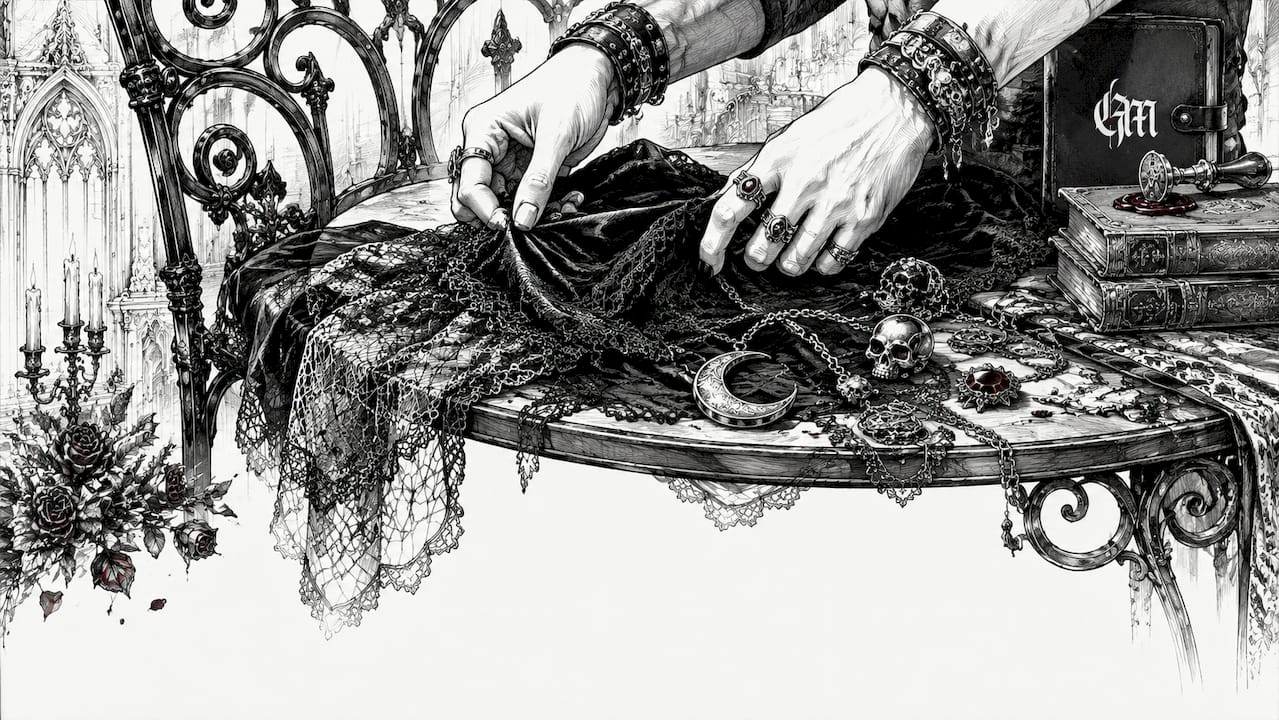
Trad goth fashion is built on specific fabrics, garments, and accessories that work together to create a layered, dramatic silhouette. Understanding each element helps you build a wardrobe that feels authentic rather than costume-like.
Fabrics and Textures
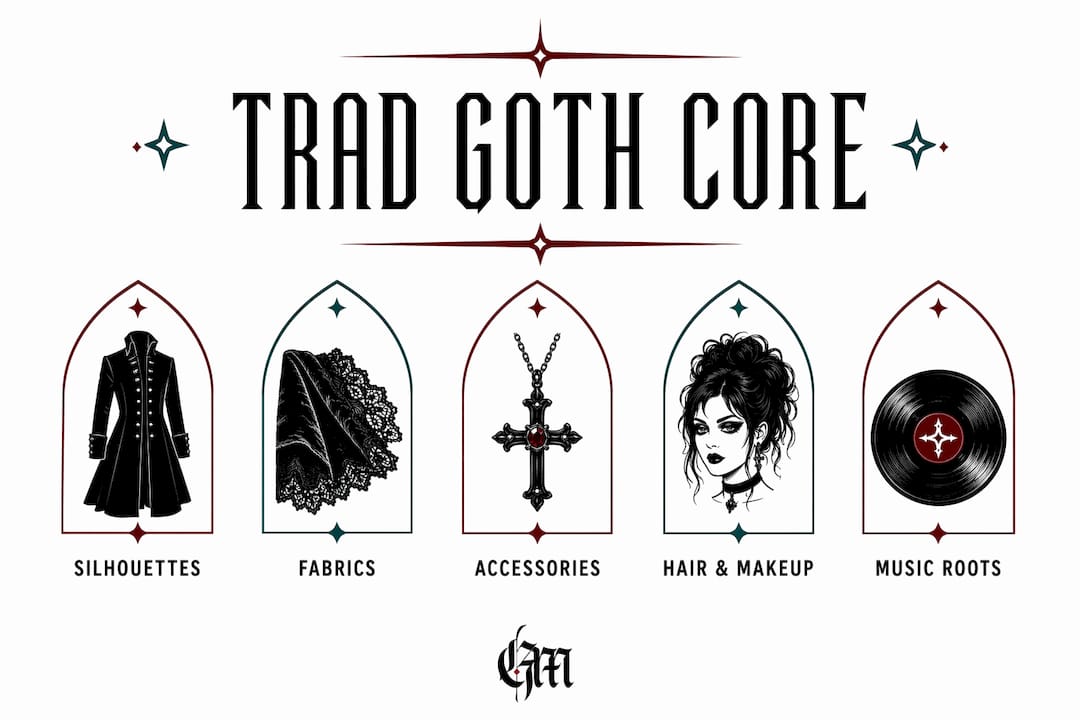
The foundation of any trad goth outfit is texture layering with lace, velvet, leather, and mesh. Each fabric carries a different visual weight. Velvet reads as opulent and Victorian. Leather signals post-punk aggression. Lace adds fragility and romance. Mesh creates visual depth without bulk. Wearing two or three of these together in a single outfit is standard practice, not excess.
Signature Garments
- Corsets and bustiers: These shape the torso and reference Victorian undergarments worn as outerwear, a deliberate subversion.
- Fishnet tights and tops: Often hand-distressed or layered under other fabrics for texture.
- Oversized coats: Long, structured coats in black wool or faux leather extend the silhouette dramatically.
- Pointed winklepicker boots: The sharp 1980s-inspired boot profile is one of the most recognizable elements of the look.
Accessories
Silver jewelry featuring occult or religious motifs is the standard. Crucifixes, ankhs, pentagrams, and coffin shapes appear on rings, chokers, and earrings. These pieces are not decorative afterthoughts. They carry symbolic weight within the subculture.
Hair and Makeup
Extreme backcombing and theatrical pale foundation with smudged eyeliner define the trad goth face. The goal is a stark, almost spectral appearance. Hair is teased for maximum volume, often styled into dramatic shapes that frame the face like a dark halo. These elements are as non-negotiable as the clothing itself.
Pro Tip: When building your trad goth look, start with the hair and makeup before assembling the outfit. The silhouette only reads correctly when all elements work together from the top down.
How does trad Goth compare to other Goth subcultures?
Trad goth occupies a specific and foundational position within the broader goth spectrum. Comparing it to other subcultures clarifies what makes it distinct rather than just “old goth.”
| Subculture | Music Roots | Fashion Focus | Key Distinction |
|---|---|---|---|
| Trad Goth | Post-punk, deathrock, early gothic rock | Victorian and Edwardian silhouettes, DIY textures | Music-first identity, thrifted and hand-modified clothing |
| Nu-Goth | Synth-pop, electronic, commercial | Minimalist black, occult graphics, fast fashion | More commercial, less music-driven |
| Romantic Goth | Gothic classical, darkwave | Flowing gowns, lace, medieval references | Softer and more theatrical, less punk influence |
| Deathrock | Punk, horror punk | Torn clothing, heavy makeup, theatrical horror | Shares roots with trad goth but leans harder into punk |
Nu-goth incorporates more synth and commercial elements, whereas trad goth purists prioritize original post-punk and underground club culture. That distinction matters because trad goth identity is inseparable from its music. You cannot fully understand the aesthetic without knowing the records that built it.
Deathrock shares the most DNA with trad goth, both emerging from the same early 1980s underground scene. The difference is emphasis. Deathrock leans harder into horror punk theatrics and torn, aggressive styling. Trad goth pulls more from Victorian elegance and romantic imagery, even while keeping the punk rawness intact.
Romantic goth and trad goth share a love of lace and dark beauty, but romantic goth tends toward flowing, theatrical gowns and a softer palette. Trad goth stays darker, sharper, and more grounded in music culture. The gothic wardrobe essentials that define trad goth are built for clubs and concerts, not costume balls.
What cultural and musical influences shaped trad Goth?
Trad goth is inseparable from the music that created it. The aesthetic did not emerge from a fashion designer’s studio. It grew out of a specific musical moment in late 1970s and early 1980s Britain.
The core musical pillars of the trad goth subculture are:
- Bauhaus: Often credited as the first true gothic rock band, their 1979 single “Bela Lugosi’s Dead” set the sonic and visual template.
- Siouxsie and the Banshees: Siouxsie Sioux’s dramatic eye makeup and angular fashion directly shaped the trad goth visual vocabulary.
- The Cure: Robert Smith’s disheveled hair, smudged lipstick, and melancholic songwriting gave the subculture its emotional core.
- Sisters of Mercy: Their cold, bass-heavy sound and leather-and-black aesthetic reinforced the darker, more austere side of trad goth.
Beyond music, trad goth finds beauty in melancholy and decay, drawing from gothic literature and classic horror cinema like Nosferatu and Dracula. Mary Shelley, Edgar Allan Poe, and Bram Stoker are not just literary references. They are aesthetic blueprints. The visual language of crumbling Victorian architecture, candlelight, and mourning dress runs directly through trad goth fashion.
Underground club culture also shaped the subculture in ways that are easy to overlook. Venues like the Batcave in London, which opened in 1982, created physical spaces where the music, fashion, and community converged. Trad goth is a cultural identity rooted in post-punk and deathrock, not a trend that appeared on a runway. That origin in underground club spaces explains why authenticity and DIY values remain so central to the subculture today.
How can newcomers authentically adopt trad Goth today?
Building an authentic trad goth aesthetic in 2026 is entirely possible, but it requires a different approach than most fashion subcultures. The goal is not to buy a complete look. It is to build one over time.
- Start with thrifting. Trad goth’s DIY ethos encourages thrifting and creative clothing modification over buying mass-produced items. Vintage stores, estate sales, and online secondhand platforms are your primary sources. Look for black wool coats, lace blouses, and leather pieces with real wear on them.
- Learn to modify. Hand-shredding fishnets, adding silver hardware to boots, or sewing lace trim onto a plain black dress are all standard practices. Mixing textures like lace, leather, mesh, and velvet creates the visual complexity the aesthetic requires. A perfectly staged, unmodified outfit reads as costume.
- Invest in key anchor pieces. A structured black coat, a quality corset, and a pair of pointed boots will anchor any trad goth outfit. Build around these before adding accessories.
- Study the makeup. Pale foundation, heavily smudged eyeliner, and dark lip color are the core techniques. Practice the signature backcombed hair volume before committing to it for an event. It takes more skill than it looks.
- Engage with the music. Listen to Bauhaus, The Cure, and Siouxsie and the Banshees before buying a single item of clothing. Understanding the emotional and sonic world of trad goth will make every styling decision more intentional.
Pro Tip: Check out the gothic fashion checklist at Goth to prioritize which pieces to acquire first. Building a trad goth wardrobe is a long game, not a single shopping session.
Key takeaways
Trad goth aesthetic is a music-rooted, DIY-driven subculture where Victorian fashion, post-punk sound, and authentic self-expression form one inseparable identity.
| Point | Details |
|---|---|
| Defined by Victorian fashion and post-punk music | Trad goth merges 1980s post-punk roots with Victorian and Edwardian silhouettes. |
| Texture layering is non-negotiable | Combine lace, velvet, leather, and mesh to create the visual depth the aesthetic demands. |
| DIY over mass-produced | Thrift and hand-modify clothing to avoid the commercial look that undermines authenticity. |
| Music is the foundation | Bands like Bauhaus, The Cure, and Siouxsie and the Banshees define the subculture’s identity. |
| Trad goth differs from nu-goth | Trad goth prioritizes underground music culture and vintage sourcing over commercial trends. |
Why trad Goth rewards those who go deeper
I have spent years watching people discover trad goth through a single image on social media and immediately try to replicate the look with a fast-fashion haul. It never works. Not because the clothes are wrong, but because the attitude is missing.
What makes trad goth genuinely compelling is that it demands something from you. You have to listen to the music. You have to understand why Robert Smith wrote “A Forest” or why Bauhaus chose to open with a nine-minute dirge about a dead actor. The fashion only makes sense once you feel the emotional world it comes from.
The DIY spirit is also more than a practical workaround for budget shoppers. It is a statement about value. When you hand-modify a thrifted coat or spend an hour perfecting your eyeliner, you are rejecting the idea that identity can be purchased off a shelf. That rejection is the actual core of trad goth, and it is why the subculture has outlasted dozens of trends that tried to absorb it.
My honest advice: do not rush it. Spend a month just listening to the music and reading the literary influences before you buy anything. The wardrobe will follow naturally once the aesthetic lives in your head. And when you do start building your look, check out how goth influences modern fashion to understand where trad goth sits in the current cultural moment. It is more relevant than most people realize.
— Rey
Build your trad Goth wardrobe at Goth
Ready to start building your trad goth look with pieces that actually hold up to the subculture’s standards?
Goth is a curated marketplace built specifically for the dark and alternative community. You will find independent creators selling Victorian-inspired corsets, occult silver jewelry, lace and velvet garments, and hand-crafted accessories that mass-market retailers simply do not carry. Every piece on the platform is selected for authenticity and aesthetic integrity. Browse the full trad goth collection at Goth to find anchor pieces, accessories, and styling inspiration that align with the real spirit of the subculture.
FAQ
What defines trad Goth compared to other Goth styles?
Trad goth is defined by its direct roots in 1980s post-punk and deathrock music, Victorian and Edwardian fashion influences, and a strong DIY ethos. Unlike nu-goth or romantic goth, trad goth places music-based identity and thrifted, hand-modified clothing at the center of the aesthetic.
What are the essential clothing items for trad Goth fashion?
The core trad goth wardrobe includes black corsets, fishnet tights, pointed winklepicker boots, oversized structured coats, and lace or velvet garments. Silver jewelry with occult or religious motifs, such as crucifixes and ankhs, completes the look.
Is trad Goth only about fashion?
No. Trad goth is a full cultural identity that encompasses music, literary influences, and community values. The fashion expresses an inner world shaped by bands like Bauhaus and The Cure, gothic literature, and a philosophy that finds beauty in melancholy and decay.
Can beginners adopt trad Goth authentically?
Yes, but the process takes time. Start by thrifting and hand-modifying clothing, learning the signature hair and makeup techniques, and deeply engaging with the music that built the subculture. Avoid buying mass-produced goth items, which typically lack the raw, unfiltered quality the aesthetic requires.
What makeup and hair techniques are central to trad Goth?
Trad goth makeup centers on pale foundation, heavily smudged eyeliner, and dark lip color. Hair is styled with extreme backcombing to create dramatic volume and a distinctive silhouetted shape that frames the face.