

3 Moves That Make Goth Fashion Sustainable: Thrift, Mend, Back Indies
Sustainable goth fashion means building a dark wardrobe through secondhand hunting, small-batch makers, and lower-impact fabrics instead of fast fashion’s disposable black basics. The three moves that matter most: shop vintage and thrift first, back independent and small-batch designers over mass manufacturers, and pick natural or closed-loop materials like organic cotton, hemp, and TENCEL Lyocell over virgin polyester. Curated marketplaces make finding these pieces faster, since listings already group secondhand, small-batch, and made-to-order goth fashion in one place.
TL;DR:
- Secondhand shopping is the most impactful way to build a sustainable goth wardrobe, as it preserves authentic vintage silhouettes and reduces demand for new production.
- Natural fabrics like organic cotton, hemp, and TENCEL Lyocell are preferred for durability and lower environmental impact, while polyester should generally be avoided due to shedding and microplastic pollution.
- Investing in quality, long-lasting essentials such as outerwear, boots, and structured pieces is more sustainable than frequent replacements of fast-fashion items.
- Repair, upcycling, and customizing existing clothing extend the lifespan of goth pieces and align with subcultural DIY traditions.
- Curated platforms that showcase small-batch, made-to-order, and indie brands facilitate sustainable shopping by providing transparent material and production details.
Table of Contents
- What Shopping Approaches Actually Make Goth Fashion Sustainable?
- Which Materials and Fabrics Should Goth Shoppers Prefer or Avoid?
- How to Build a Sustainable Goth Capsule Wardrobe
- What Care and Repair Habits Keep Gothic Pieces Wearable for Years?
- Where to Shop: Secondhand Platforms, Indie Makers, and Curated Marketplaces
- What a Goth Curator Recommends: Rey’s Checklist and Quick Wins
- Environmental Impact of Common Goth Fashion Dyes and Alternatives
- Ethical Labor Practices in Goth Fashion Production
- Sustainable Footwear and Accessories That Complement Goth Fashion
- The Real Case for Treating Goth as a Sustainable Subculture
- How Does Goth.Market Help You Find Curated, Sustainable Goth Pieces?
- Sources
- FAQ
What Shopping Approaches Actually Make Goth Fashion Sustainable?
Three approaches cover almost every purchase decision a goth shopper makes, and each one solves a different problem.
Secondhand and vintage shopping is the highest-impact habit you can build. Gothic style already leans on Victorian, Elizabethan, and Edwardian silhouettes, so vintage racks are often a better source for authentic shapes than new production lines. Gothic fashion has always drawn on historical and subcultural DIY traditions, which is part of why thrifting feels less like a compromise and more like the point.
Indie and small-batch makers solve the “everything looks the same” problem while keeping production runs small. Before buying, ask three things: what fabric is this, where was it sewn, and how many units did you make? A maker who answers specifically is usually one worth trusting.
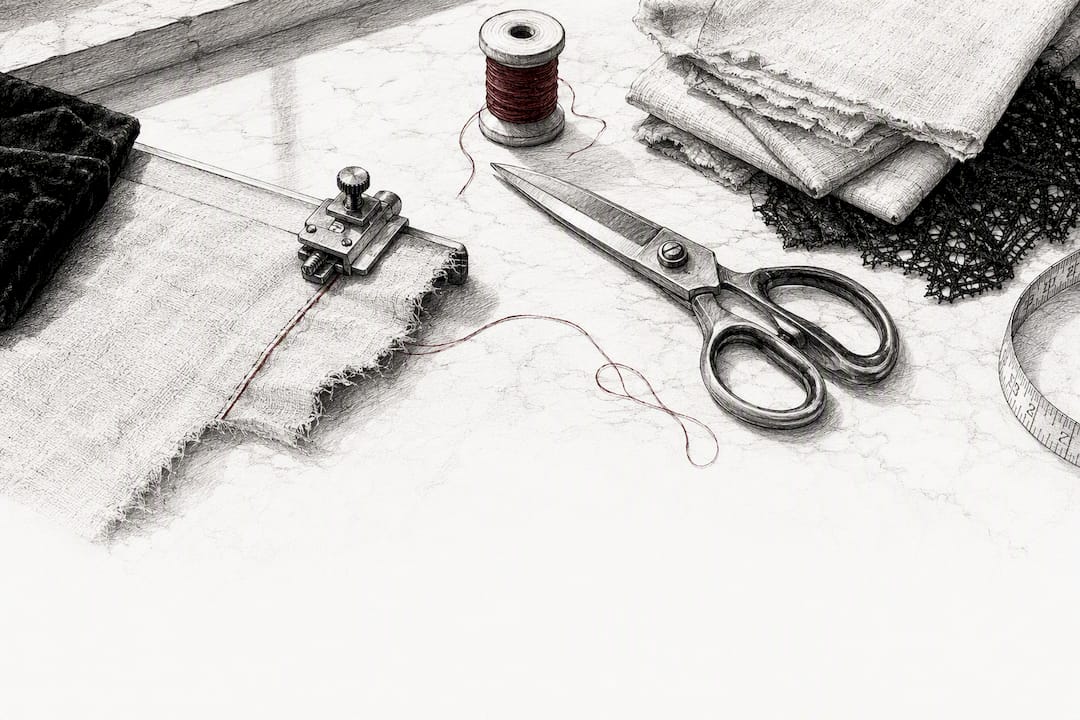
Repair, upcycling, and customization stretch every piece you already own. Sustainably Chic’s guidance on ethical goth clothing treats mending and altering as a core sustainability practice, not an afterthought.
New purchases still make sense for specific cases:
- A structural piece you’ll wear for a decade (a well-built corset, real leather boots)
- An item secondhand markets rarely carry in your size
- A design so specific that only a maker’s current run fits your vision
Which Materials and Fabrics Should Goth Shoppers Prefer or Avoid?
Fiber choice affects both how long a piece lasts and how much environmental damage it leaves behind. Organic cotton, hemp, and linen hold up to the heavy black dyeing and structured tailoring goth fashion demands, and they age into a worn, lived-in look rather than falling apart.
TENCEL Lyocell deserves special attention. It drapes like viscose (useful for flowing goth silhouettes) but comes from closed-loop production that recovers most of its solvents, making it a meaningfully lower-impact alternative to conventional viscose or rayon.
Polyester is the trickier case. It’s cheap, holds black dye well, and shows up in a huge share of goth clothing, including from brands that otherwise market themselves as ethical. The tradeoff:
- Durability: polyester resists fading better than some natural fibers under heavy wear
- Shedding: every wash releases microplastic fibers into wastewater
- Longevity math: a polyester piece worn for ten years often beats a “natural fiber” piece replaced every season
For leather and fur, cruelty-free doesn’t have to mean flimsy. Cork leather, apple leather, and heavyweight vegan leathers now hold structure well enough for corsetry and boots, and faux fur has largely caught up in texture to the real thing.
How to Build a Sustainable Goth Capsule Wardrobe
A capsule works when you invest in the pieces that take the most abuse and thrift or DIY everything else.
- Outerwear (invest new or buy quality vintage): a structured coat gets worn hardest and longest.
- Boots (invest): resoleable leather or a durable vegan leather pair outlasts fast-fashion boots by years.
- One corset or structured bodice (invest, fit matters too much to gamble on thrift sizing).
- Band or graphic tees (thrift): condition rarely matters much on a shirt you’ll layer.
- Velvet or lace tops (thrift or vintage): secondhand racks are full of these.
- A flowing skirt or dress (thrift, then tailor).
- Fishnets or tights (buy new, they wear out fast regardless of source).
- A statement accessory (indie maker): jewelry, belts, or hardware from a small studio.
- A denim or twill layering piece (thrift, then dye black if needed).
- A altered vintage blazer (thrift plus tailor).
- A DIY patched jacket (upcycled from an existing piece).
- One made-to-order piece (small-batch maker) for the exact silhouette nothing secondhand offers.
Pro Tip: Budget your money toward fit, not fabric count. A tailored $40 thrifted coat almost always outperforms an ill-fitting $150 new one, in looks and in years of wear.
What Care and Repair Habits Keep Gothic Pieces Wearable for Years?
Black fabric fades and weakens faster than most colors because the dyeing process itself stresses the fibers, so care routines matter more here than almost anywhere else in fashion.
- Wash black garments inside out, in cold water, and skip the dryer when possible. Heat is what breaks down both dye and fiber.
- Reinforce stress points (seams, buttonholes, zipper edges) before they tear, not after.
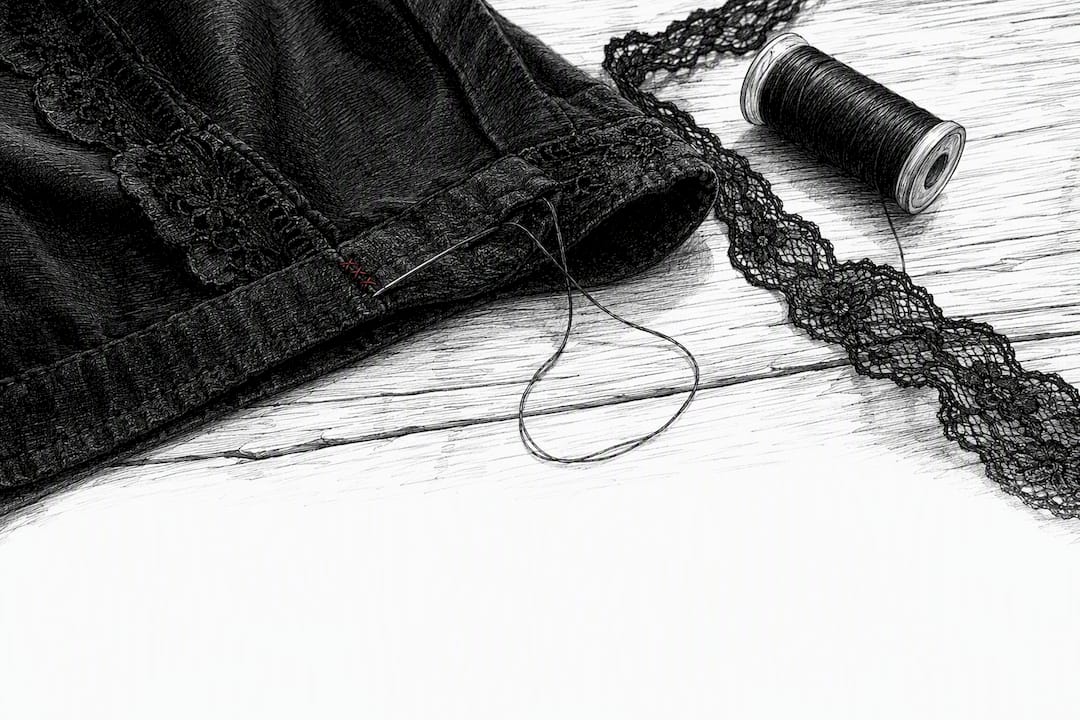
- Learn basic hand stitching for hems and small tears. It takes under 20 minutes and saves a garment from the donation pile.
- Take structural items (corsets, leather boots, tailored coats) to a cobbler or tailor rather than replacing them. A $20 to $40 repair on a $150 boot is almost always the better trade.
- Dye a faded piece back to deep black instead of retiring it, or patch a worn knee with lace or fabric scraps for a look that reads intentional.
Where to Shop: Secondhand Platforms, Indie Makers, and Curated Marketplaces
Vintage and resale listings reward specific searches. Search by era terms (Victorian, 1980s post-punk, 1990s cybergoth) rather than just “goth,” and cross-check measurements against your own body, not just the listed size, since vintage sizing runs differently than modern standards. Era-specific vintage guides are useful here for knowing which decades match which silhouettes.
When vetting indie makers, ask about fiber content, where production happens, and batch size. A maker who lists this upfront is worth more trust than one who only says “ethically made.”
Curated marketplaces cut the search time down considerably, since listings already separate secondhand, small-batch, and made-to-order goth pieces instead of burying them in a general fashion search. Watch for these red flags on any platform:
- No fabric or material listed at all
- Generic stock photos instead of the actual item
- Sizing that contradicts the garment’s own measurements
- Vague sustainability language with nothing specific behind it
For a broader sourcing check, WRAP’s factory certification program is one way to verify a brand’s production claims when they say “ethically manufactured.”
What a Goth Curator Recommends: Rey’s Checklist and Quick Wins
Before buying anything, run it through six questions: Do I already own something close to this? Will I wear it more than five times? Is the fabric named specifically? Can I repair this myself if it tears? Is this a small run or mass production? Would I buy it secondhand if I saw it thrifting?
On Goth.Market, curation signals worth trusting include small production runs, maker bios that name their process, and listings with fiber content spelled out rather than vague “premium fabric” language.
Three quick wins if you want to start today: flip one thrifted piece into something goth with dye or trim, repair one item you’ve been meaning to replace, and make one targeted investment in a piece you’ll wear for years.
Environmental Impact of Common Goth Fashion Dyes and Alternatives
Getting fabric to true black is more chemically intensive than almost any other color. Conventional black dyeing often requires multiple dye baths to achieve depth and colorfastness, which means higher water use and more chemical runoff than lighter shades need. Synthetic azo dyes, common in fast fashion black garments, have drawn scrutiny for wastewater contamination in manufacturing regions, since excess dye that doesn’t bind to fabric washes into local water systems.
Low-impact and fiber-reactive dyes bind more efficiently to natural fibers, which means less dye escapes into wastewater during the dyeing process itself. They tend to work best on cotton, hemp, and linen, which is one more reason those fibers make sense for a goth wardrobe beyond just durability.
Natural dyes (walnut hull, iron oxide, certain plant tannins) can achieve deep, complex blacks, though they typically require more skill and time to get an even, lasting result than synthetic dyes do. This is part of why small-batch and DIY dyers sometimes charge more for hand-dyed black pieces. The premium reflects labor and material handling, not markup for its own sake.

The practical takeaway for shoppers: a black garment’s environmental footprint isn’t just about the fiber, it’s about how that black got there. Asking a maker whether they use low-impact or fiber-reactive dyes is a fair question, and one a transparent small-batch designer should be able to answer without hesitation.
Ethical Labor Practices in Goth Fashion Production
Labor conditions in goth fashion production follow the same patterns as the broader apparel industry: mass-manufactured pieces routed through low-cost factories carry the highest risk of poor wages and unsafe conditions, while small-batch and local production generally offers more visibility into how a garment gets made.
Independent makers who sew their own runs, or work with a small named workshop, can usually describe their production process in specific terms, who cuts the fabric, who sews the seams, where that happens. That specificity is itself a signal. Vague claims like “ethically made overseas” without naming a facility or process are worth treating with skepticism.
Third-party certification is one way to verify claims when a brand scales beyond a single maker. WRAP’s compliance certification audits factories against standards covering wages, working hours, and workplace safety, and it’s a checkable credential rather than a marketing line. Not every small goth brand will have formal certification, since audits cost money that a two-person studio may not have. That’s fine. The alternative verification is direct: ask the maker who made it and where, and judge the specificity of the answer.
Buying from a maker you can actually message, rather than a brand with no visible production chain, remains one of the more reliable ways to avoid supporting labor practices you’d object to if you could see them.
Sustainable Footwear and Accessories That Complement Goth Fashion
Footwear is where goth fashion’s durability instincts pay off best, since boots built to last are already the category’s default aesthetic. Leather boots with a resoleable construction (a real welt rather than a glued sole) can be repaired for decades instead of replaced every year or two, which makes the higher upfront cost a long-term savings rather than an indulgence.
Vegan leather has improved enough that cork-based and mushroom-derived (mycelium) leathers now show up in boots and bags with real structure, not just as flimsy pleather. They’re worth seeking out specifically if avoiding animal leather matters to you, since older vegan leather formulations cracked and peeled within a year or two.
For accessories, metal hardware (chains, buckles, studs) is inherently one of the more sustainable material categories in goth fashion, since well-made metal jewelry and belt hardware essentially never wears out the way fabric does. Buying secondhand metal accessories carries almost no downside, since tarnish polishes off and structural integrity rarely degrades.
Bags and belts follow the same logic as boots: a well-constructed piece in real or durable vegan leather, cared for and occasionally repaired, will outlast several cheaper versions bought to replace each other. Prioritizing construction quality on these smaller items, rather than treating them as disposable extras to the main outfit, is an easy way to extend the sustainability of a goth wardrobe without changing your aesthetic at all.
The Real Case for Treating Goth as a Sustainable Subculture
The conventional sustainability advice, buy less, buy quality, misses what makes goth different from other style communities: the culture was already built around secondhand hunting, DIY repair, and statement pieces meant to last, long before “sustainable fashion” became a marketing category. Goths were thrifting Victorian coats and patching leather jackets in the 1980s, not because it was ethical, but because it was the aesthetic. That history is the advantage.
Where I think most guides get it wrong is treating sustainability as an added layer of effort on top of goth style, a checklist to follow while shopping. It’s backwards. The habits that make a wardrobe sustainable, mending instead of discarding, hunting vintage instead of scrolling fast fashion, valuing one well-made corset over five cheap ones, are the same habits that make a goth wardrobe look genuinely good instead of costume-store generic. Prioritize learning basic repair skills before you prioritize finding the “perfect ethical brand.” A wardrobe you can fix yourself will always be more sustainable than one you simply bought correctly once.
— Rey
How Does Goth.Market Help You Find Curated, Sustainable Goth Pieces?
Curated listings from creators who make gothic clothing, accessories, and decor in limited runs rather than mass production can give you what generic marketplaces cannot: makers you can actually ask about fabric content, production size, and turnaround, instead of a customer service chatbot.

Use the platform’s filters to narrow by category, whether you’re hunting for a made-to-order corset, a small-batch velvet coat, or accessories from an independent jewelry maker, and check each listing for the fiber and production details this article recommends verifying. Shipping and return details are posted on individual seller pages, since each creator manages their own fulfillment. If you’re building a capsule from scratch, start by browsing the curated gothic wardrobe guide and then search Goth.Market directly for the specific pieces on your list.
Sources
- The Best Ethical Goth Clothing Brands (Sustainable Gothic Fashion Guide 2026) - Sustainably Chic
- Wrapcompliance
FAQ
What Does Sustainable Goth Fashion Actually Mean?
It means sourcing gothic clothing through secondhand shopping, small-batch or indie makers, and lower-impact materials rather than fast fashion. The goal is reducing waste and environmental harm while keeping the dark, dramatic aesthetic intact.
Is Thrifting Really Better Than Buying New Ethical Brands?
Yes, in most cases. Secondhand shopping produces no new manufacturing demand at all, while even the most transparent new brand still uses raw materials, water, and energy to make a garment.
What Fabric Should I Avoid Most in Goth Clothing?
Lightweight, low-quality polyester is the biggest concern, mainly because it sheds microplastics in every wash and tends to pill and fade faster than better-made alternatives. TENCEL Lyocell, hemp, and organic cotton are generally better choices for pieces you want to keep long term.
How Can I Tell if an Indie Goth Brand Is Actually Ethical?
Ask specifically what fabric they use, where the item is sewn, and how large their production runs are. A maker who answers with real detail is more trustworthy than one relying on vague terms like “eco-friendly” with no specifics attached.
Are Vegan Leather Alternatives Actually Sustainable?
It depends on the material. Cork and mycelium-based leathers hold up structurally and avoid animal products, while cheap PVC-based “pleather” often cracks within a year and carries its own environmental costs, so check the specific material before assuming vegan automatically means sustainable.
Where Can I Find Curated, Small-Batch Goth Fashion Online?
Marketplaces like Goth group secondhand, small-batch, and made-to-order gothic pieces from independent creators in one place, which cuts down the search time compared to browsing broad resale platforms for goth-specific items.