

Medieval Goth Clothing: Style, History, and How to Wear It
TL;DR:
- Medieval goth clothing combines European fashion from 1000–1600 CE with gothic aesthetics, emphasizing rich colors and layered silhouettes. It differs from traditional goth by prioritizing fabric quality, fit, and historical symbolism rather than all-black costumes. Building a wardrobe involves essential pieces like a linen chemise, fitted corset, velvet gown, and symbolic accessories for authentic style and confidence.
Medieval goth clothing is defined as a fashion style that fuses authentic European garments from roughly 1000–1600 CE with modern gothic aesthetics, built on rich colors, flowing silhouettes, and materials like velvet and heavy linen. Unlike traditional goth’s all-black palette, this style draws from the history of goth clothing and medieval tailoring to create something far more textured and visually complex. Corset-style bodices, bell sleeves, and dramatic cloaks sit at the center of the look. The result is a style that reads as both historically grounded and unmistakably dark.
What is medieval goth clothing and where does it come from?
Medieval goth style fuses historic European fashion from 1000–1600 CE with gothic elements, using rich colors and flowing silhouettes rather than the traditional all-black goth palette. The aesthetic emphasizes colors like burgundy, forest green, and obsidian, with materials such as velvet and heavy linen forming the foundation. This is not a costume category. It is a fully realized gothic clothing style with its own rules, references, and community.
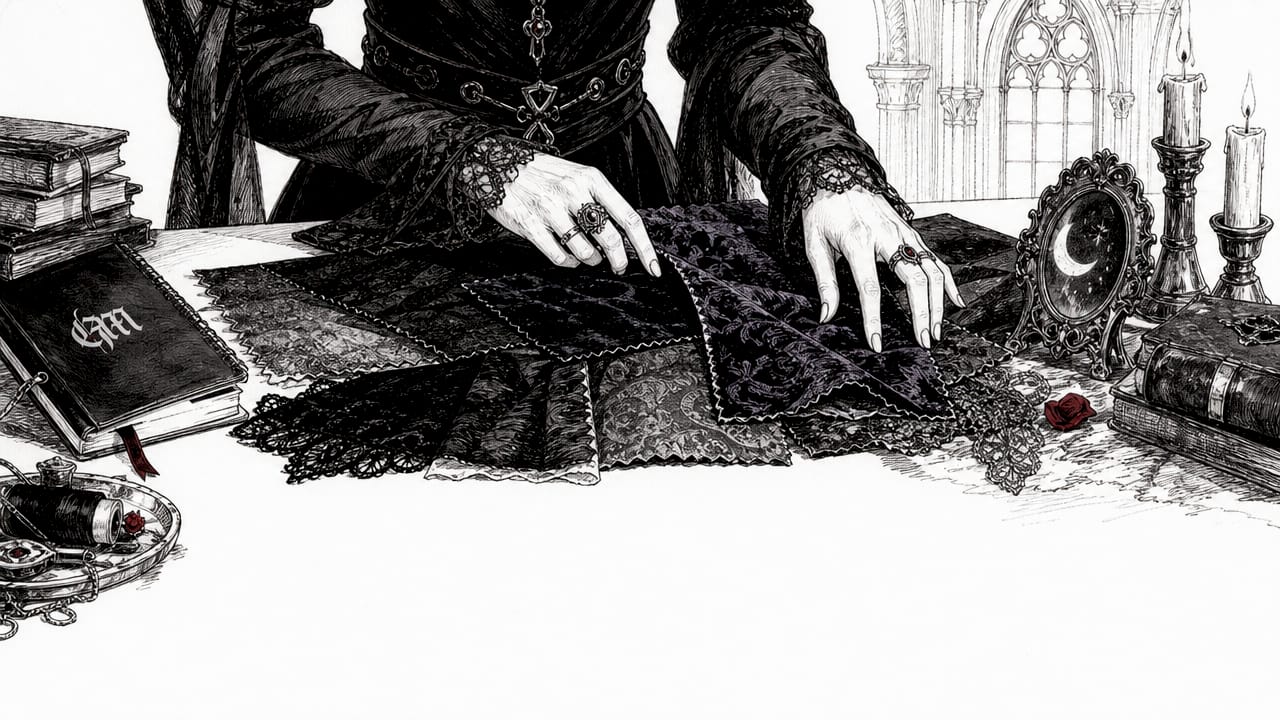
The style is sometimes called “dark medieval” or “medieval gothic fashion” in alternative fashion circles, but the underlying concept stays consistent. Wearers borrow the structural logic of medieval European dress, then filter it through a gothic lens. The outcome is clothing that feels both ancient and deliberately modern.
What makes this style distinct from Renaissance faire costumes is intentionality. A medieval goth outfit is built around fit, fabric quality, and symbolic detail. It is worn as a daily aesthetic or for goth events, not as a theatrical prop.
How did medieval European fashion shape the goth aesthetic?
Medieval European clothing from 1000–1600 CE established the silhouettes and layering logic that medieval gothic fashion still uses today. The core garments of the period included the chemise, the kirtle, the surcoat, and the cloak. Each layer served a practical function while also signaling social status through fabric and cut.
The 14th century was pivotal for medieval fashion innovation. Tailors introduced form-fitting seams, lacing, and curved panels that defined the waist and chest. Gowns from this period had tight sleeves, narrow waists, and body-defining construction that modern gothic fashion directly adapts into corsets and fitted gowns.
Key historical garments that feed into medieval goth style today:
- Chemise: A linen undergarment worn closest to the skin, forming the base of any layered look
- Kirtle: A fitted gown worn over the chemise, often laced at the sides or back to shape the torso
- Surcoat: A sleeveless or wide-sleeved outer garment adding visual weight and drama
- Cloak: A full-length outer layer that added both warmth and status signaling
- Hose: Fitted leg coverings that completed the silhouette from head to toe
Materials carried meaning in medieval dress. Velvet indicated nobility. Wool was practical and common. Linen was universal but varied in quality. Medieval clothing emphasized layering with these garments, and that layering logic remains central to the modern medieval goth wardrobe.
Pro Tip: Study illuminated manuscripts from the 13th and 14th centuries. They show actual medieval silhouettes with more accuracy than most films, and they are a direct reference point for building an authentic medieval goth look.
How does medieval goth differ from traditional gothic fashion?
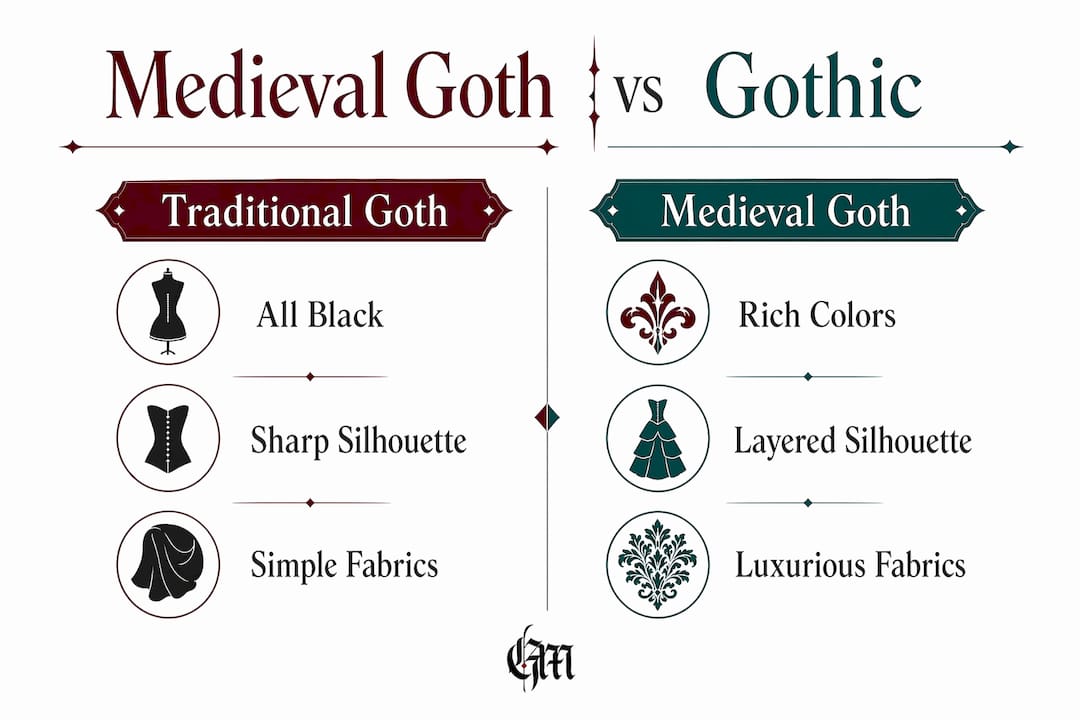
Medieval goth and traditional gothic fashion share a dark sensibility, but they diverge sharply in color, silhouette, and historical reference. Traditional goth, rooted in the 1980s post-punk scene, centers on all-black clothing, band tees, fishnet, and leather. Medieval goth pulls from a completely different visual vocabulary.
| Feature | Traditional goth | Medieval goth |
|---|---|---|
| Color palette | All black | Burgundy, forest green, obsidian, deep plum |
| Silhouette | Slim, angular, deconstructed | Flowing, structured, layered |
| Key fabrics | Leather, PVC, fishnet | Velvet, linen, wool, brocade |
| Historical reference | 1980s punk subculture | European dress, 1000–1600 CE |
| Accessories | Chains, studs, platform boots | Cloaks, crown-style headpieces, symbolic jewelry |
The most common mistake newcomers make is treating medieval goth as simply “goth with a cape.” The silhouette is architectural. Corset-style bodices create a defined waist. Bell sleeves add drama at the wrist. Cloaks replace leather jackets as the statement outer layer. These are not decorative additions. They are structural choices that define the style.
A gothic fashion checklist for this aesthetic starts with silhouette, not color. Get the shape right first, then layer in the dark palette.
What are the essential pieces for a medieval goth wardrobe?
Building a medieval goth wardrobe starts with a small number of high-quality foundational pieces. A basic linen chemise costs $30–$50, and a corset runs $60–$80, making a complete starter outfit achievable for under $200. That budget range makes this one of the more accessible gothic clothing styles to enter.
The core pieces to prioritize:
- Linen chemise: The base layer that protects outer garments and keeps the look historically grounded
- Corset-style bodice: The structural centerpiece that defines the waist and elevates the entire silhouette
- Velvet tunic or gown: Adds richness and texture; velvet tunics in menswear historically signified nobility, with narrow sleeves and mid-thigh lengths often adorned with gold thread
- Full skirt or layered skirt: Adds movement and visual weight below the bodice
- Cloak: The single most dramatic piece in any medieval goth outfit; choose wool or velvet for authenticity
Accessories define the gothic dimension of the look. A velvet collar choker connects medieval fabric sensibility with gothic jewelry tradition. Pendant necklaces with symbolic motifs, like a gothic heart crown pendant, add the dark romanticism that separates medieval goth from straight historical reproduction.
Pro Tip: Buy your chemise first. A well-fitted linen chemise protects your velvet and corset pieces from sweat and friction, extending their life significantly. It also anchors the layered look so every outer piece sits correctly.
Fit is the single most important factor in avoiding the costume look. Tailored bodices with lacing or structured panels distinguish high-fashion medieval goth from theatrical dress-up. If a piece is boxy or shapeless, it reads as a costume. If it is fitted and intentional, it reads as style.
How has medieval goth fashion evolved over recent decades?
Medieval goth fashion has experienced periodic resurgences, particularly in the 1970s, 1990s, and 2020s, each wave shaped by different cultural pressures. The 1970s wave connected to fantasy literature and early dark folk music. The 1990s resurgence tied to gothic rock and the growing alternative subculture scene. The 2020s revival is the most visible yet, driven by social media aesthetics and a broader cultural appetite for escapism.
The term “whimsigoth” emerged from this latest wave, describing a softer, more romantic take on gothic style that leans into medieval and cottagecore references. Dark romanticism as a fashion category also grew during this period, blending Victorian and medieval influences with gothic color and mood. These are not separate styles. They are branches of the same tree, all drawing from the same medieval gothic fashion roots.
“Medieval goth fashion offers something that minimalist modern fashion cannot: an ‘architectural’ and ‘poetic’ quality that makes the wearer feel like they inhabit a different world entirely.” — Sartorial Magazine
The enduring appeal of gothic fashion lies partly in its resistance to trend cycles. Medieval goth does not chase seasonal fashion. It builds an identity from historical depth and personal symbolism. That is why it keeps coming back.
Media has also played a consistent role. Films, television series, and video games set in medieval or fantasy worlds regularly reintroduce the visual language of medieval goth to new audiences. Each cultural moment creates a new entry point into the style.
What styling tips help you wear medieval goth with confidence?
Wearing medieval goth clothing with confidence comes from understanding the difference between historical accuracy and historical inspiration. You do not need to recreate a 14th-century court gown. You need to borrow its logic.
- Layer creatively, not literally. Combine a linen chemise with a modern corset and a velvet skirt. The layers do not need to be period-correct. They need to create visual depth and movement.
- Choose fitted over boxy. Every outer piece should have a defined relationship with your body. Loose, shapeless garments collapse the silhouette and read as costume.
- Prioritize fabric quality over quantity. One velvet bodice in deep burgundy reads as more intentional than three synthetic pieces in mixed colors.
- Use accessories as symbolic anchors. Chain-link jewelry, crown-style headpieces, and pendant necklaces with gothic motifs connect the historical silhouette to the dark aesthetic. These details signal that the look is deliberate.
- Protect your investment pieces. Always wear a linen chemise under velvet or structured corsets. A linen base layer absorbs sweat and friction, protecting expensive outer pieces and extending their wearable life.
For goth events specifically, a cloak worn over a fitted corset and layered skirt is the most versatile and visually complete medieval goth outfit. It reads clearly as intentional style, moves well, and scales from casual gatherings to formal dark events without adjustment.
Key Takeaways
Medieval goth clothing is defined by its fusion of historical European silhouettes with gothic color, fabric, and symbolic detail, making fit and fabric quality the two non-negotiable elements of the style.
| Point | Details |
|---|---|
| Core definition | Medieval goth fuses European dress from 1000–1600 CE with gothic aesthetics, using velvet, linen, and rich colors. |
| Historical foundation | The 14th century introduced tailoring and lacing that directly shaped the corsets and fitted gowns central to this style. |
| Essential wardrobe pieces | Start with a linen chemise, corset bodice, velvet outer layer, and cloak for a complete foundational look. |
| Fit over costume | Tailored, laced bodices distinguish high-style medieval goth from theatrical costume. Boxy cuts undermine the aesthetic. |
| Style evolution | The style has resurged in the 1970s, 1990s, and 2020s, with each wave expanding its cultural reach and vocabulary. |
Why medieval goth clothing resonates beyond the aesthetic
I have spent years watching gothic fashion trends cycle in and out of mainstream visibility, and medieval goth is the one that consistently holds its ground. It is not because the silhouettes are dramatic, though they are. It is because the style demands something from the wearer. You cannot throw on a velvet cloak and call it done. You have to understand why the layers exist, what the fabrics signal, and how the silhouette works.
What I find most compelling is how the style handles color. Traditional goth’s all-black rule is a blunt instrument. Medieval goth uses color the way medieval artisans used it: as a signal of meaning. Burgundy was not just a color in the 14th century. It was a statement of wealth and power. Wearing it now, in a fitted velvet bodice, carries that weight forward even if most people cannot name the reference.
The biggest mistake I see newcomers make is skipping the base layer. A linen chemise feels like an afterthought until your velvet corset starts deteriorating after six months of wear. The historical logic behind layering was practical, and it still is. Respect the construction and the garments last.
For anyone new to this style, my advice is simple. Buy one fitted piece in a rich color, pair it with a linen base, and add one symbolic accessory. That is a medieval goth outfit. Build from there with intention, not volume.
— Rey
Curated medieval goth pieces at Goth Market
Goth is the destination for medieval goth clothing and accessories built for the alternative community, not the costume aisle. The marketplace connects independent creators with readers who want pieces that carry real aesthetic weight: velvet bodices, layered skirts, gothic jewelry with historical motifs, and cloaks that work as daily wear. Every piece is curated for the dark alternative aesthetic, not mass-market production. If you are ready to build your gothic wardrobe with intention, Goth is where independent makers and serious style meet. Browse the full gothic wardrobe essentials collection at Goth Market and find pieces that fit the aesthetic from the first wear.
FAQ
What is the difference between medieval goth and Renaissance faire style?
Medieval goth is a personal fashion aesthetic worn as daily or event style, built around fit, fabric quality, and gothic symbolism. Renaissance faire style is theatrical costume designed for a specific event context, prioritizing spectacle over wearability.
What colors define medieval goth clothing?
The core palette includes burgundy, forest green, obsidian, and deep plum. These colors reference historical dye traditions and create the dark romantic mood that separates medieval goth from traditional all-black gothic clothing styles.
How do I avoid looking like I am wearing a costume?
Fit is the deciding factor. Tailored bodices with lacing or structured panels elevate the look beyond costume. Boxy or shapeless pieces collapse the silhouette and undermine the aesthetic immediately.
What is the best starting piece for a medieval goth wardrobe?
A linen chemise is the practical foundation, but a fitted corset-style bodice in velvet or brocade is the visual anchor. Together, they form the core of any medieval goth outfit and support every other layer you add.
Is medieval goth appropriate for everyday wear?
Yes. The style scales from casual layering to formal goth events depending on fabric weight and accessory choices. A velvet tunic over a linen chemise with simple gothic jewelry reads as intentional daily wear without requiring full historical dress.