

Building a Gothic Personal Brand in 2026
TL;DR:
- A gothic personal brand involves deliberately creating a dark aesthetic identity through visual design and storytelling. Building such a brand in 2026 requires distinct colors, typography, textures, and a compelling narrative structure rooted in authenticity. Consistent community engagement and disciplined aesthetic choices are essential for long-term success and loyalty.
A gothic personal brand is the deliberate construction of a dark aesthetic identity through visual design, narrative storytelling, and lifestyle authenticity. Building a gothic personal brand in 2026 means going far beyond wearing black. It means creating a recognizable persona that speaks directly to the alternative community through every touchpoint you own. The standard industry term for this practice is dark aesthetic personal branding, and it draws from gothic subculture, horror literature, and occult visual traditions. Done right, it builds a loyal following that mass-market brands simply cannot reach.
What are the essential design elements for a gothic personal brand?
The 2026 gothic color palette has moved well past the black-and-red cliché. The recommended modular color system now includes charcoal, oxblood, pewter, bone white, moss green, and deep indigo. Each color gets a role: primary, accent, or atmospheric tint. That role assignment is what keeps your brand consistent across a website, social profile, and product packaging without looking like a Halloween costume.
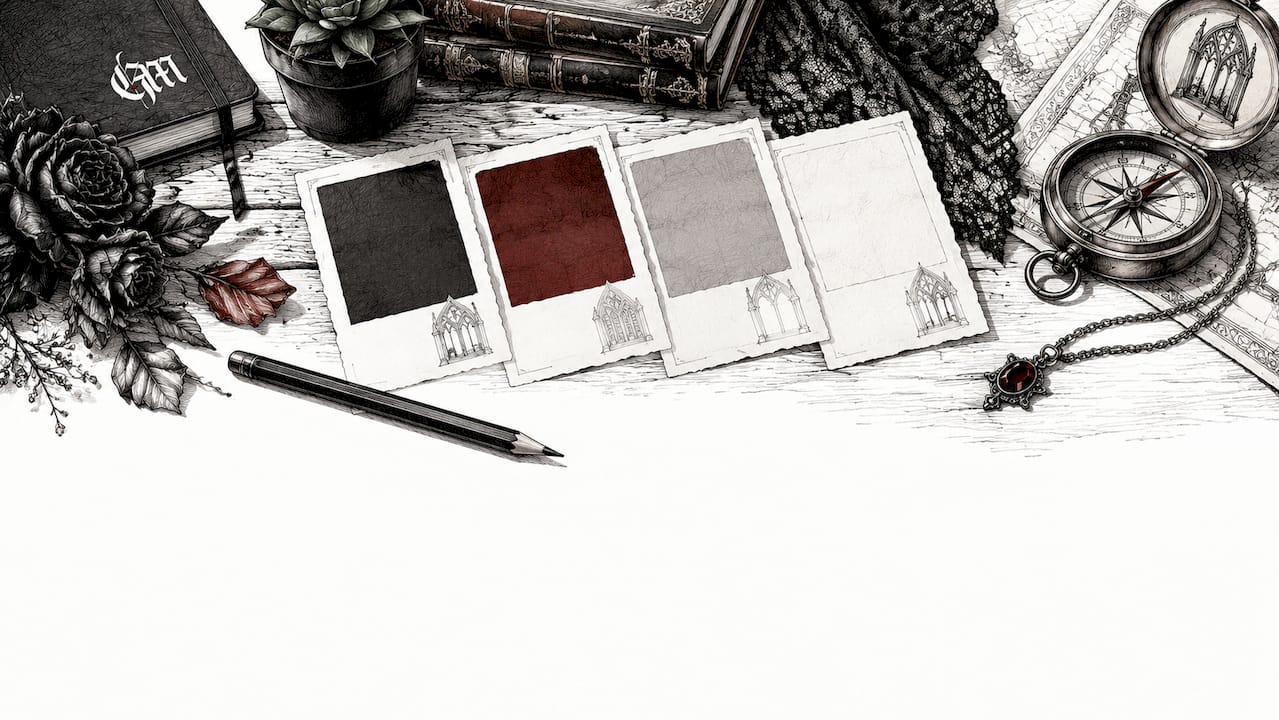
Typography follows a similar logic. Gothic display fonts work best when paired with clean, modern sans-serif body text. The dramatic headline font signals your aesthetic. The readable body font keeps people from bouncing. Cognitive friction is the silent killer of gothic digital brands, and most creators ignore it entirely.
Texture is where gothic branding gets genuinely interesting. The design philosophy known as Gothic Maximalism uses intentional layering of leather, lace, matte metal, and polished stone to build atmosphere without clutter. The rule is quality of atmosphere over quantity of elements. One well-chosen texture combination reads as intentional. Five competing textures read as noise.
Core visual elements to lock in first
- Primary color: Your anchor. Charcoal or deep indigo works better than pure black, which flattens on screens.
- Accent color: Oxblood or pewter. Use sparingly on calls to action and key UI elements.
- Atmospheric tint: Bone white or moss green for backgrounds and overlays.
- Display font: One dramatic, historically influenced typeface for headlines only.
- Body font: A modern sans-serif at 16px minimum for readability.
- Signature texture: One repeating motif, such as cracked leather or aged lace, used across all branded assets.
Pro Tip: Build a one-page brand guide in Canva or Adobe Express before you post a single piece of content. Lock in your palette, fonts, and texture rules. A professional brand guide is non-negotiable for avoiding the amateurish aesthetic drift that kills gothic brands early.
| Design element | 2026 gothic standard | Common mistake |
|---|---|---|
| Color palette | Modular system with assigned roles | Using only black with no tonal variation |
| Typography | Display font paired with sans-serif body | All-gothic fonts that destroy readability |
| Texture | One signature layered motif | Stacking five textures with no hierarchy |
| Logo | Iconographic, works in monochrome | Overly complex marks that fail at small sizes |
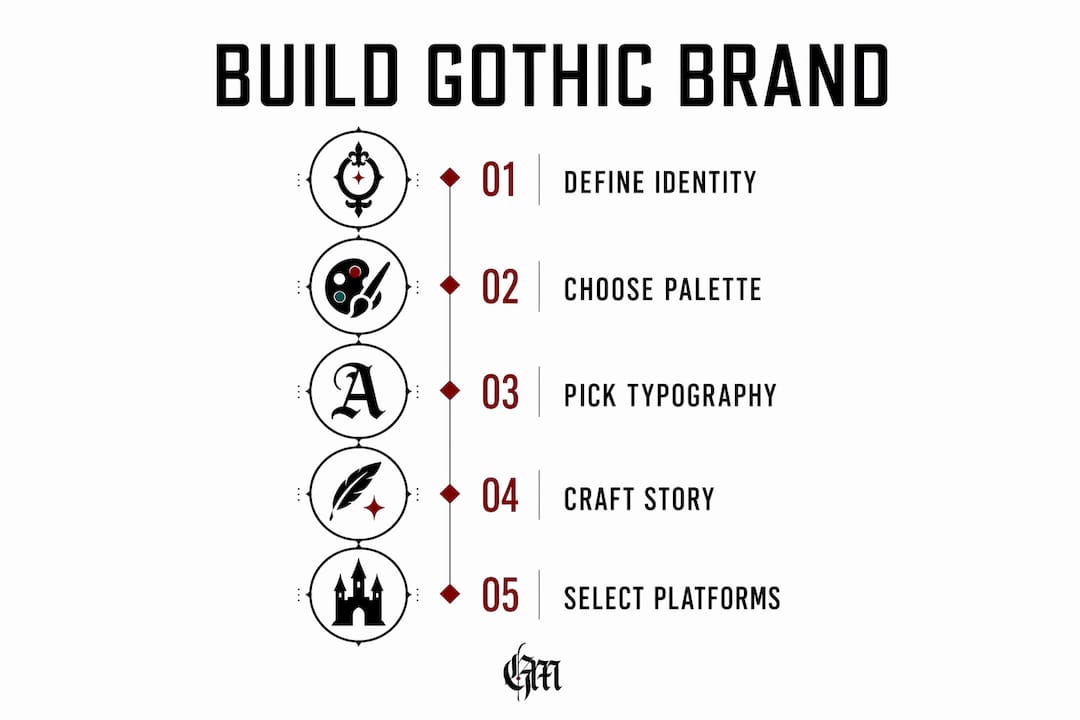
How to craft a gothic brand story that connects with your audience
Gothic aesthetics used as a storytelling engine create deeper emotional engagement than visual style alone. The most effective gothic narrative framework in 2026 follows a three-part arc: origin myth, forbidden knowledge, and redemption. This structure maps directly onto the marketing funnel and gives your audience a reason to follow you across time, not just consume a single post.
Here is how to build that arc in practice:
- Origin myth. Share the moment your gothic identity crystallized. Not a generic “I always loved dark things” story. A specific scene, object, or experience. The more precise the detail, the more believable the myth.
- Forbidden knowledge. Reveal something your audience does not expect. A counterintuitive design principle, an obscure subculture reference, or a behind-the-scenes look at your creative process. This is the part of your story that earns trust.
- Redemption. Show how your brand, your art, or your community gives meaning to the darkness. This is not a happy ending. It is a resolved tension. The gothic tradition does not promise joy. It promises depth.
A three-part storytelling arc measurably increases emotional connection and tribal engagement in gothic brand campaigns. That engagement translates directly into community loyalty, which is the real currency of niche personal branding.
Serialized storytelling amplifies this effect. Release your narrative in chapters, not all at once. Drip behind-the-scenes lore, epistolary content, and ritual-based reveals across weeks. Serialized content releases build community trust far more effectively than straight product pitches. Your audience starts to feel like participants in a story, not consumers of a brand.
Pro Tip: Avoid counterfeit gothic tropes: the forced skull motif, the performative darkness, the aesthetic with no substance underneath. The gothic community values authenticity above all else. Your story must be congruent with your actual creative truth, or the community will see through it immediately.
Which digital tools and platforms best support a gothic personal brand?
The gothic community concentrates on specific platforms, and spreading yourself thin across all of them dilutes your presence. Instagram and TikTok carry the widest gothic creator audiences in 2026, but Tumblr and Pinterest remain strong for aesthetic archiving and mood board culture. Discord servers and Substack newsletters serve the deeper, more loyal segment of your community.
Cross-platform aesthetic consistency is what separates recognized gothic brands from creators who just post dark photos. Every profile header, bio font choice, and pinned post should reflect the same brand guide you built in the design phase. Inconsistency reads as amateur. The gothic community notices.
For brand guide creation, Canva Pro, Adobe Express, and Figma all support the kind of modular template systems gothic branding requires. For email, ConvertKit and Beehiiv both handle serialized drip campaigns well. A seven-stage email sequence, released over three weeks before a product or content launch, is a proven ritual-based launch structure that builds anticipation without burning out your list.
| Platform | Best use for gothic brands | Audience depth |
|---|---|---|
| Visual portfolio, aesthetic drops | Wide but shallow | |
| TikTok | Storytelling, behind-the-scenes lore | Wide, growing |
| Tumblr | Mood boards, long-form aesthetic posts | Niche, very loyal |
| Substack | Serialized newsletters, epistolary content | Small, deeply engaged |
| Discord | Community rituals, VIP access events | Smallest, most loyal |
- Use Canva Pro or Figma to build and maintain your brand guide templates.
- Schedule content in batches using Buffer or Later to maintain posting consistency.
- Build your email list from day one. Social platforms change algorithms. Your list does not.
- Use Substack for serialized lore drops that reward your most engaged followers.
What are proven steps to launch a gothic personal brand authentically?
A gothic brand launch is not a single announcement. It is a ritual with stages, and each stage deepens your audience’s investment before you ask for anything in return.
- Build anticipation with pre-launch teasers. Release cryptic visual fragments, color palette reveals, and single-line narrative hooks two to three weeks before launch. Do not explain. Let the community speculate.
- Open VIP access first. Give your most engaged followers early access to your brand, your store, or your content. This creates a sense of initiation, which is deeply resonant in gothic culture.
- Execute a multi-stage content drop. Release your origin myth, then your forbidden knowledge content, then your redemption arc across separate days. Each drop should feel like a chapter, not a post.
- Host a launch event, live or digital. A live stream, a Discord event, or an in-person gathering signals that your brand is a community, not just a content feed.
- Follow up with deeper engagement. After launch, move your most loyal followers into a tighter circle. A private newsletter, a Discord channel, or a patron tier. Deeper engagement tactics sustain loyalty far longer than any single launch moment.
The most common mistake at launch is diluting the gothic vibe to appeal to a broader audience. Maintaining a true gothic aesthetic is the best filter for attracting the right niche audience. Trying to appeal to everyone guarantees you resonate with no one.
Pro Tip: Measure success with brand affinity metrics, not just follower counts. Comments that reference your narrative, shares within gothic community spaces, and direct messages from new community members are stronger signals than raw numbers.
How to maintain and evolve your gothic brand over time
A gothic personal brand that does not evolve becomes a costume. The goal is to deepen your identity, not repeat it. These practices keep your brand alive and growing past the launch phase:
- Iterate your narrative. Revisit your origin myth annually. Add new chapters as your creative work develops. Your story should grow with you.
- Incorporate emerging gothic trends without losing your core. In 2026, Gothic Maximalism and dark cottagecore are both gaining traction. Adopt elements that genuinely fit your aesthetic. Reject those that do not.
- Engage community feedback directly. Ask your audience what resonates. Gothic communities are vocal and specific. Their feedback is more useful than any analytics dashboard.
- Refresh one visual element per quarter. Update a background texture, introduce a new accent color, or commission new iconography. Small updates signal that your brand is alive without triggering a full rebrand.
- Sustain loyalty through ritual. Monthly content drops, seasonal reveals, and anniversary events give your community recurring reasons to stay engaged. Ritual is the foundation of gothic culture, and it translates directly into authentic style growth for your brand.
The gothic community is niche but deeply loyal. That loyalty is your competitive advantage. Protect it by staying congruent between your aesthetic choices and your actual creative truth.
Key takeaways
A gothic personal brand succeeds when visual discipline, authentic storytelling, and ritualized community engagement work together from the first day of planning.
| Point | Details |
|---|---|
| Use a modular color system | Assign roles to charcoal, oxblood, pewter, and bone white instead of defaulting to black. |
| Build a brand guide before posting | Lock in fonts, palette, and texture rules to prevent aesthetic drift across platforms. |
| Follow the three-part narrative arc | Origin myth, forbidden knowledge, and redemption create lasting emotional engagement. |
| Launch in ritual stages | Pre-launch teasers, VIP access, and serialized drops build anticipation and community investment. |
| Protect authenticity above all | Diluting your gothic aesthetic to reach a wider audience destroys the trust that makes niche brands powerful. |
What I have learned about gothic branding that most guides miss
I have watched creators spend months perfecting their visual identity and then undermine it entirely with a single off-brand collaboration or a desperate pivot toward mainstream appeal. The gothic community does not forget. It does not forgive aesthetic betrayal easily either.
The insight that changed how I think about dark aesthetic personal branding is this: the reserved, curious, melancholic brand voice is not a stylistic choice. It is a trust signal. When your tone matches your visuals and your story matches your actual creative practice, the community recognizes it immediately. When any of those three elements are out of sync, the whole thing reads as performance.
Gothic Maximalism is the other area where I see creators consistently fail. They interpret “more” as “better” and end up with cluttered feeds that communicate chaos instead of atmosphere. The discipline required to layer textures and colors intentionally, and then stop before adding one more element, is the real skill. Most creators never develop it because no one tells them that restraint is the most gothic thing you can practice.
Start with your gothic branding fundamentals locked in writing before you create a single piece of public content. The creators who skip that step spend years correcting inconsistencies that a one-page brand guide would have prevented on day one.
— Rey
Start building your gothic brand with Goth
Goth is the platform built specifically for creators like you. Whether you are sourcing gothic fashion, occult jewelry, dark decor, or art to represent your brand aesthetic, Goth connects you directly with independent creators and vendors who understand the alternative community from the inside.
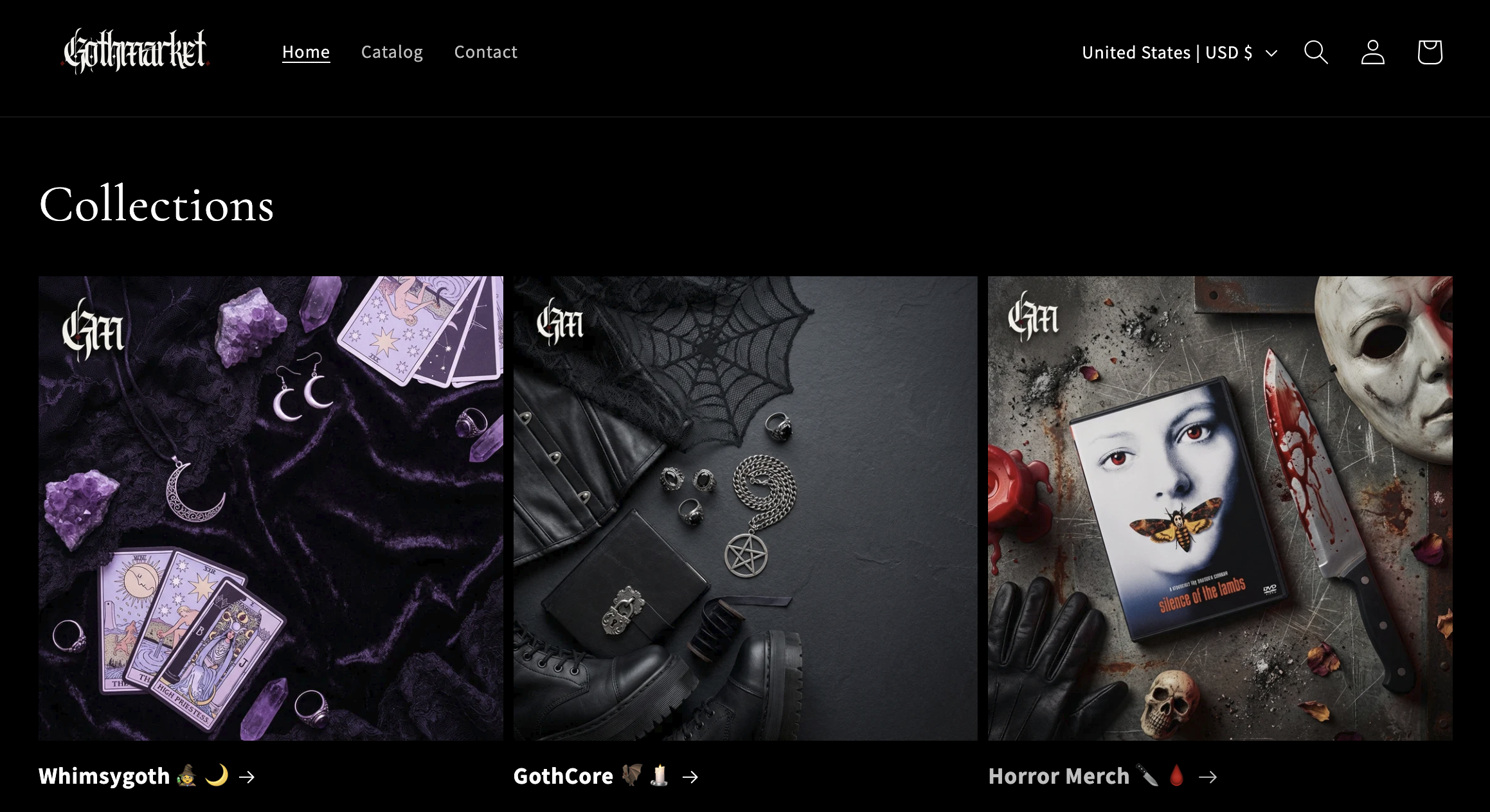
Goth also supports independent creators who want to sell their own work through a marketplace that already attracts your exact audience. You do not have to build community from scratch when one already exists. Explore gothic merch and branding resources at Goth and find the tools, products, and community that match the brand you are building. For deeper guidance on reaching your audience, the gothic marketing strategies resource on Goth covers the specific tactics that move product in the alternative space.
FAQ
What is a gothic personal brand?
A gothic personal brand is a dark aesthetic identity built through intentional visual design, narrative storytelling, and lifestyle authenticity. It targets the alternative community and prioritizes depth and congruence over mass-market appeal.
How do I choose colors for a gothic brand identity?
Use a modular color system that assigns roles to charcoal, oxblood, pewter, bone white, moss green, and deep indigo. Avoid defaulting to pure black, which flattens on digital screens and signals a lack of design intention.
Which social platforms work best for gothic personal branding?
Instagram and TikTok reach the widest gothic audiences, while Tumblr, Substack, and Discord serve the most loyal and deeply engaged segments. Build your email list on all platforms from day one.
How do I avoid looking inauthentic in gothic branding?
Keep your brand voice reserved, curious, and melancholic, and make sure your aesthetic choices match your actual creative practice. The gothic community identifies performative branding quickly and disengages from it permanently.
What is Gothic Maximalism in personal branding?
Gothic Maximalism is the disciplined layering of textures, such as leather, lace, and matte metal, to build atmosphere without visual clutter. Quality of atmosphere always outranks quantity of elements in this design approach.